Blessed by BEST

This piece was originally developed for a photo essay competition on walkability in cities, which is why it returns so deliberately to walkers. Since the competition has now been postponed, I’m sharing it here, somewhat haphazardly.
Walkability, beyond footpaths, is also about how far a city allows a walker to travel without forcing them into private retreat. One must eventually reach home, covering distances too long for the body alone. In Mumbai, for nearly 35 lakh people every day, that journey is assisted by the BEST (Brihanmumbai Electric Supply and Transport Undertaking) bus — still one of the cheapest and most dependable forms of collective movement, even as metro lines and privatized alternatives aggressively expand.
As urban researcher and activist Hussain Indorewala notes in a recent essay, BEST’s fleet has shrunk drastically over the years. Of the roughly 2,800 buses operational today, only a small fraction remain publicly owned. Even depot lands and workshops now stand vulnerable to redevelopment and commercial use.1
Leaving aside, for a moment, concerns around perceived loss-making and inefficiency of BEST buses, what follows is an oblique look: BEST as a system that carries, delays, protects, exhausts, and occasionally dignifies the city’s walkers.
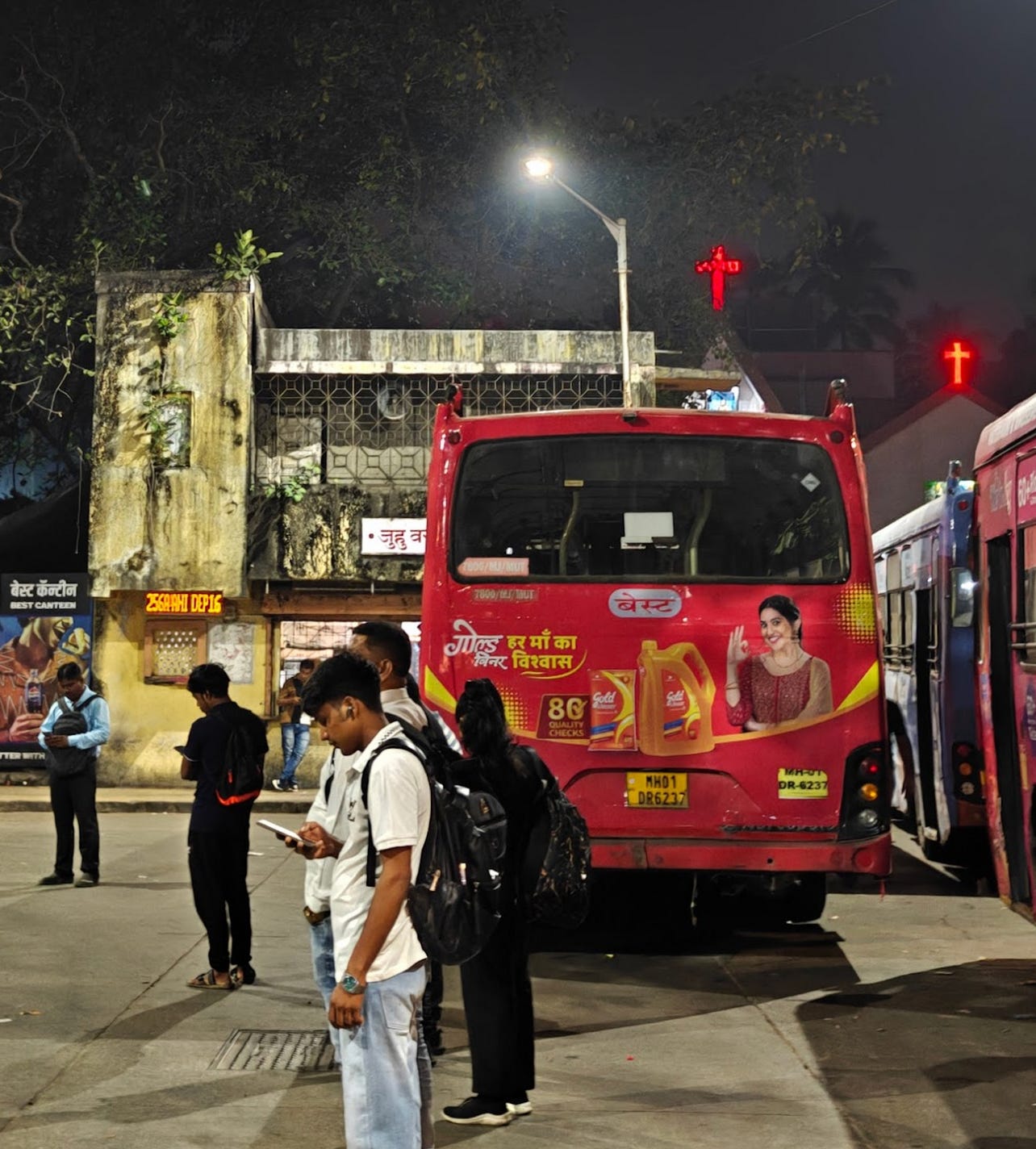
A typical day. Outside stations, buses line up in long rows, but none really move. No conductor or driver is in sight. Perhaps the ever-efficient private operators haven’t yet paid for the services. The walkers, emerging from the local railway, stand beside them as the queue slowly builds — as if waiting to enter a holy site.
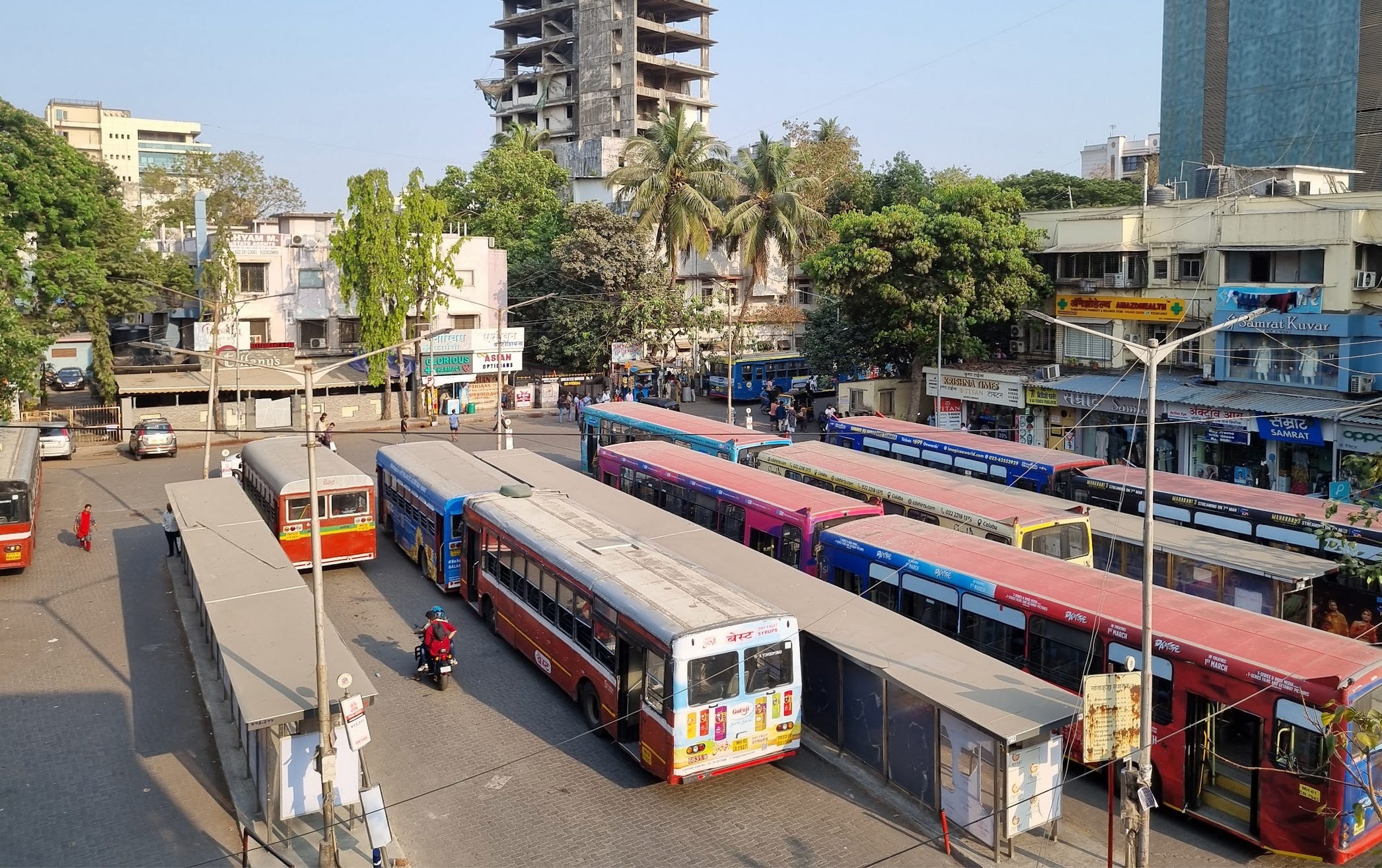
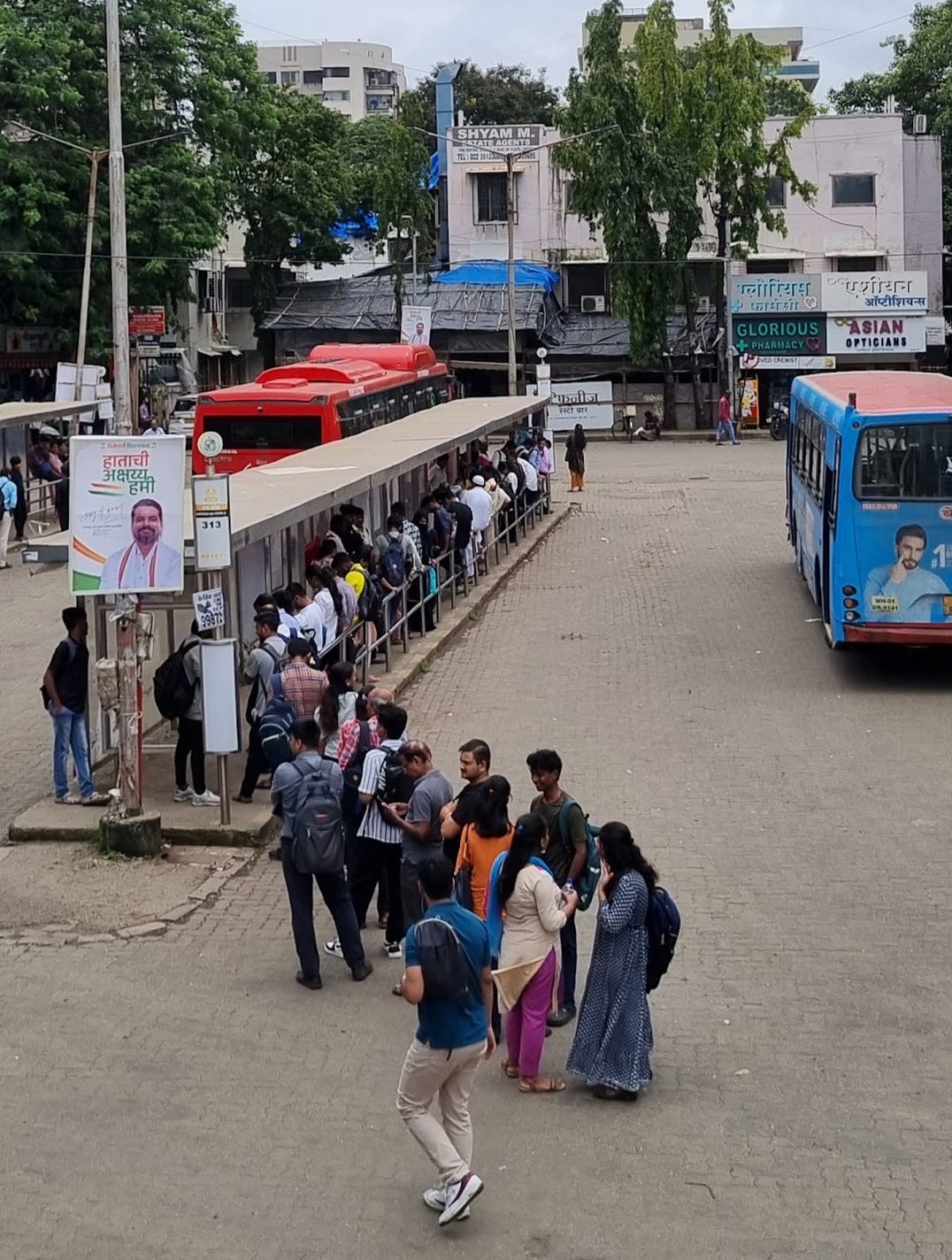
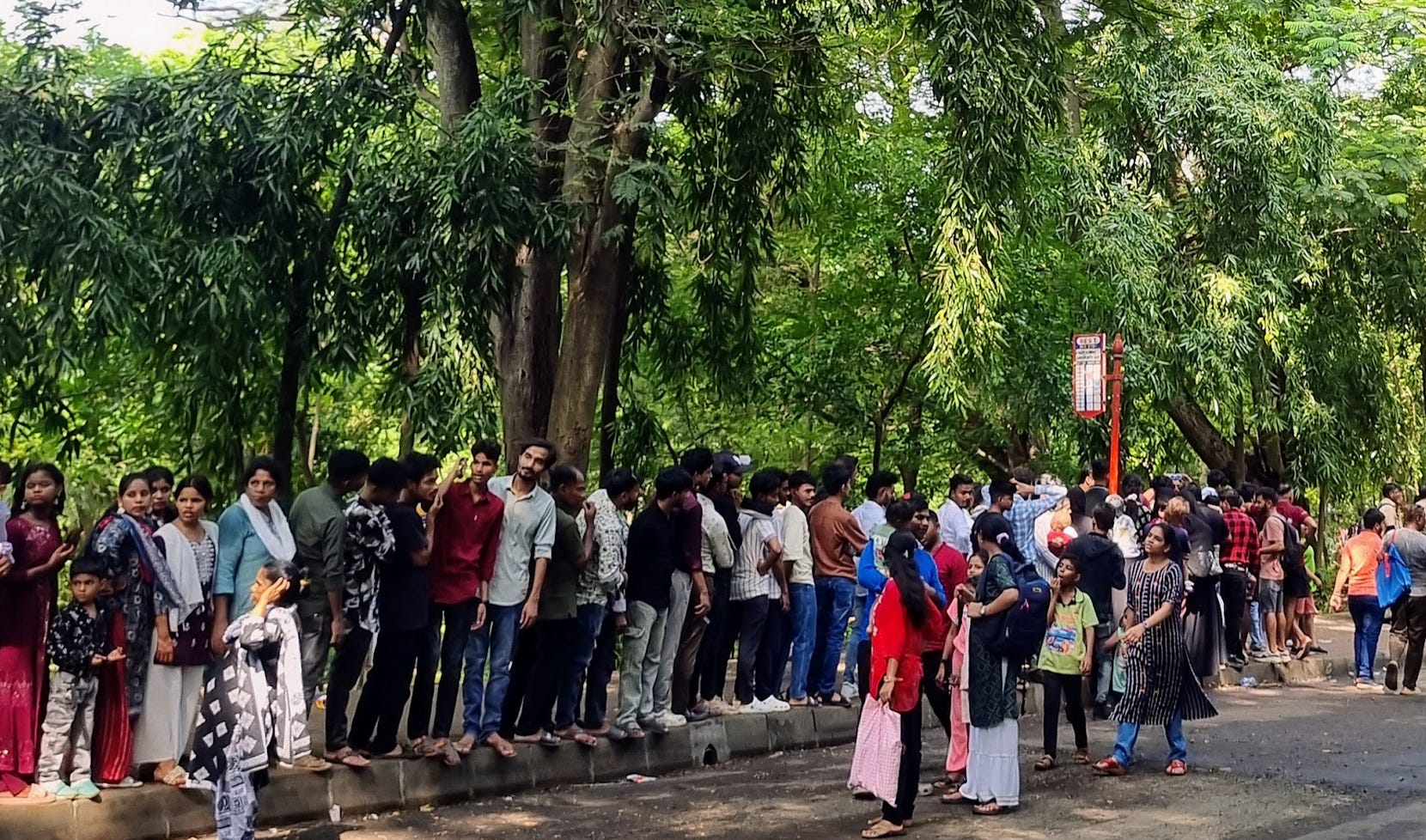
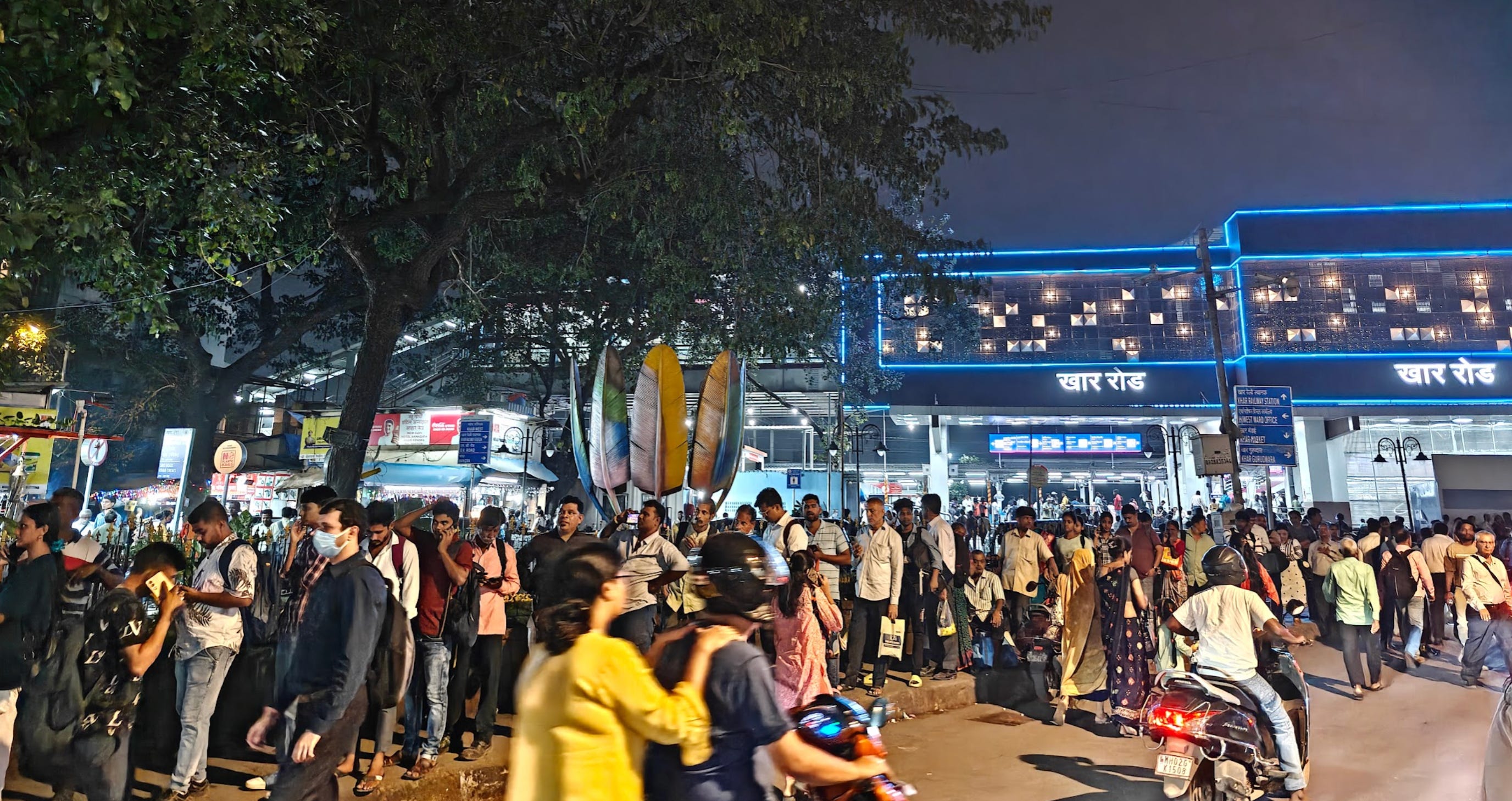
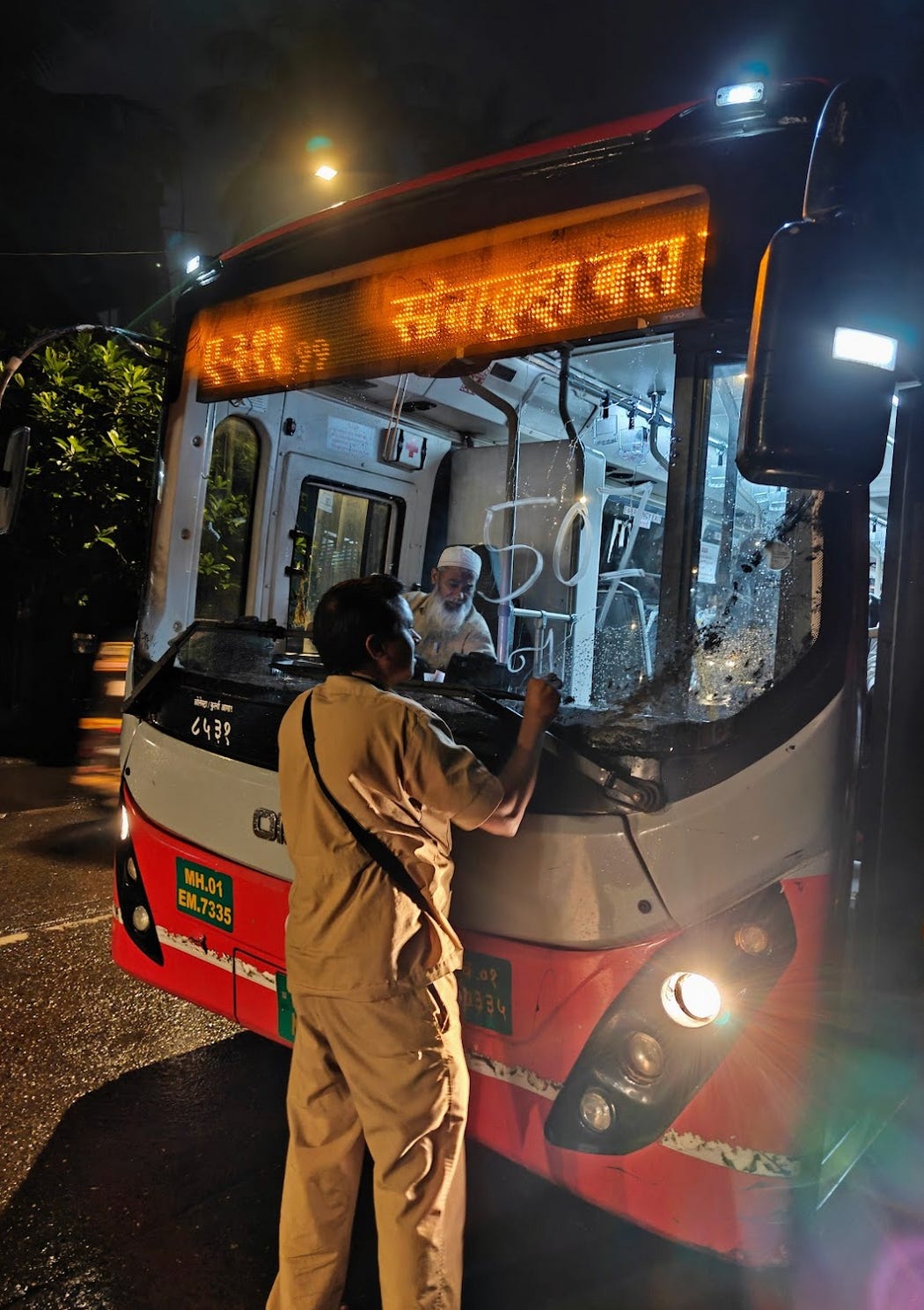
After much guesswork, enquiry, and cajoling, a bus finally starts. It will take them to their destination. But conditions apply. The route number itself may change midway. One of those inscrutable quirks of BEST.
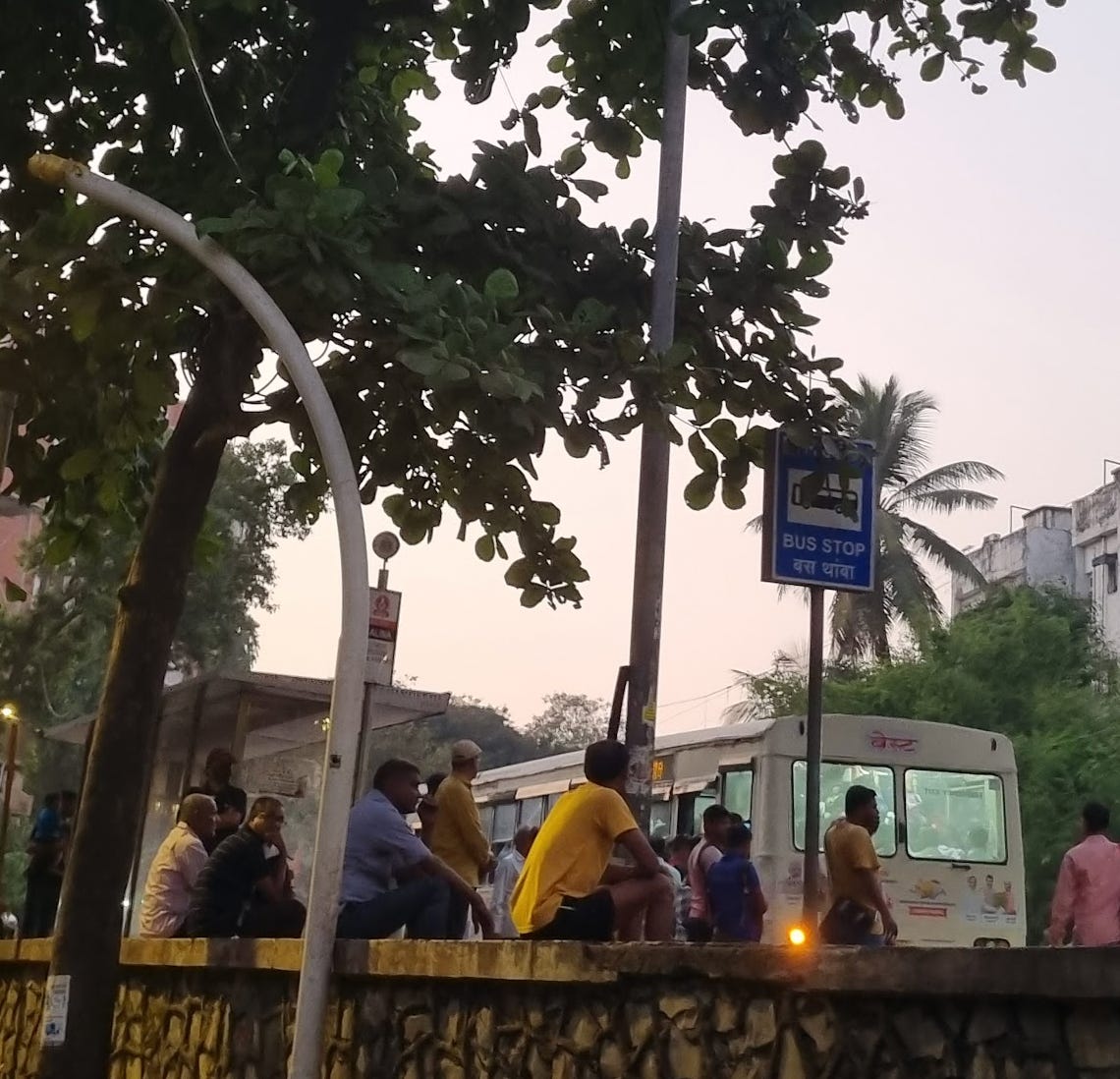
Elsewhere, the bus stop presents a different kind of waiting. Here, the walkers stand amid fast-moving traffic, constantly reminded of their futile immobility. Sometimes, garbage piled beside the stop leaves only one usable corner for everyone to gather in, breathlessly so. Even as share autos and taxis increasingly compete for attention, they continue placing their faith in BEST.
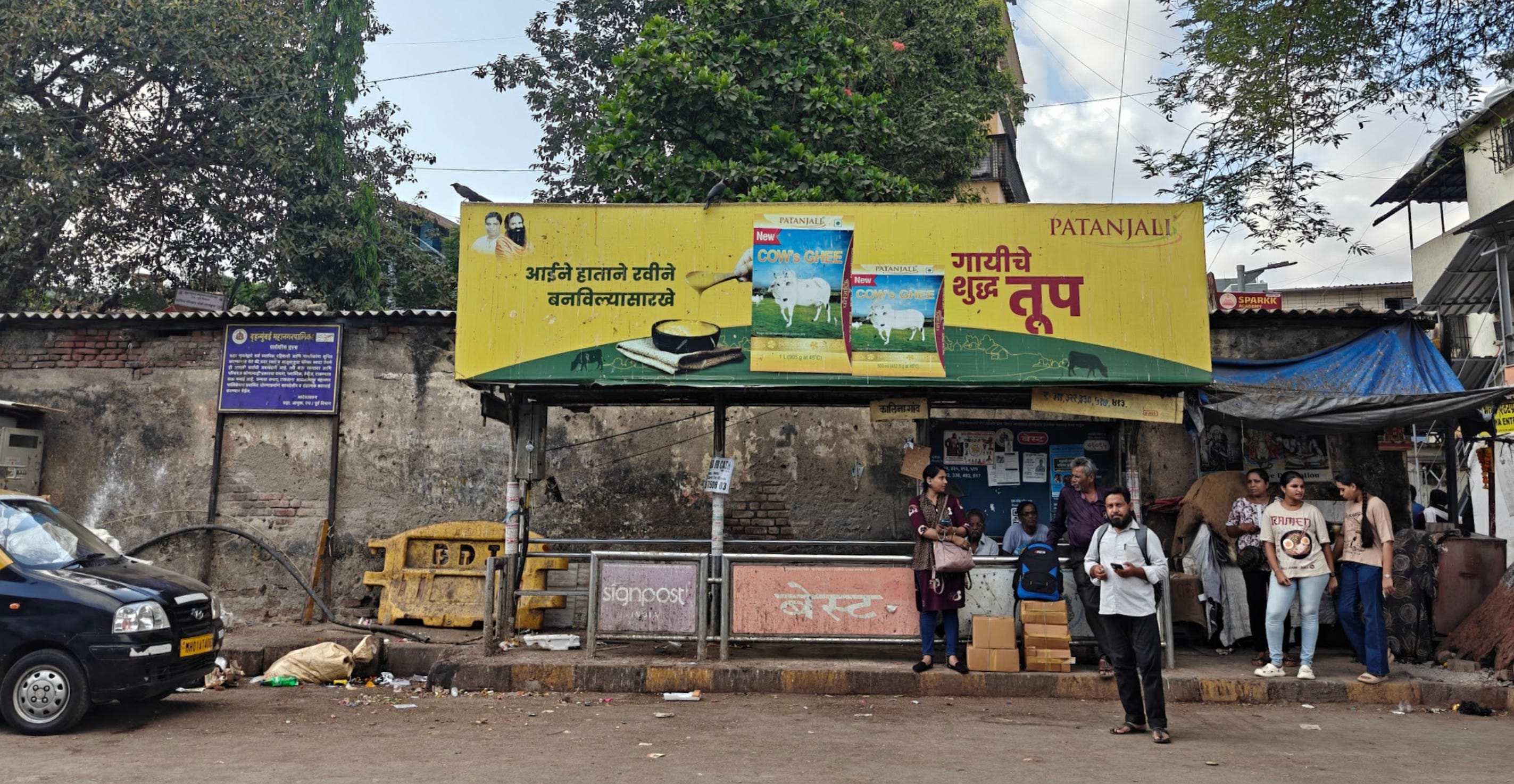
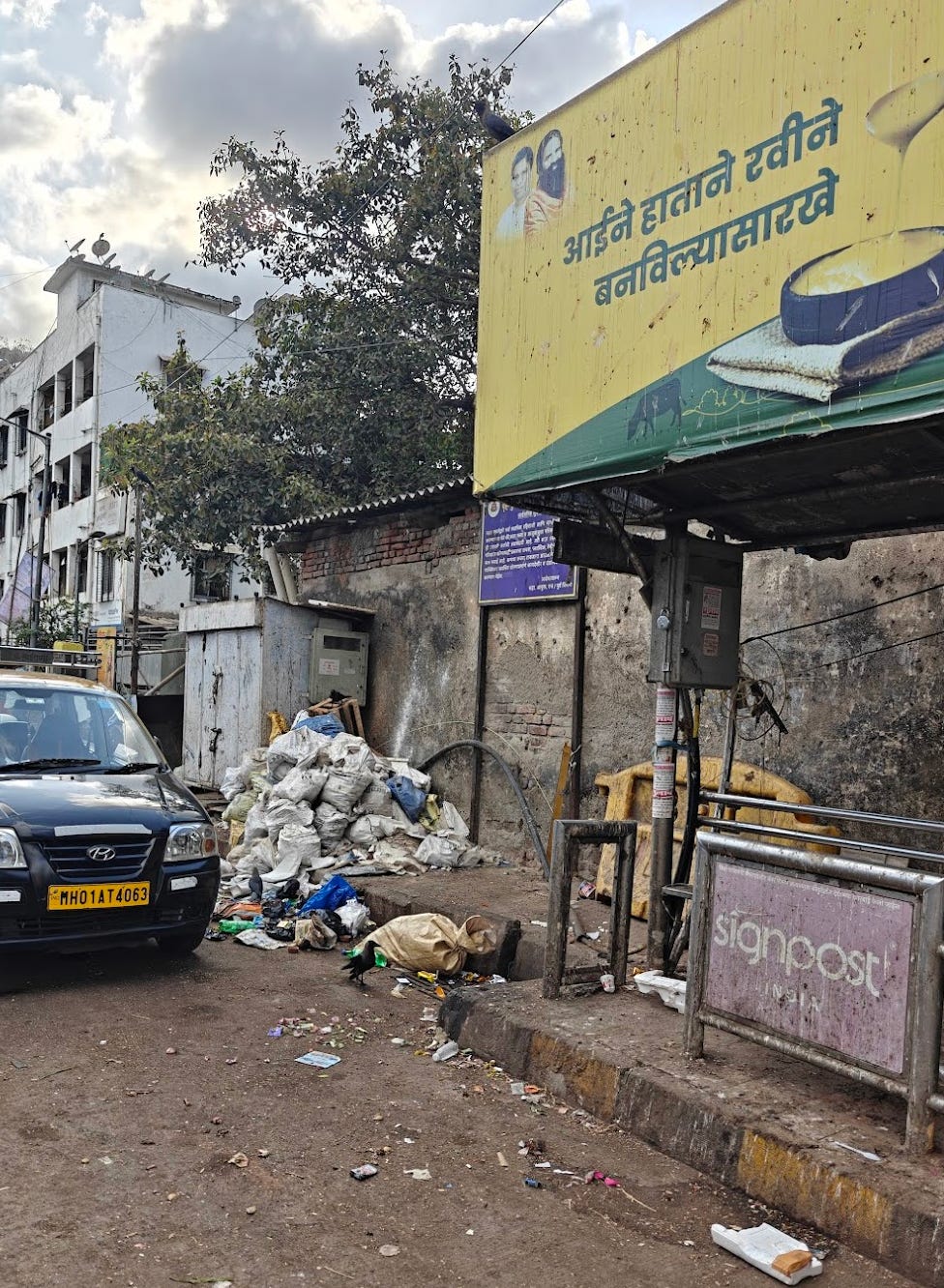
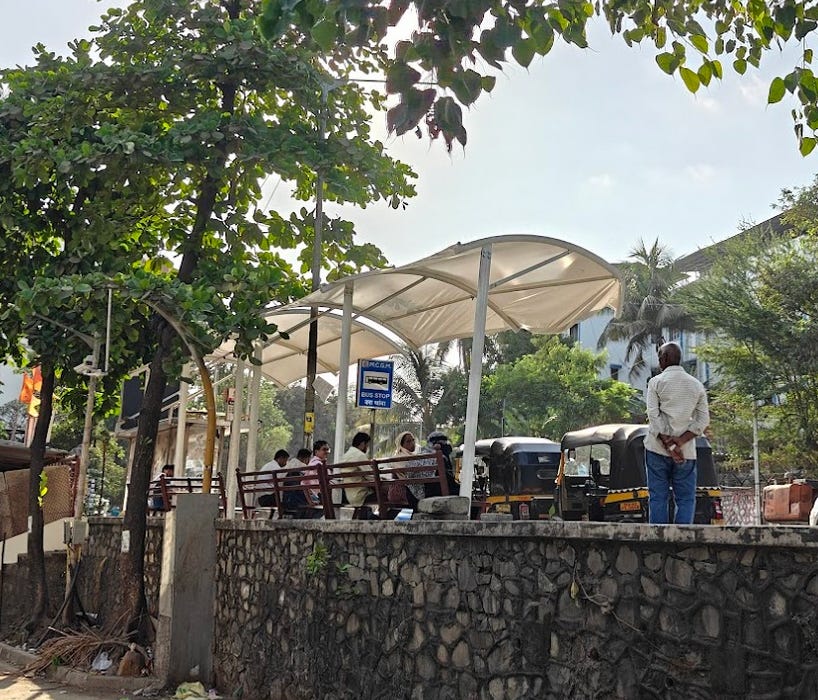
Small mercies do arrive. A nearby stop now offers seats and shade.
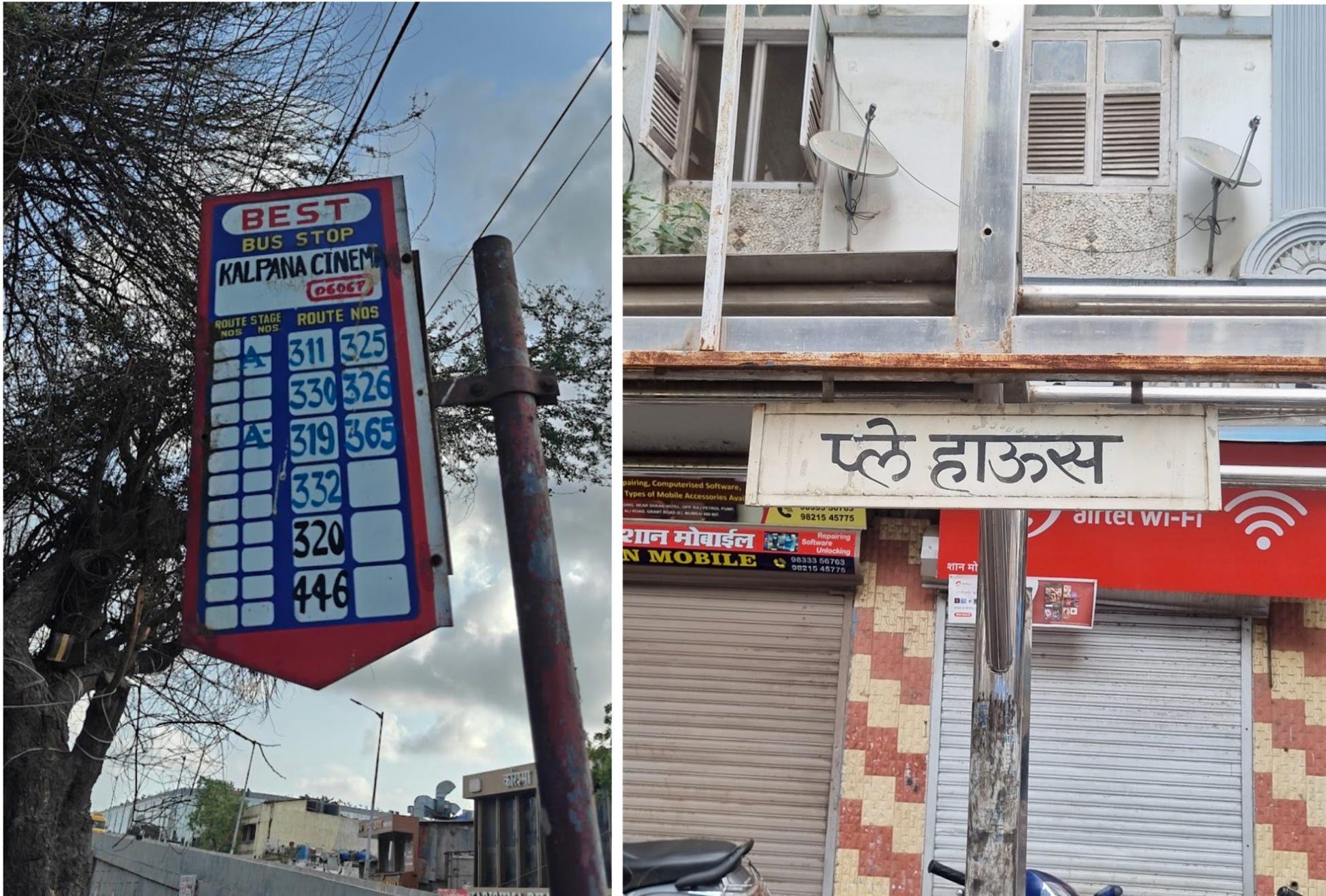
Another mercy is the name of the stop itself. Pila House, Kalpana Cinema, Alexandra Cinema — the places have disappeared, or soon will. Yet the walkers keep recalling them, route after route, holding onto the city through utterance alone. To have these names inscribed in letters honours that fragile claim of belonging, lending it permanence.
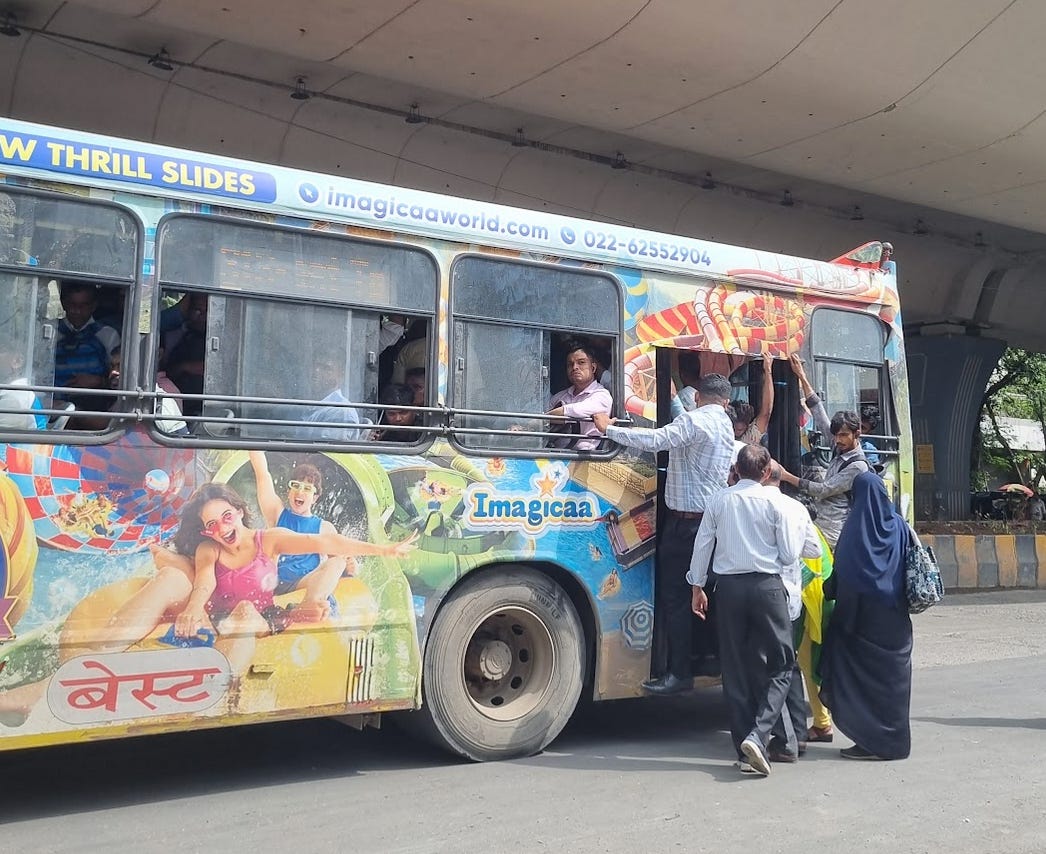
As the bus finally arrives at the stop, another trial begins. Whether it is open or an AC one, women are always left behind to wait further, as men crowd the entrances and hang along the doors.
Prof. Shilpa Phadke and co-authors write in Why Loiter? that women often prefer buses over private vehicles for the relative safety they offer. Those knocking hardest, inevitably, are the ones left stranded outside.
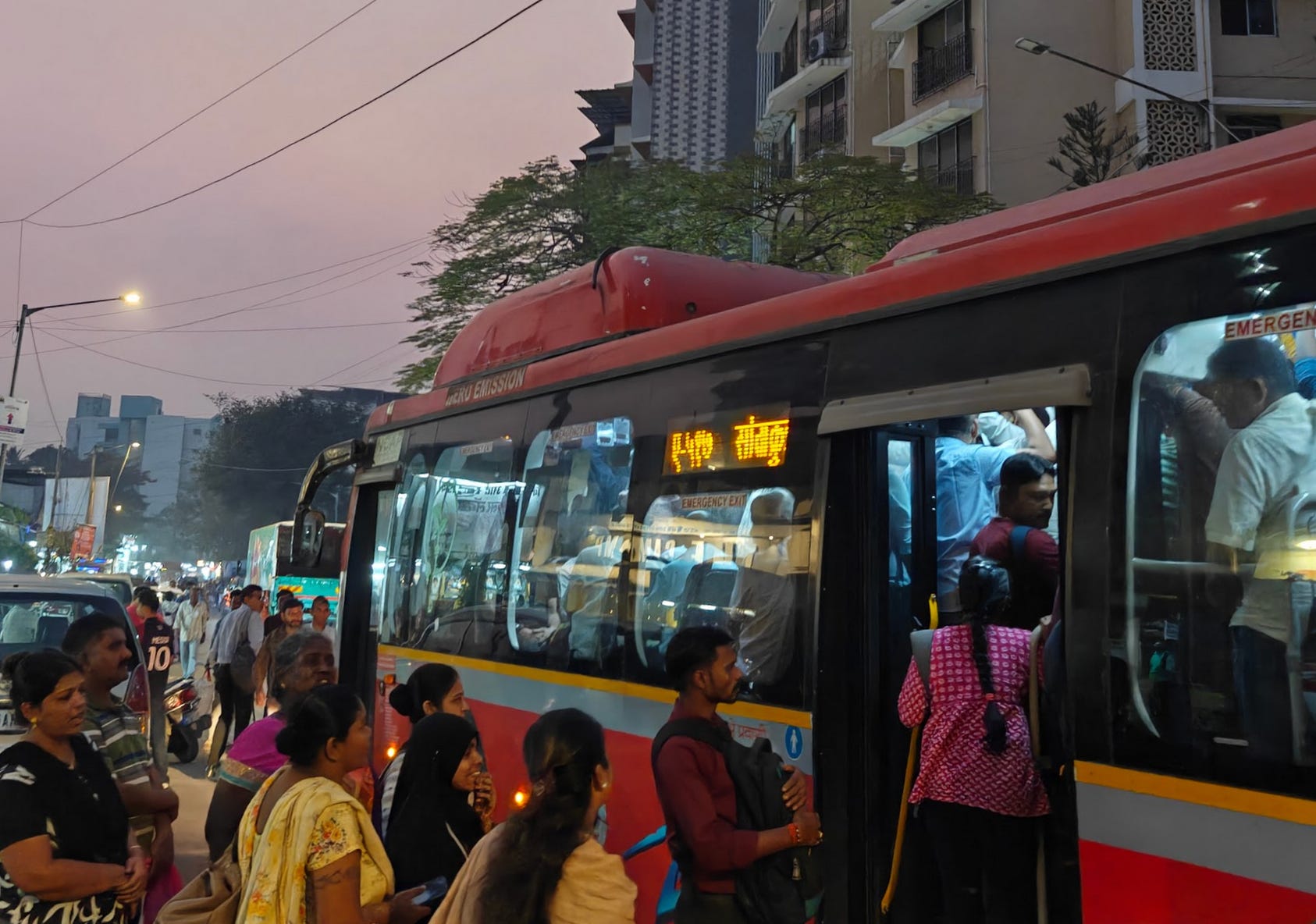
Not all walkers wish to board. Maybe they simply wish to cross past.
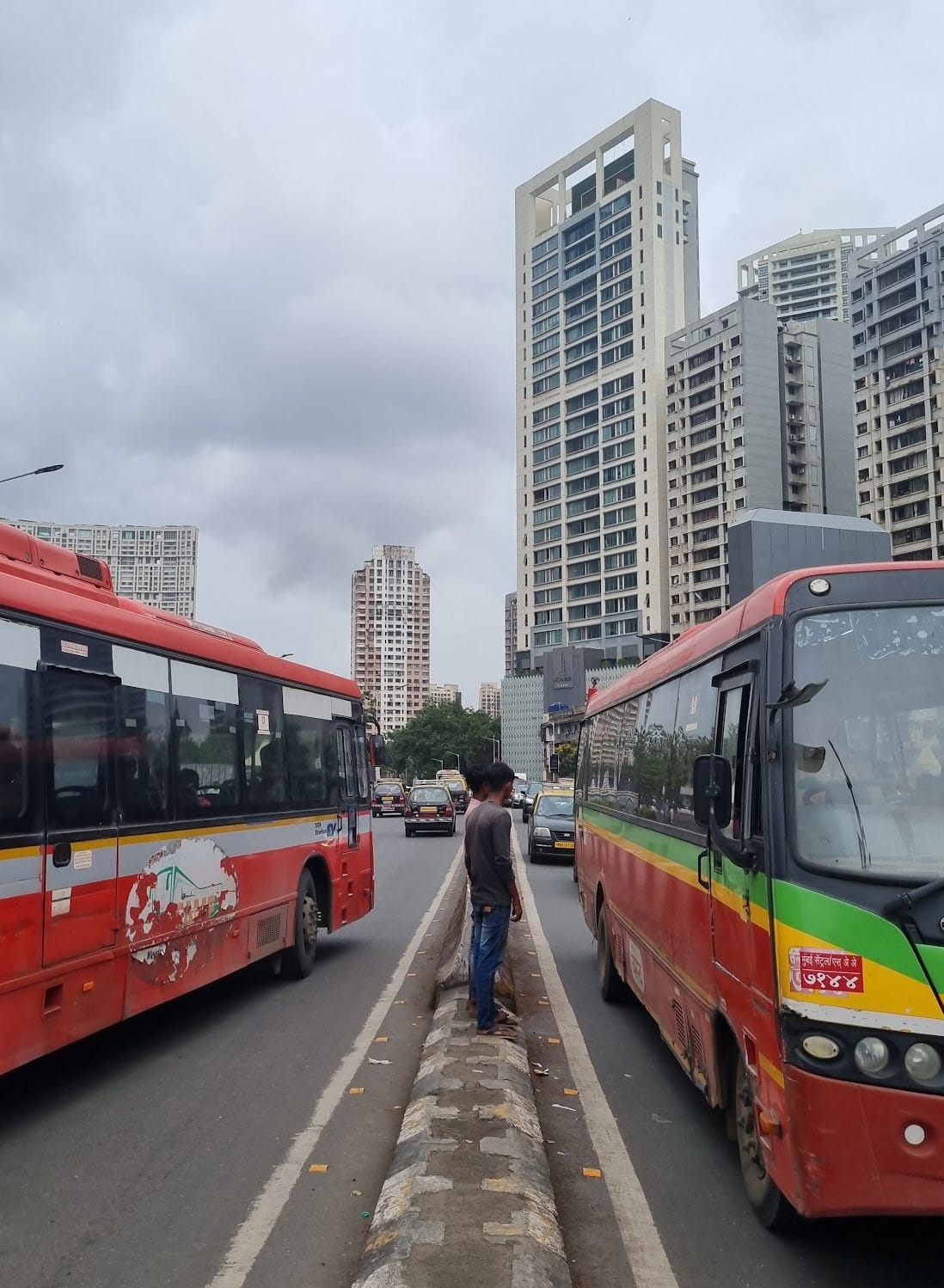
Don’t be fooled by their size. The buses, to their credit, are far gentler on walkers than the bikes or cars.
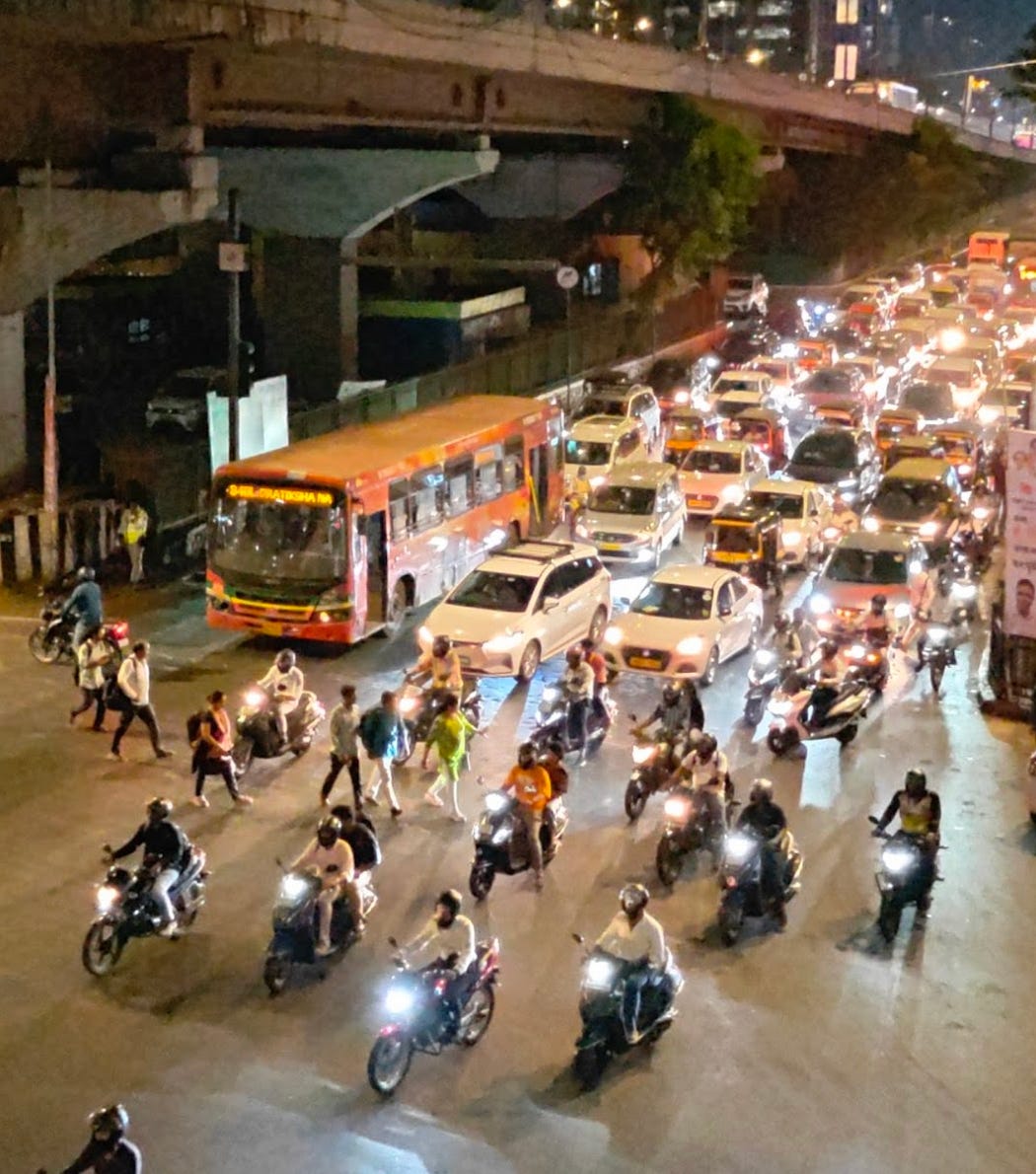
Even on a highway with heavy traffic, when everyone is searching for a quick escape, it is BEST that pauses for stranded walkers at the stop — much to the frustration of riders within. Another signal may arrive in the process. That is never a concern.
In this lies the grace of BEST. To uphold the dignity of those otherwise left behind by the city’s restless movement. Slowly, imperfectly, but with a commitment to carry all along, it chugs ahead.
In the above image, observe the bus at the upper edge. The subsequent images trace its journey through the traffic, after a pause at a stop.
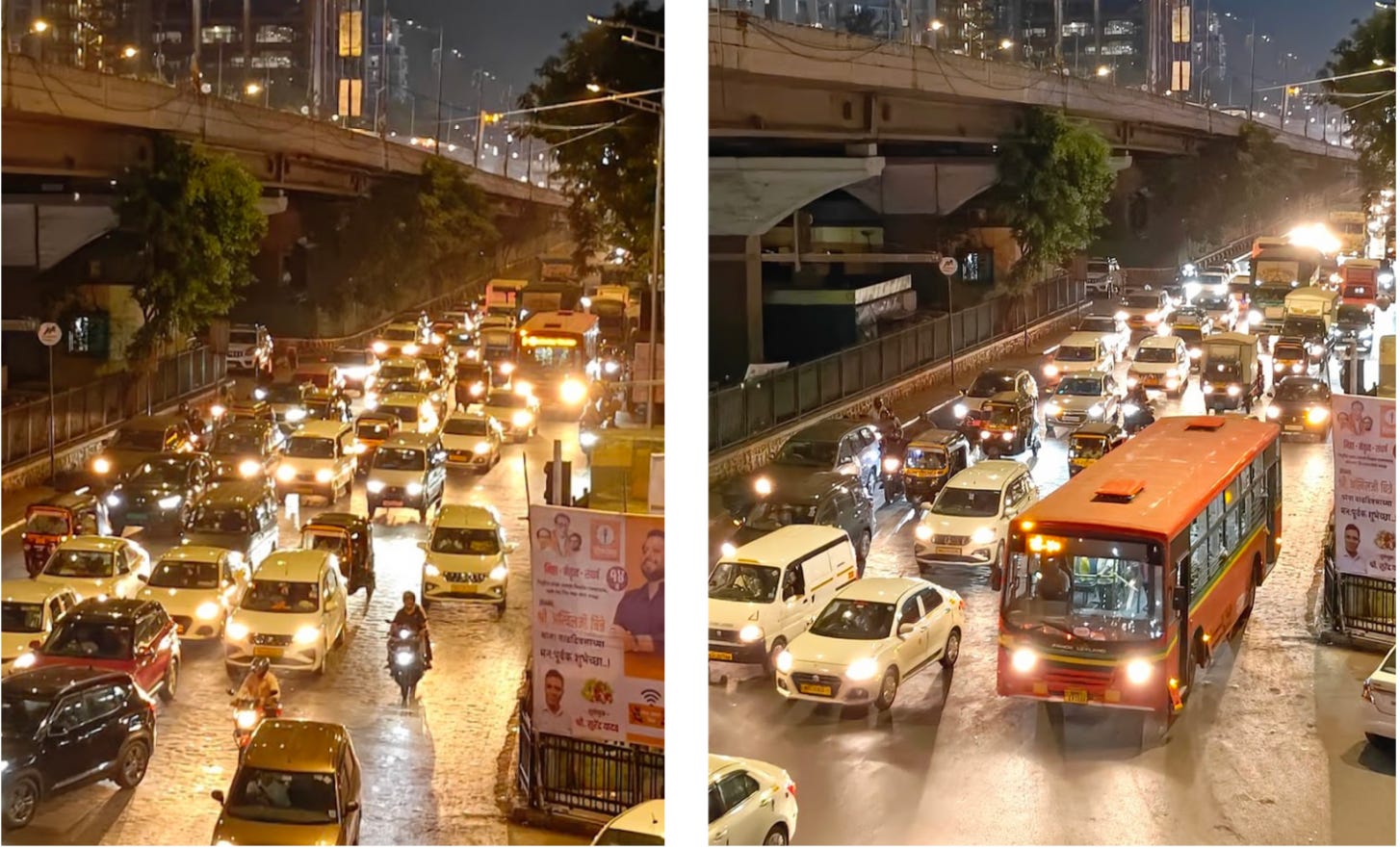
One enters the bus to glorious views. Though elevated and pacy, the immersion in the street is retained. Not just autos, even planes appear dwarfed.
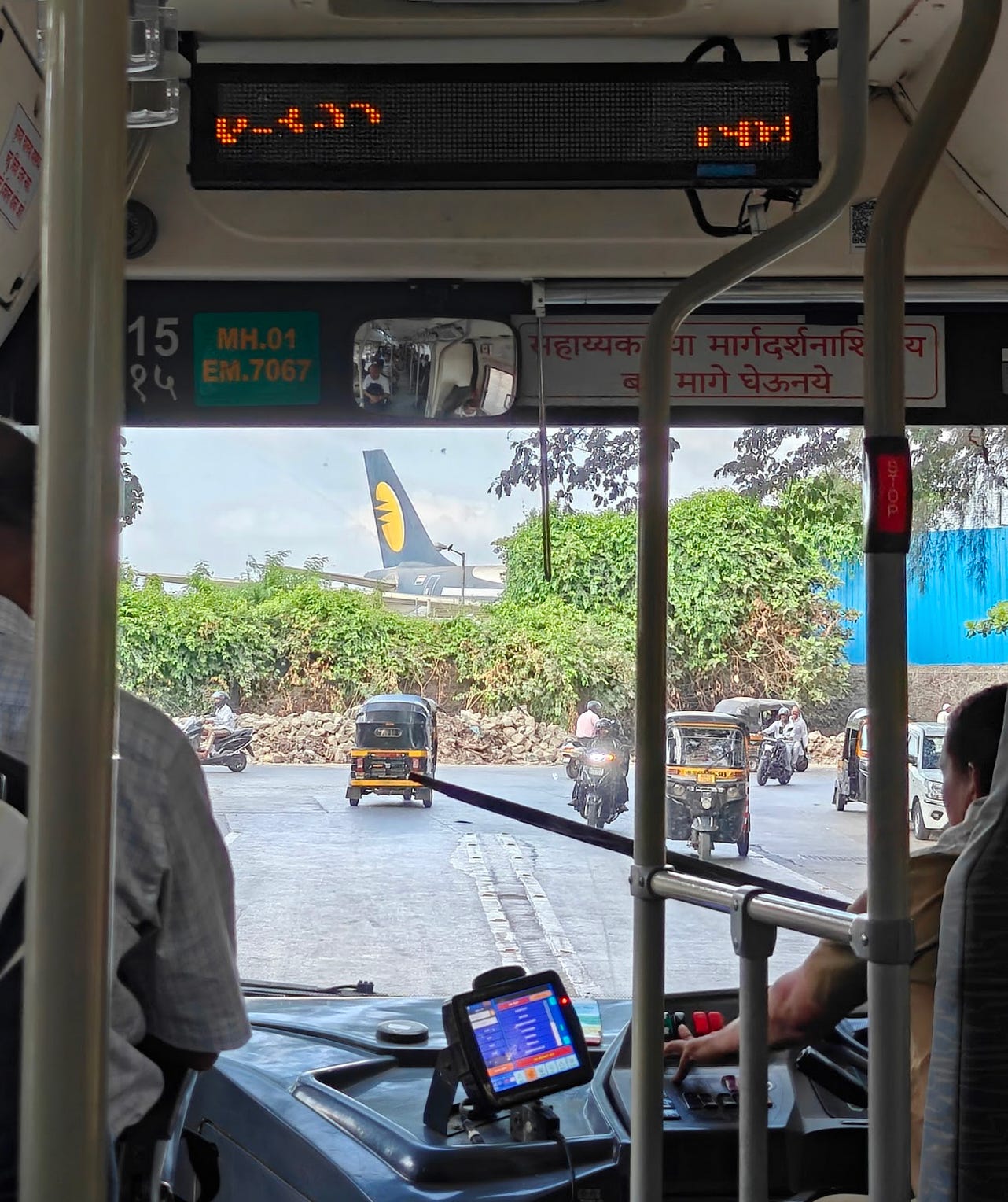
At times, thanks to road repairs, two buses pass so close in opposite directions that it feels like a parallel world brushing past. Unlike crossing trains, where encounters are fleeting, riders here briefly meet each other’s gaze. Almost as intimate as strangers on a narrow street.
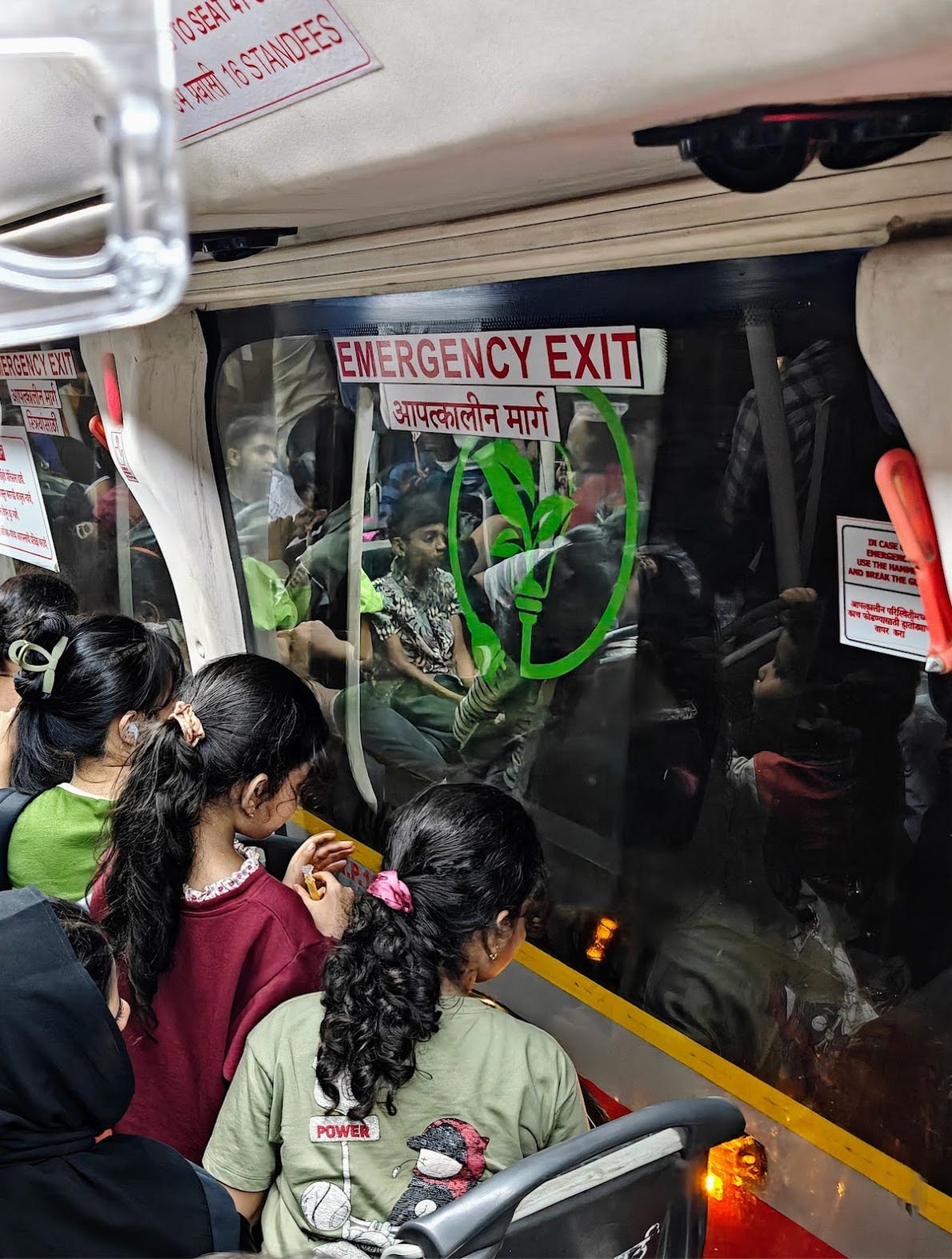
Unlike what many think, the buses are not always overcrowded.
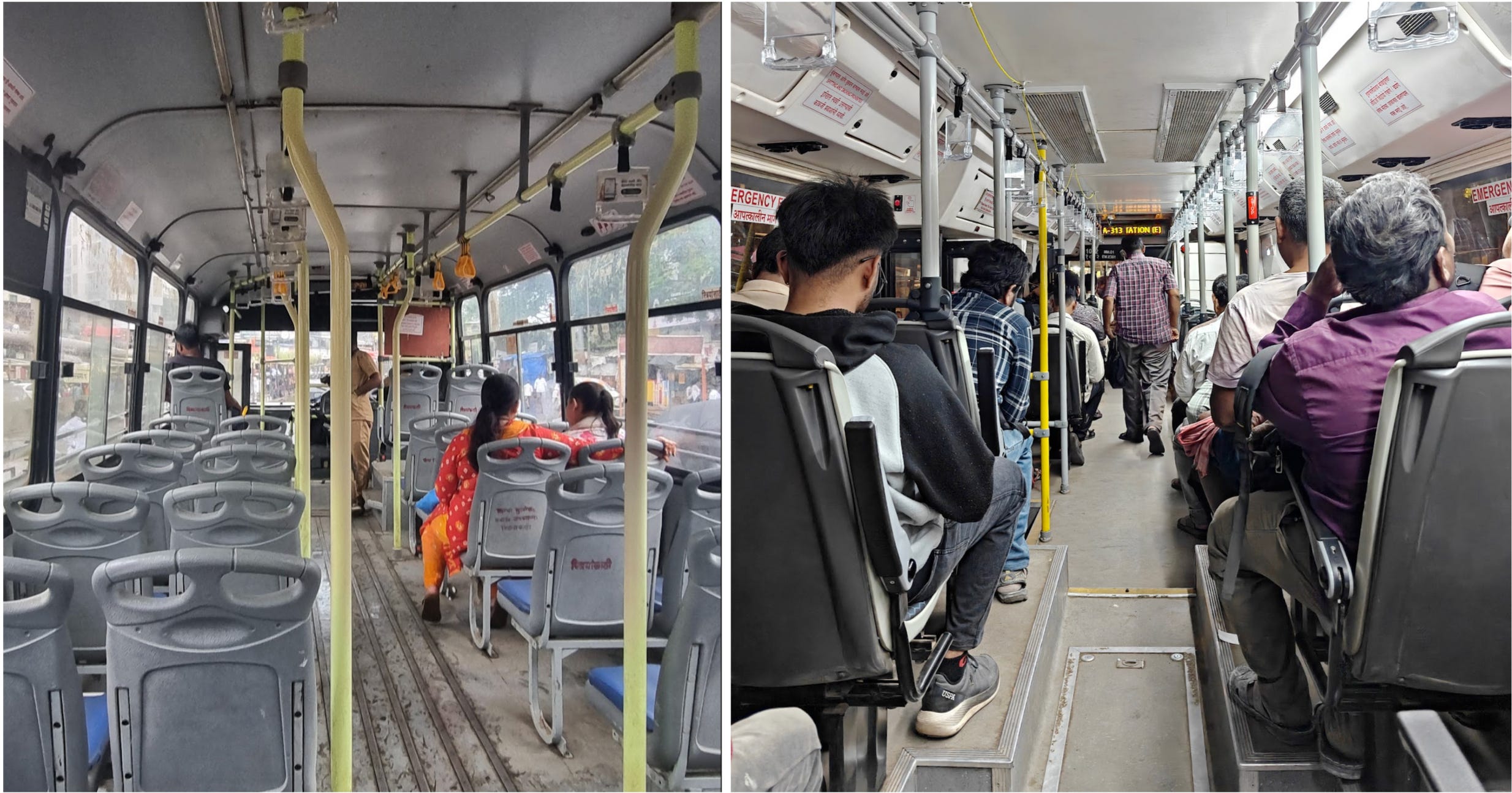
Once one experiences the pleasures of an uncongested bus, it becomes hard to turn away. Perhaps this is why, despite the troubles, even the leisurely hop onto the crowded ones — trusting that, as people get down, the pleasures will return.
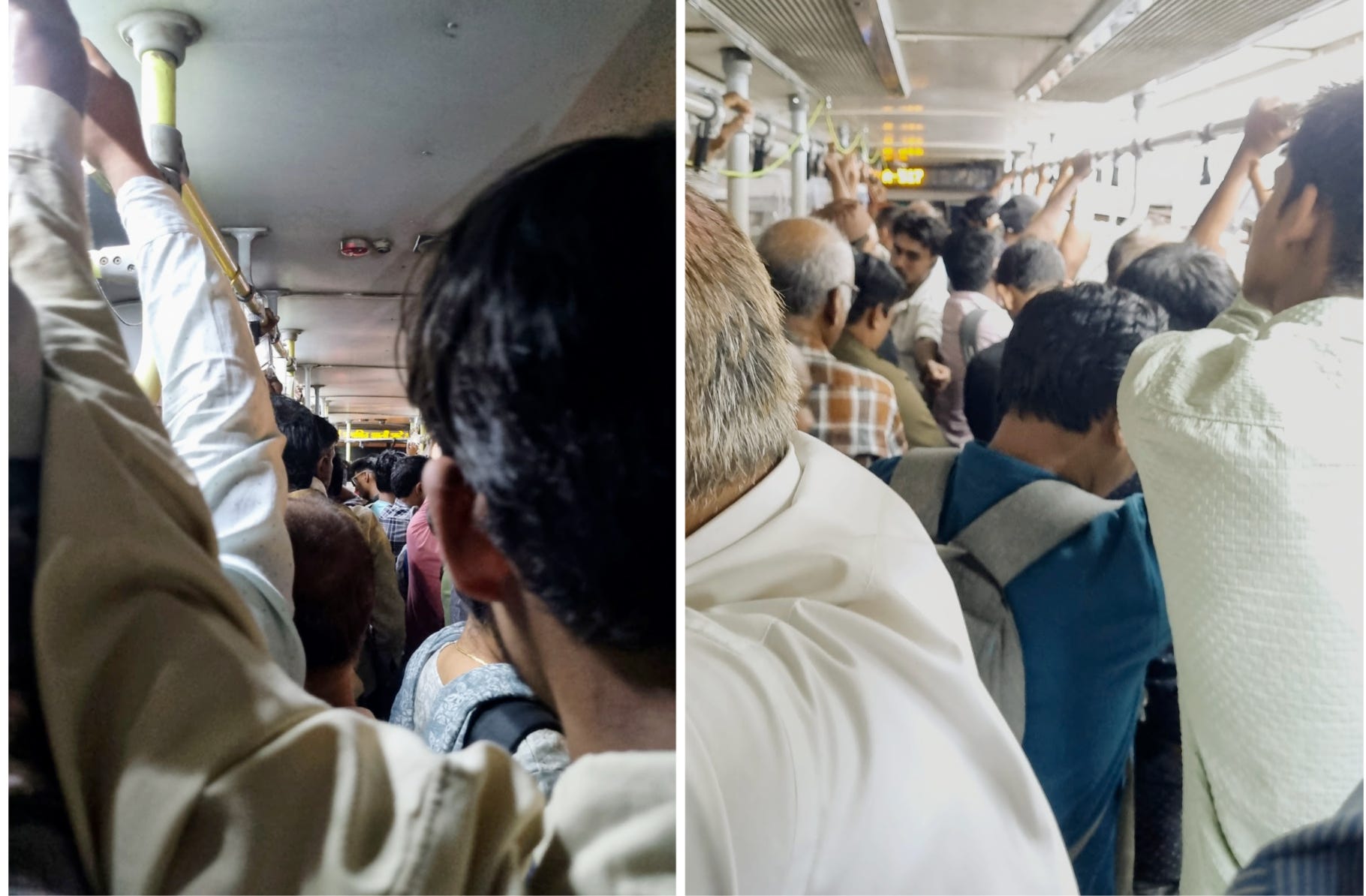
A worry persists. What if the bus is so crowded that the conductor never reaches you, and a strict ticket collector catches you at the exit?
How rude — despite continued allegiance and endurance — how can it end like this? “My BEST, my BEST, why have you forsaken me?”, rues the walker in shame.
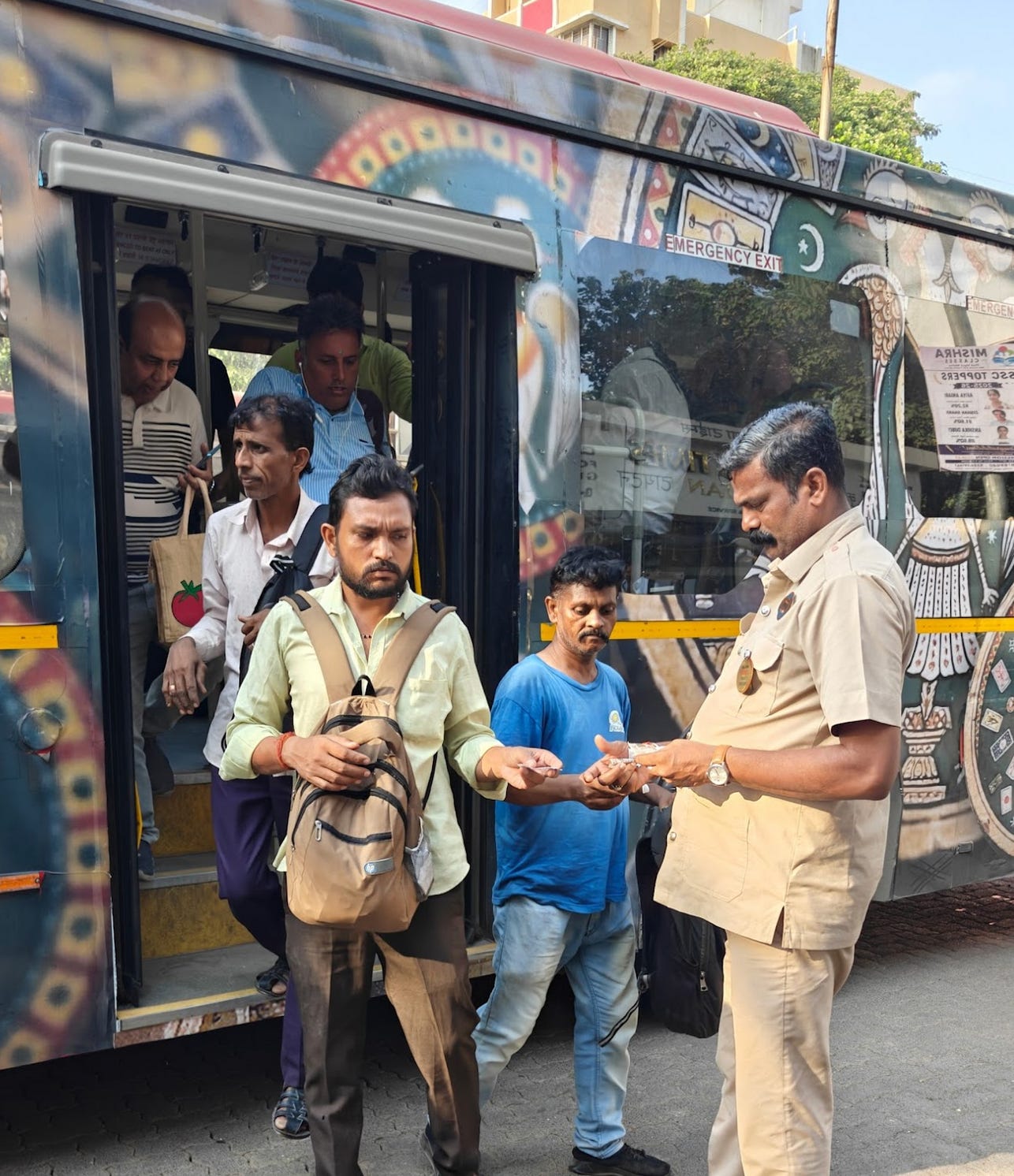
This isn’t to blame the conductors. They too move through the same fatigue. In fact, it is often the workers who put their bodies on the line in protest for BEST’s survival. Jagnarayan Gupta of the BEST Kamgar Sanghatana argues that the institution is being hollowed out using a familiar playbook once applied to the city’s textile mills.2
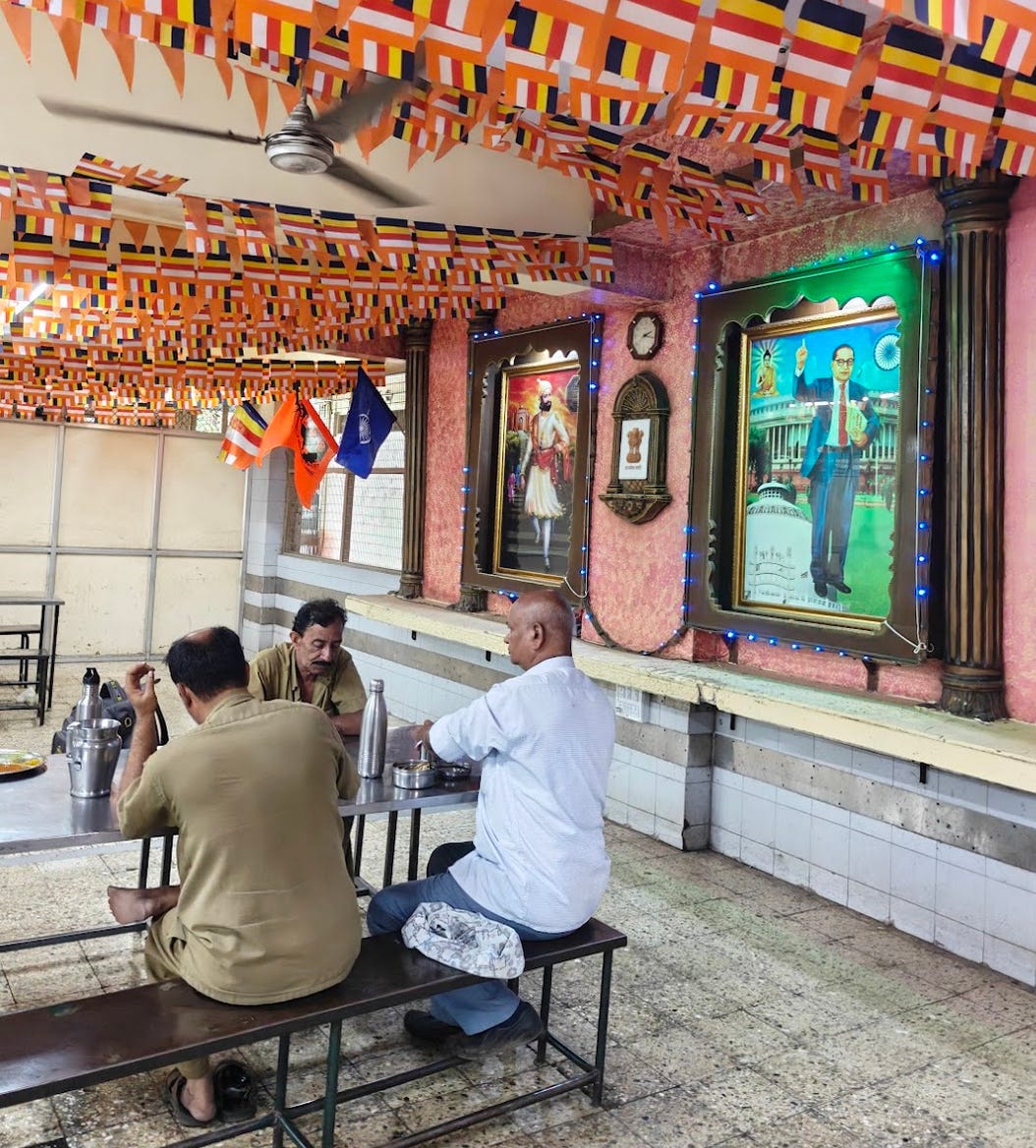
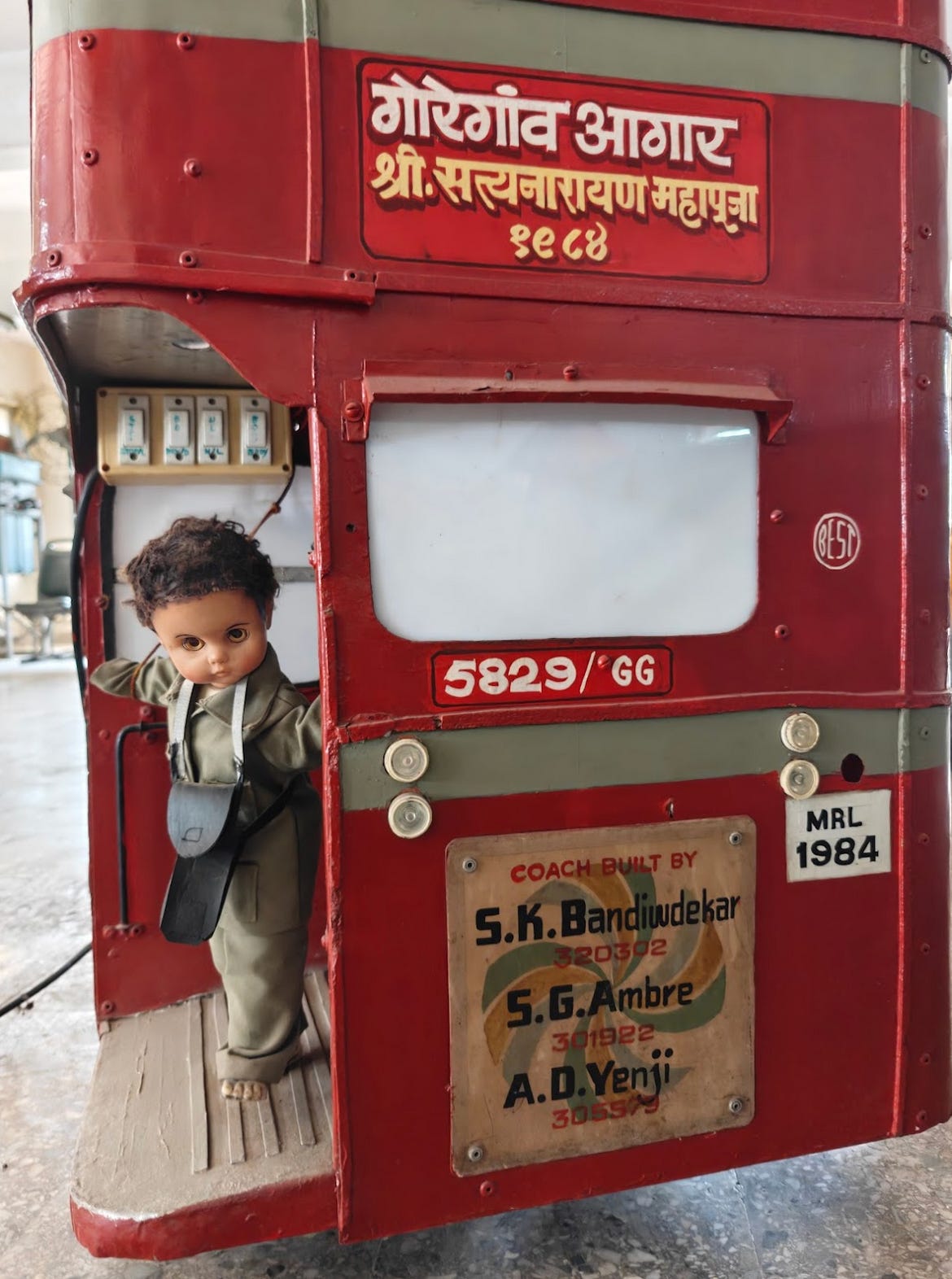
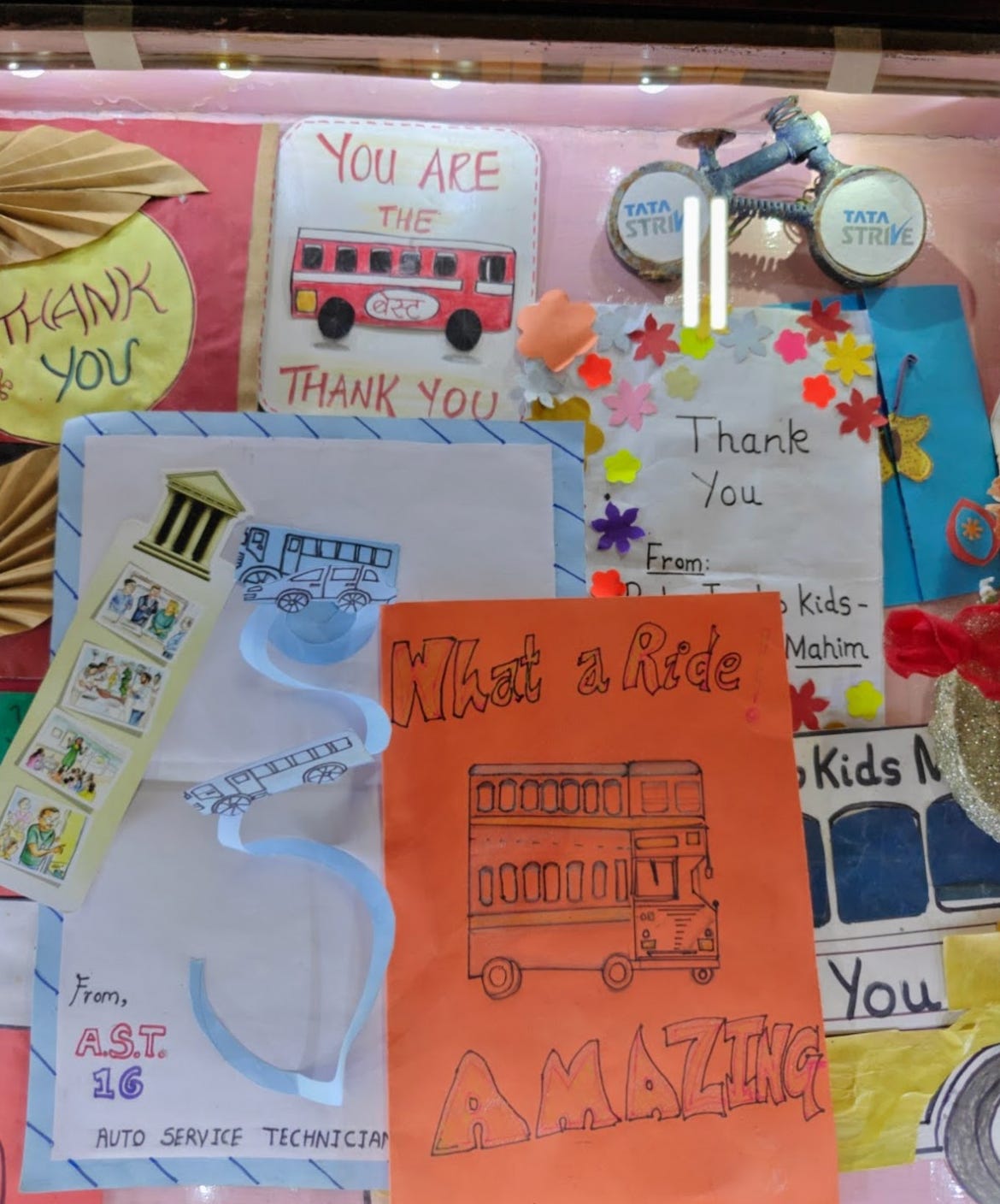
May BEST prevail, and may its blessings continue nourishing the next generation of walkers, broadening their claim to the city ever further.
There was a time when BEST travel was the best in the country. The last-mile connections from the local station to home, or the other way around, were excellent and on time.
I used to take a bus from Evershine Nagar in Malad West to Andheri station every morning, and I never missed a single train. It would leave at the same time every day, exactly as per the timetable. Not a minute late. Never more than a minute late. We would queue for it, forming a proper line. I have even skipped the train and taken the No. 4 from S.V. Road to travel south.
Later I used to take it from Navi Mumbai to all over Mumbai 0 The 500 series. Again, on time.
Coming from Bangalore, I was in awe of the professionalism of the drivers and conductors of BEST. It was the BEST.
I hope they don't destroy the local train system the way they did BEST.
Nicely written, hollowing out of public infrastructure is straight out of US playbook and is doomed to fail with India’s population density.