Colour Atop The Hill

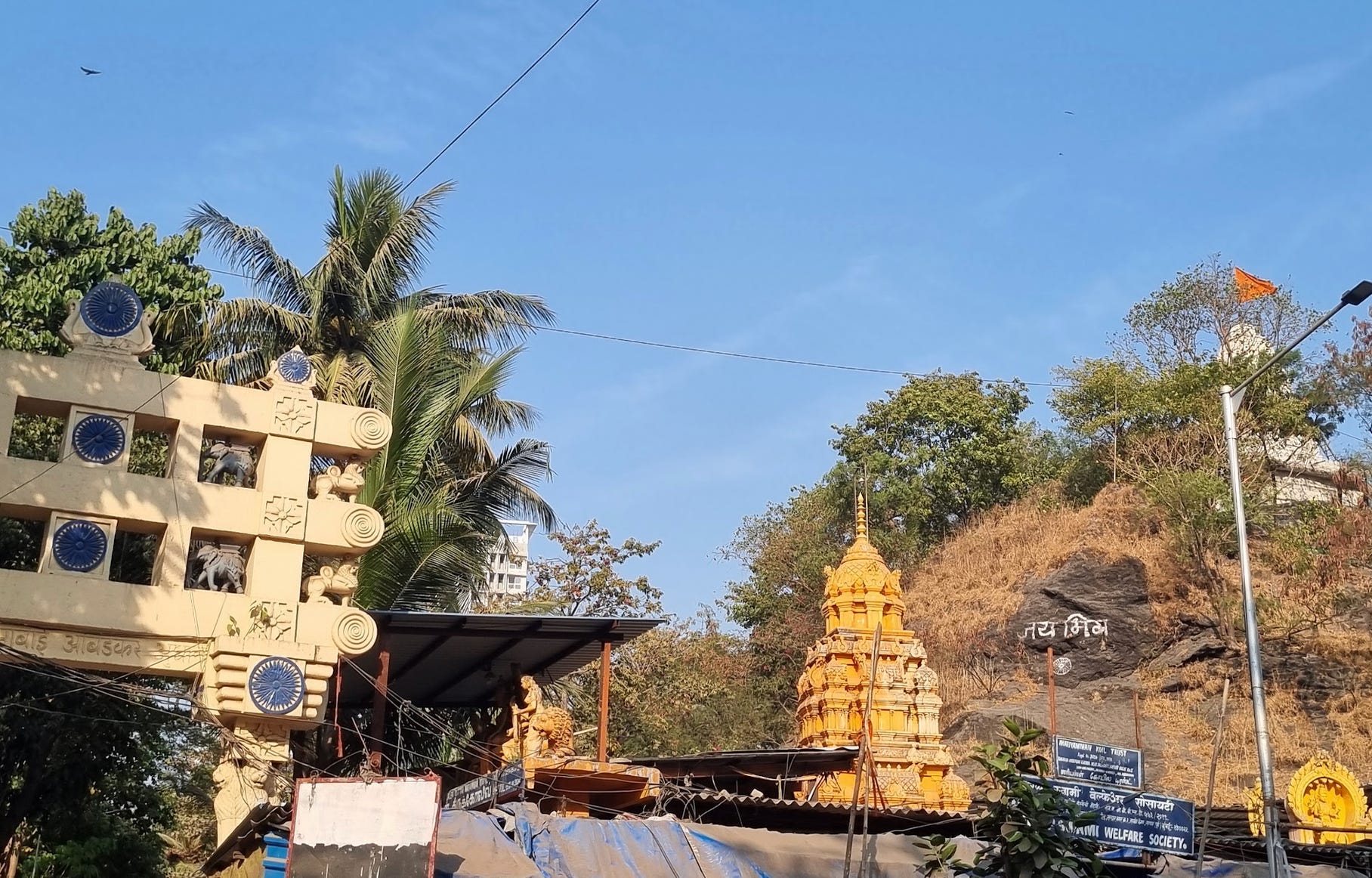
In Sion Koliwada, on the stretch between Sion and Guru Tegh Bahadur Nagar, there is a small hillock. Can you guess what sits on top?
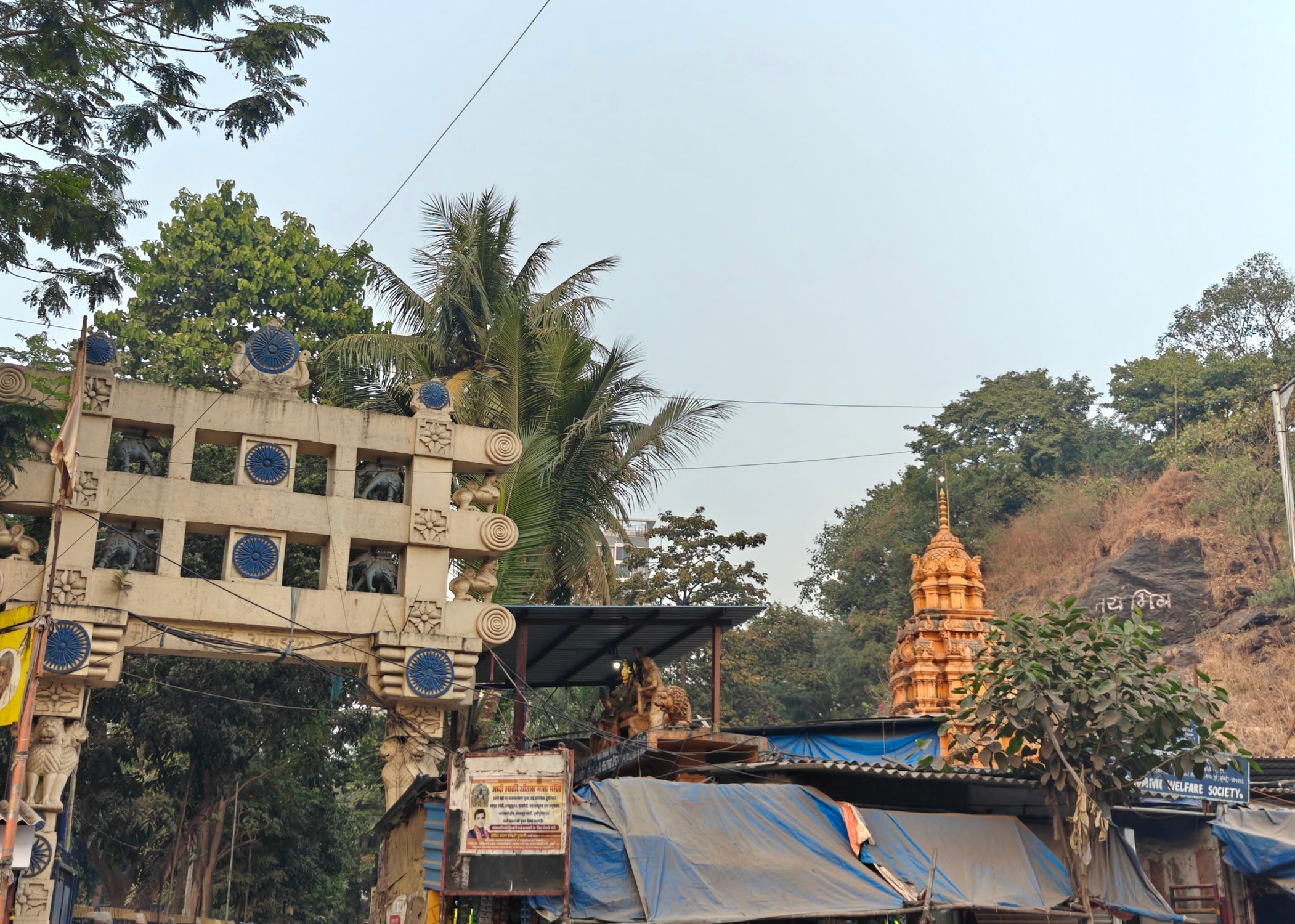
Along the northern and eastern rim of what was once Mahim island, the ridges of Sion and GTB Nagar served as natural fortification. The East India Company built a fort on one of them. Not this one—there is no fort on our hill.
Most of the terrain has since been flattened to make room for the people who kept arriving. The marshy foothills of GTB Nagar took in refugees from Punjab after 1947 and, in time, the name of the ninth Guru. Being close to Dharavi, Sion drew Tamils.
To understand this neighbourhood, one walk suffices: the road that approaches our foothill from the south.
Begin at the Aurora theatre in Matunga, once famous for its Tamil screenings, now shuttered, and go up Flank Road. On the right is the Shanmukhananda Sangeetha Sabha, where elite Tamils often show up to have their classical thirst slaked.
A little further and the world changes entirely. Gurudwaras on either side of the road, apartment towers rising behind them — this is prosperous GTB Nagar, housing the second and third generations of refugees who have done well for themselves. Past JK Bhasin Marg the prosperity thins. Houses stand decayed, waiting for a bulldozer to put them out of their misery. The food, at least, holds its first-generation form, with Sardar Paya House drawing a dedicated crowd.
One last transformation awaits. Tamil voices re-emerge, grinding in the sun, some selling fruit and flowers, and then, at the foothill, lies their temple — the Salem Kottai Mariamman Kovil.
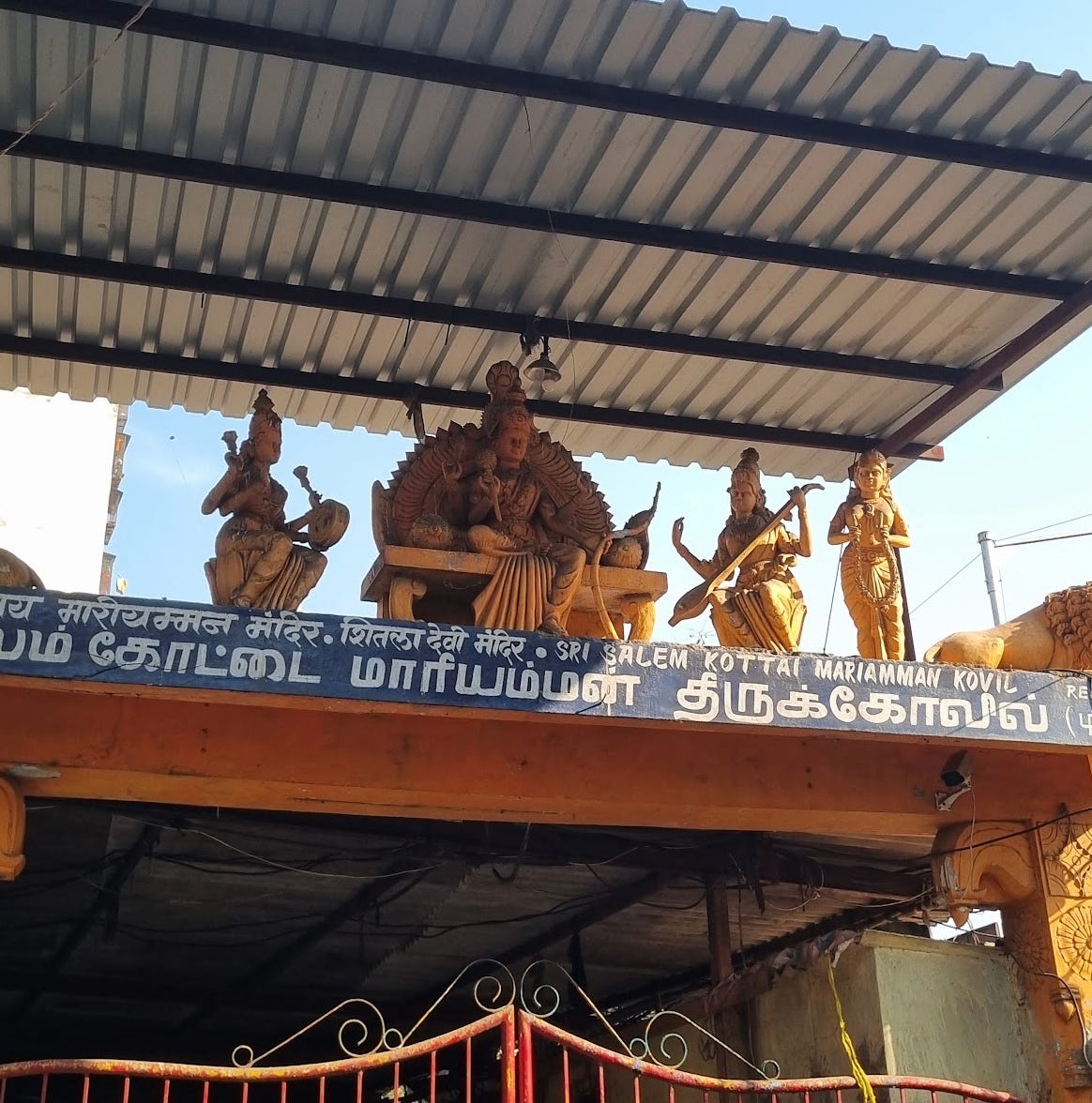
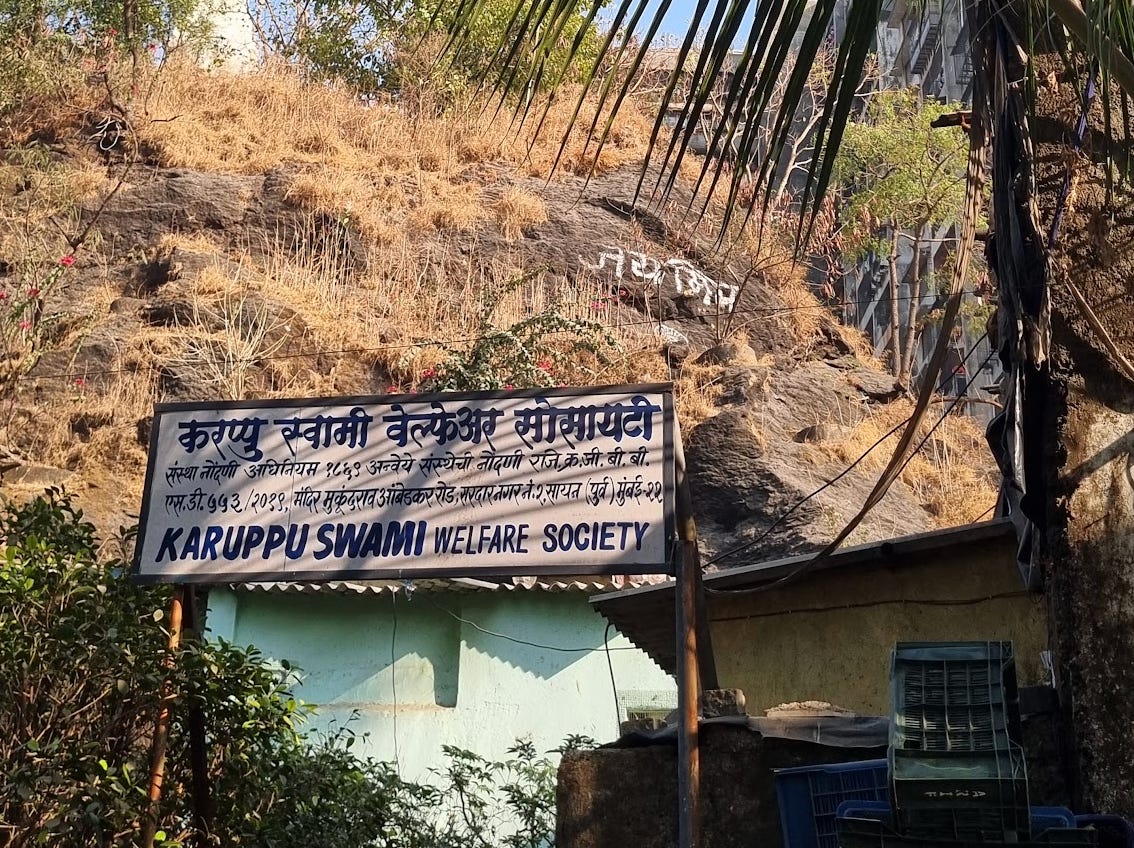
To its left is a lane with stairs cut into the slope. Beside the stairs, the Karuppu Swami Welfare Society, named for a Tamil folk deity.
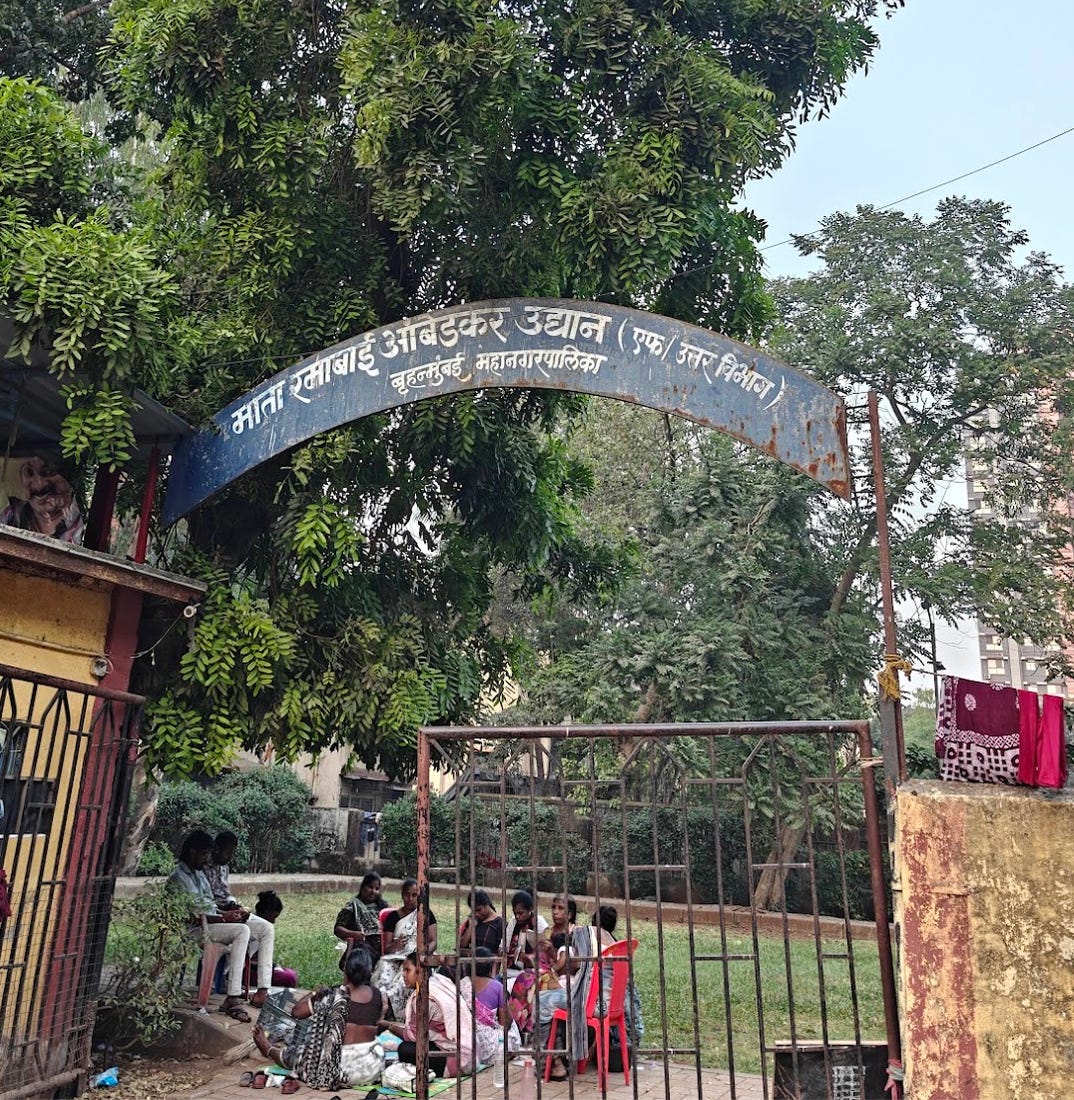
Facing it, the Mata Ramabai Ambedkar Udyan, and behind the udyan the sprawling quarters of Dadasaheb Gaikwad Nagar — named after the man who carried the Republican Party of India after Ambedkar's death.
Jai Bhim is painted across one of the larger rocks. The summit seems easy enough to guess, then. A temple for the Tamil Dalits, perhaps? Or a gurudwara, as is characteristic of Sion to throw in delightful cultural shocks.
I climbed the stairs with great anticipation and was left shocked, indeed. But not delightfully so.
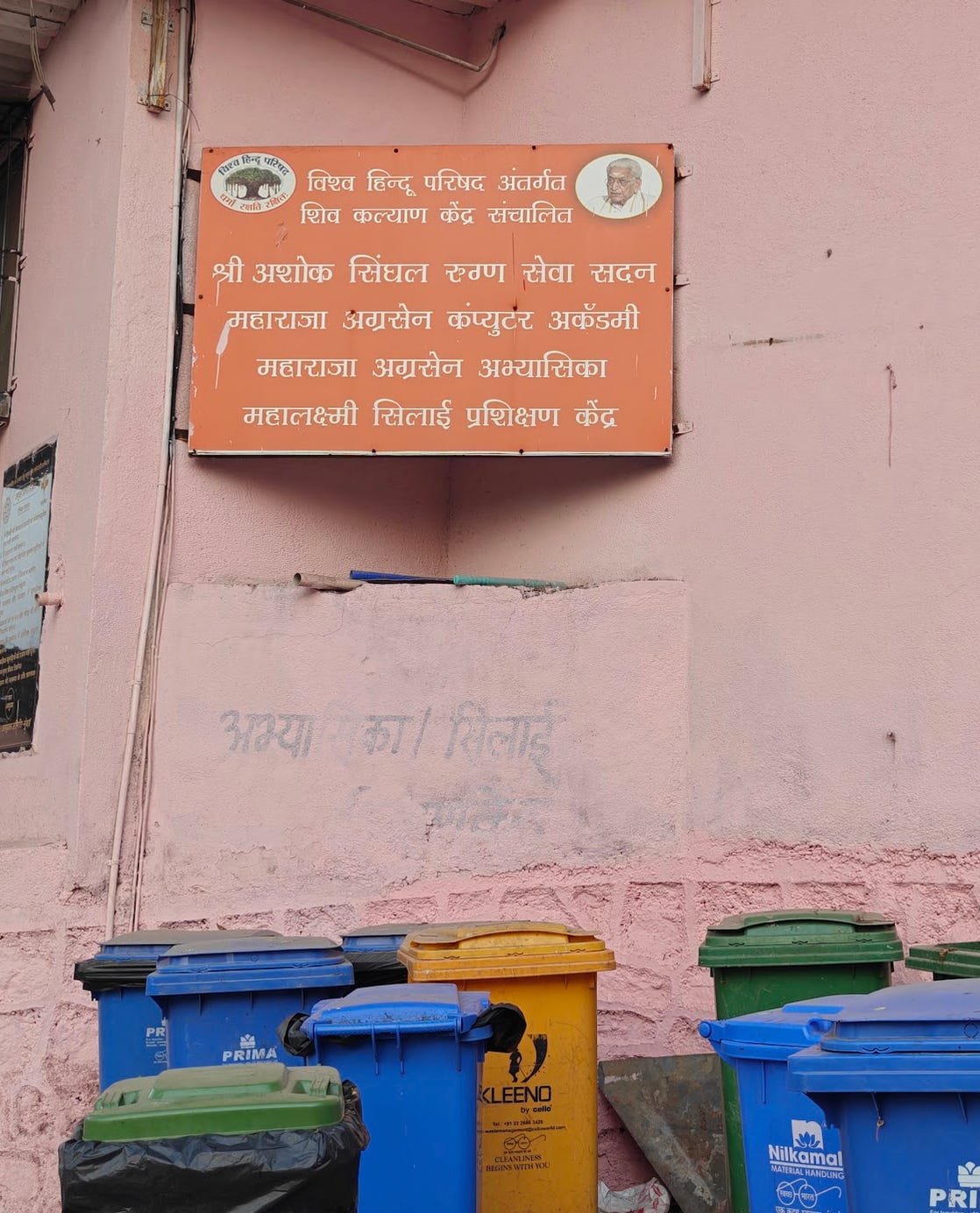
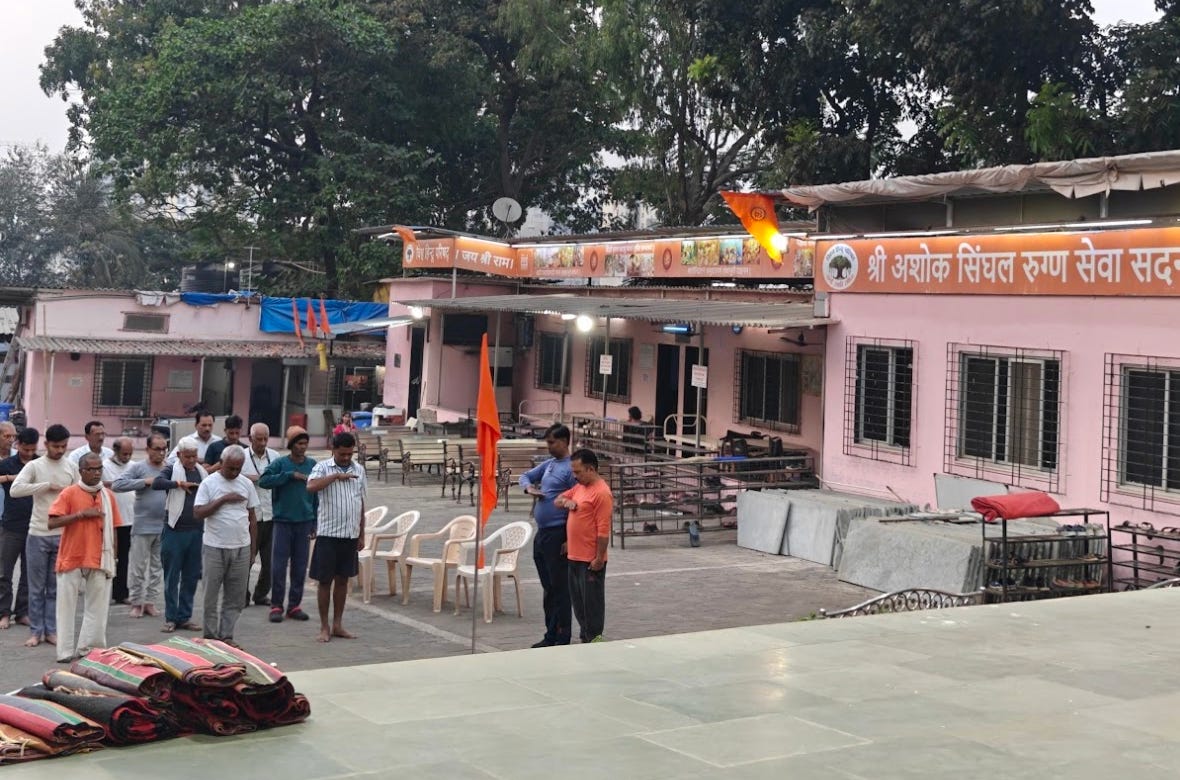
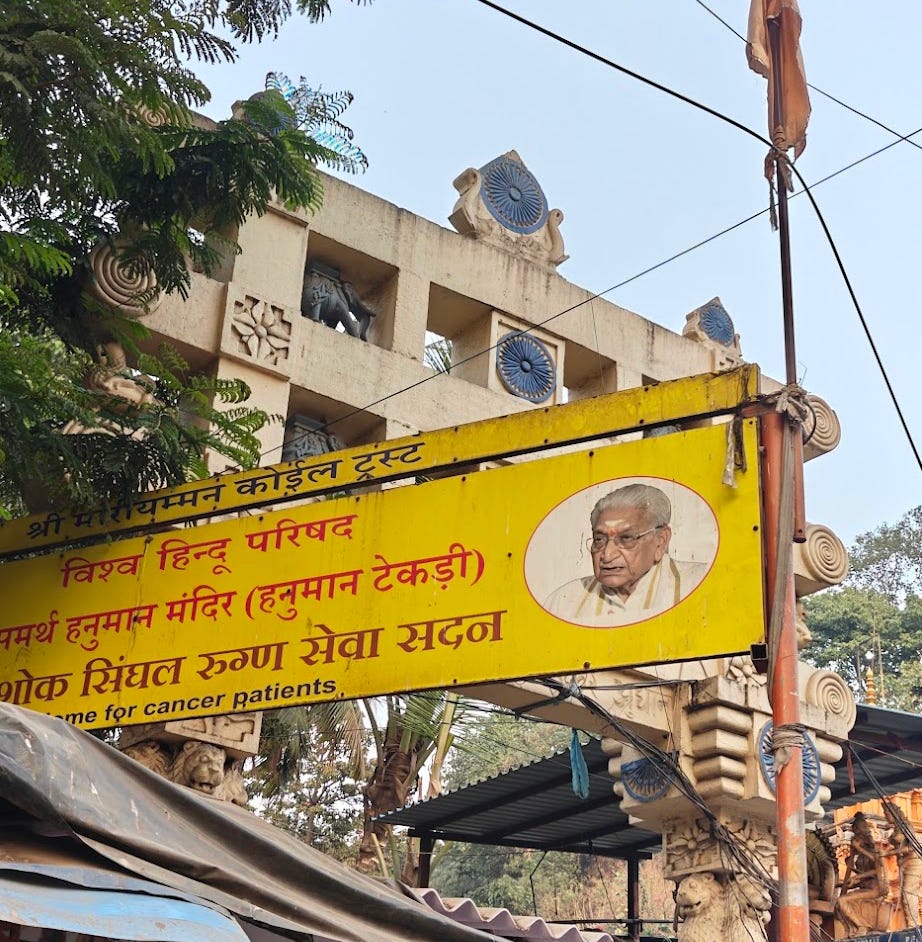
At the top sits a cluster of Vishwa Hindu Parishad services, dedicated to a former head of the organization: Ashok Singhal, a terrorist, and I use the word plainly.
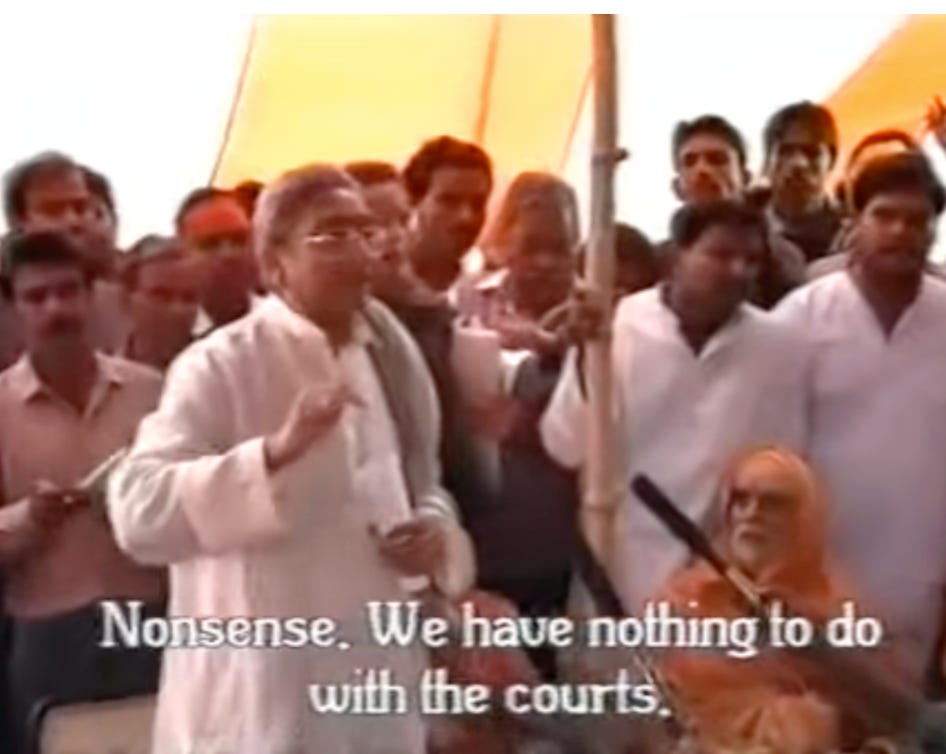
Singhal was one of the principal architects of the 1992 Babri Masjid demolition. In this news coverage1 (at 23:30), he can be seen delivering inflammatory speeches in the lead-up to the demolition, including a complete refusal to abide by the law—an attitude typical of his organization. In later years, he was also involved in the campaign surrounding the burning of Pastor Graham Staines and his two sons (aged ten and six) in Odisha, obliquely defending the killing in 1999, much to the dismay of the ruling BJP Government.
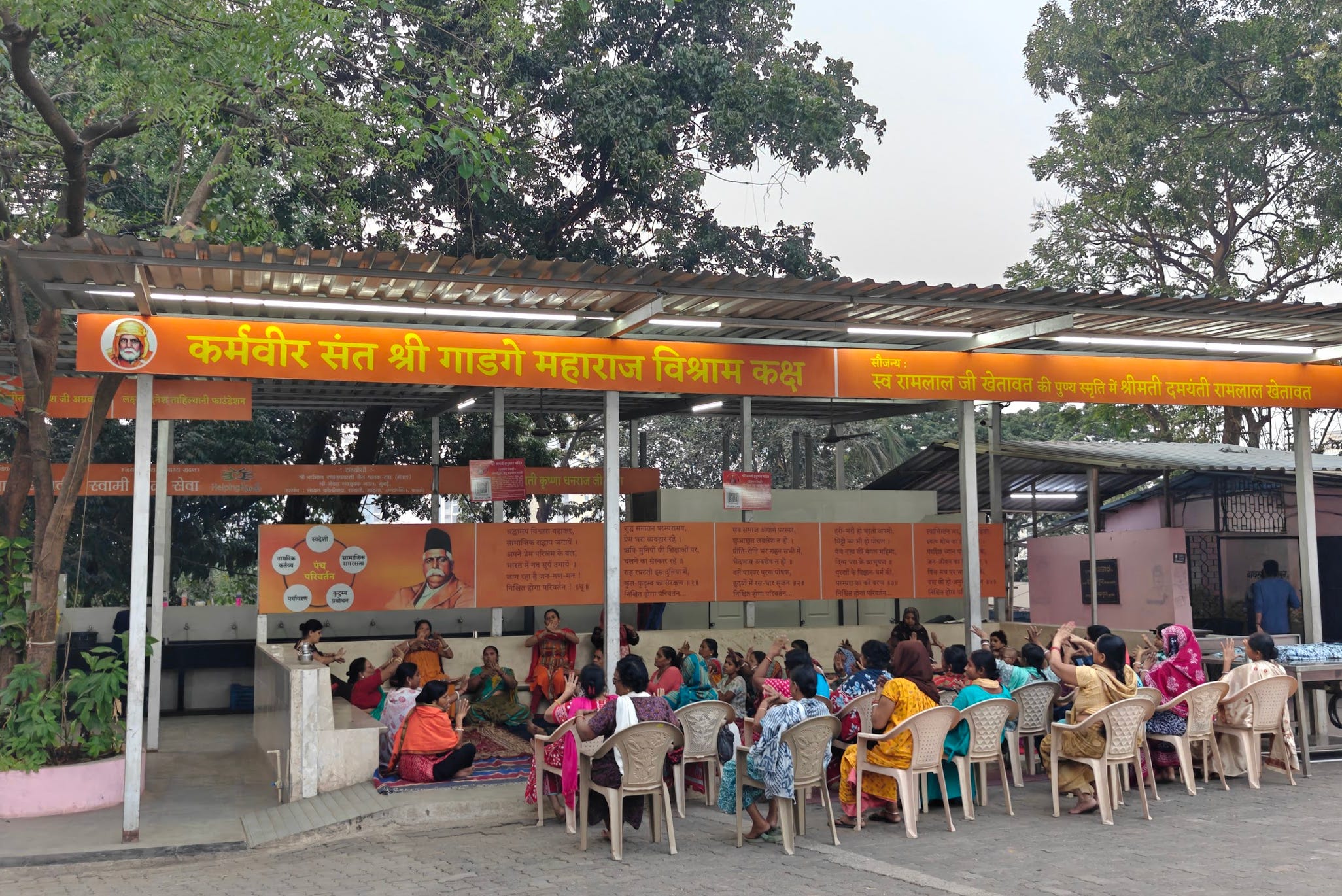
Dedication to him aside, the activities I saw up there felt harmless. I wondered whether I was being unfair to well-meaning work.
Sure, the women were being gently indoctrinated into ideas at odds with what our Constitution mandates. But they were also having a good time together: doing yoga, chanting, finding companionship. The men's activities, meanwhile, could be interpreted generously as fitness exercises, saffron salutations notwithstanding.
And the cows — how does one object to cows? Children get to feed them and spend time close to nature. Also, right beside the cowshed stood a free shelter for cancer patients seeking treatment at the Tata Memorial Hospital.
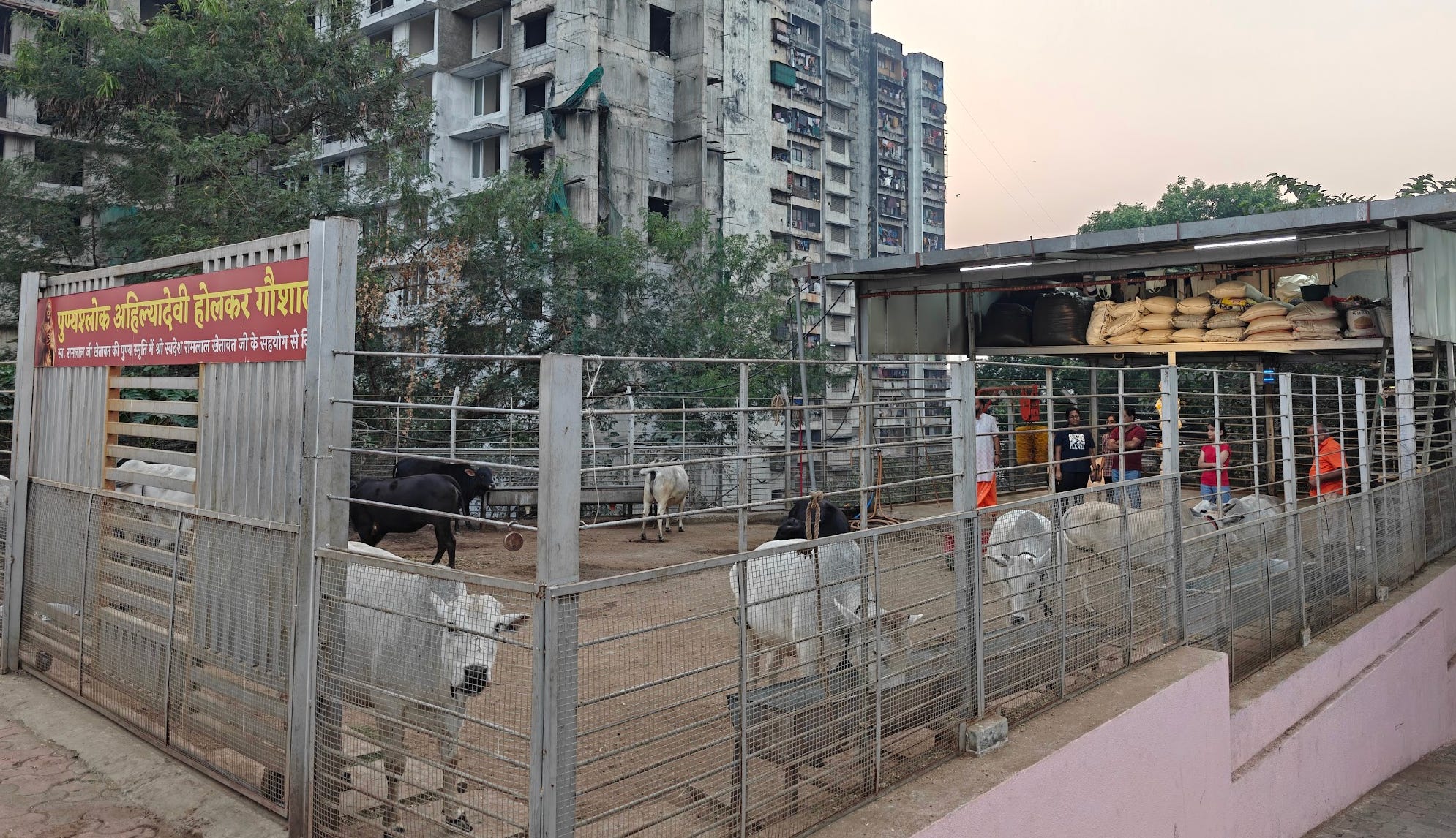
What I had stumbled upon was not some contradiction peculiar to a hill in Sion. Such clusters exist across the country. In his painstaking mapping of the RSS network, Felix Pal explains how these clusters win goodwill and, as he puts it, provide an "uncontroversial entry point for broad support." In addition, they attract large donations from abroad, much of it finding its way towards the parent organization’s nefarious ends.2
The discomfort I felt looking at the participants up there was not particularly novel, either.3 The conventional liberal resolution seems sensible: the people are not necessarily the primary problem; the system is. Here, that system is the RSS and its wider network. The task is to challenge that system and, in doing so, hope to transform minds without violence.
Consequently, questioning humane-looking services need not be guilt-laden, especially when their resources and leadership are bound up with sinister intent. It is no surprise that the state government has handed the hill's land parcel to the VHP for the next thirty years at a substantially concessional rate. Alternatives to these services cannot even obtain FCRA clearance from the Centre, let alone flourish.
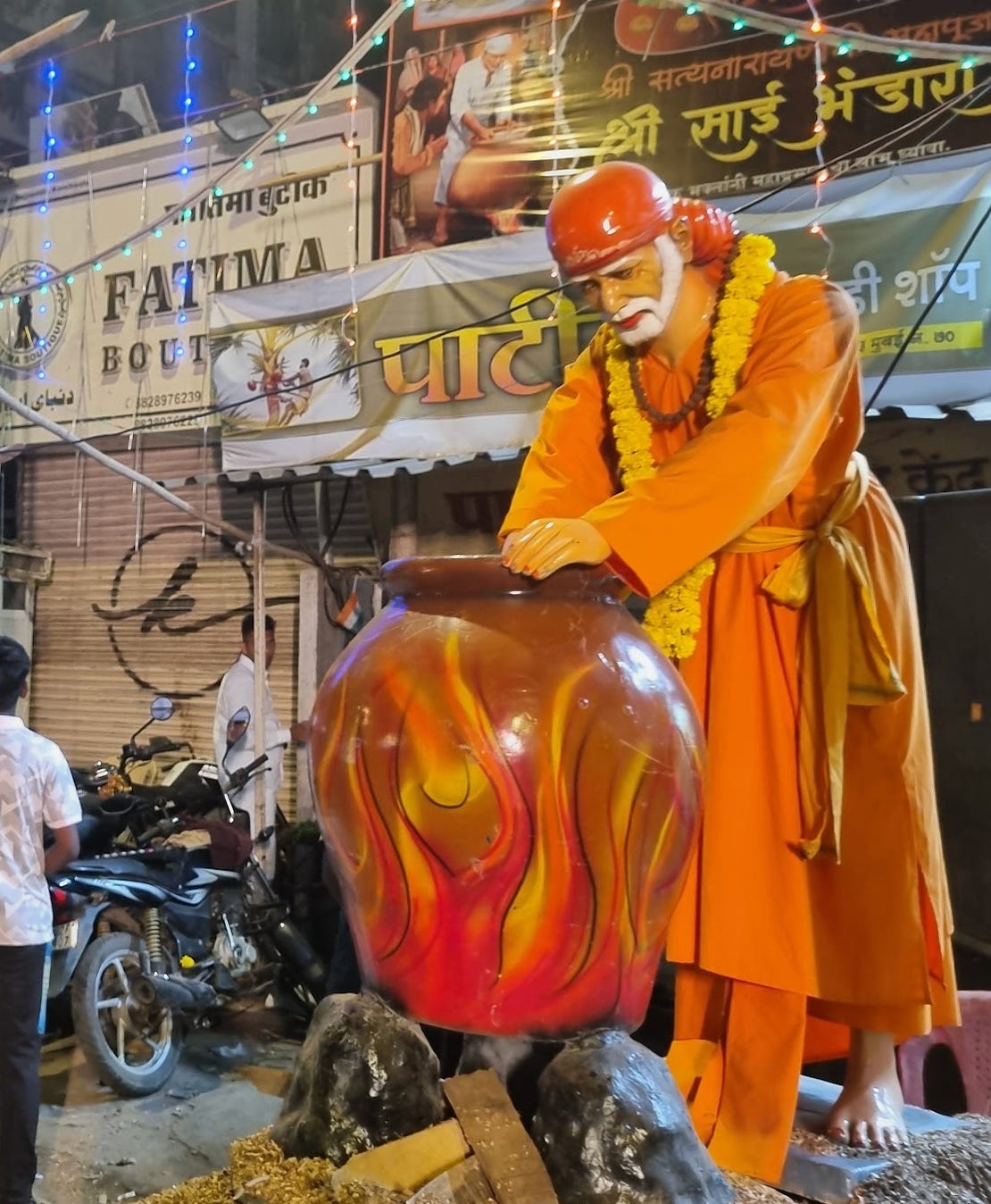
While this battleground for goodwill is all but taken, the colour bleeds until it blinds us all. So much so that even Sai Baba, a fakir who wore white all his life, is not spared.
How did we arrive here? As always, much of what is good and bad in this country traces back to the Indian National Congress. The party’s opportunism, absence at crucial junctures, and overall incompetence let the conservative strands in its own fabric thrive rather than be pulled apart.
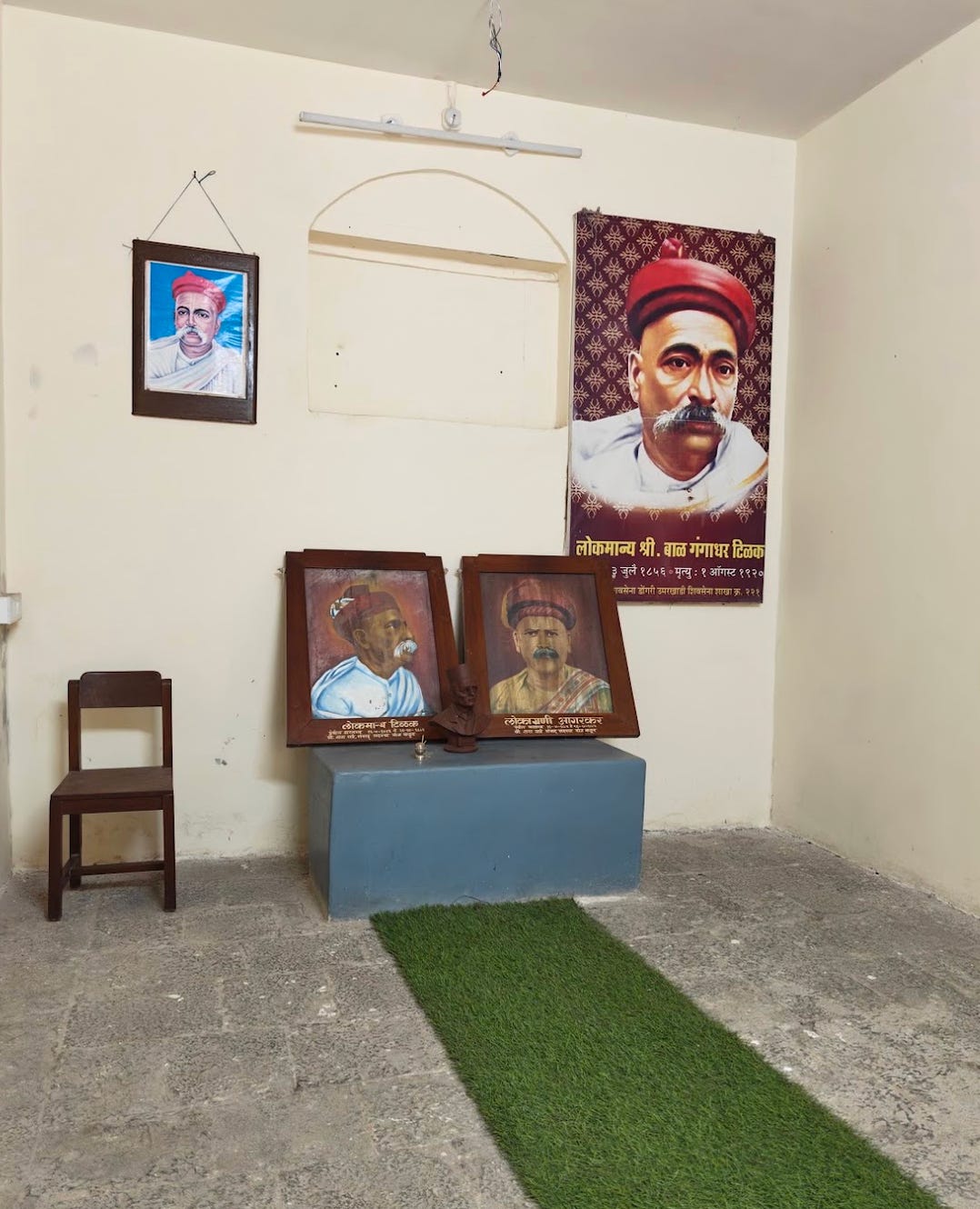
Take Bal Gangadhar Tilak—a Congressman and a fierce freedom fighter, but also conservative enough that you’d find him arguing against any progressive reform that came up.4 It must have been hard then, as it is now, to reinterpret a man of such mass appeal.
If the past is hard to reconcile with, the present is mired in illogical alliances. Congress partners with the Shiv Sena (UBT), which holds Savarkar—a fundamentalist whom the Tamil writer Jeyamohan terms a Hindu Wahhabi—in great esteem. The stance on him must therefore stay soft, lest the ally take offence.
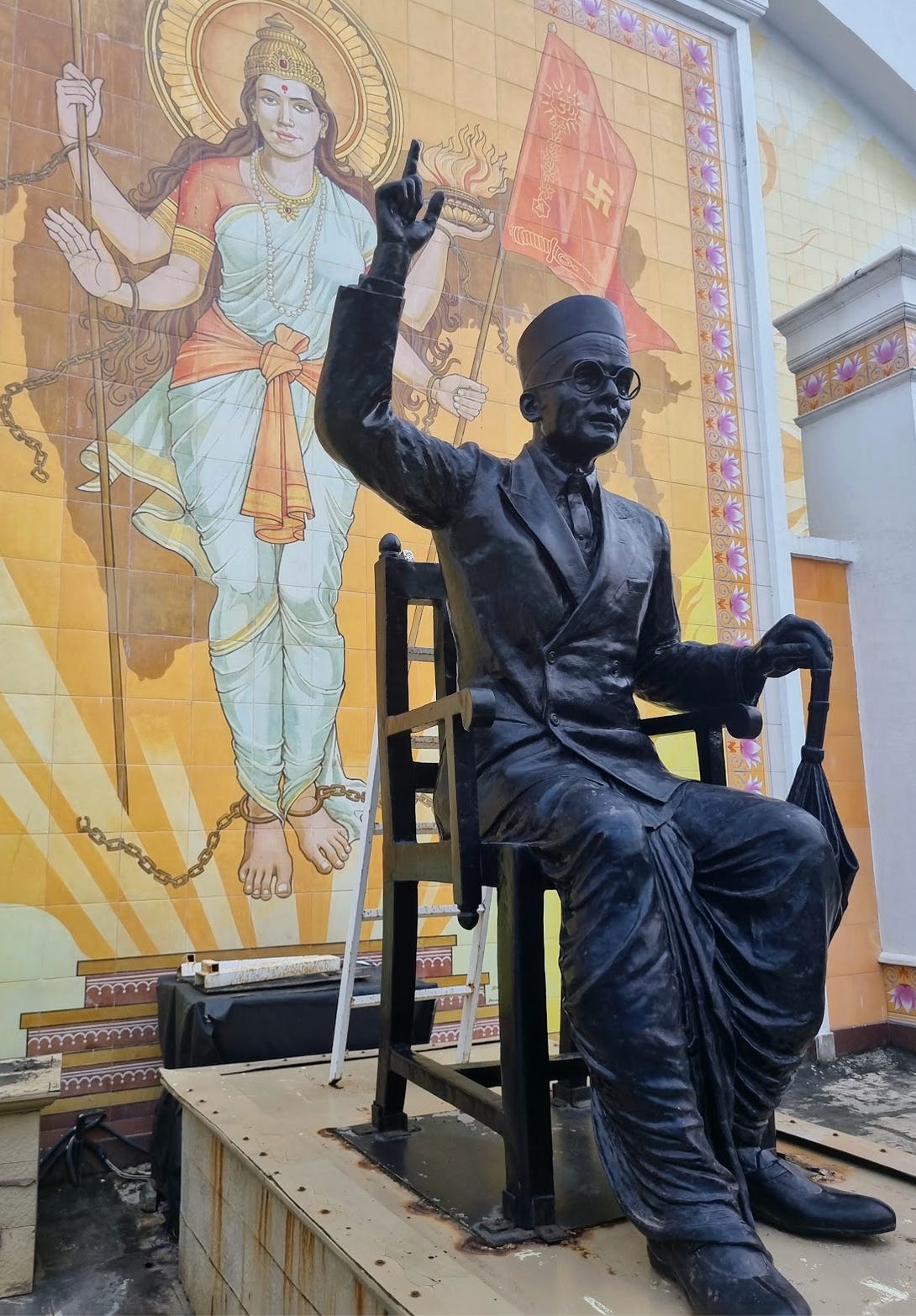
The institutions Congress built after 1947 produced propagandists of a more housetrained sort on the far right — Deendayal Upadhyaya, Atal Bihari Vajpayee. Not that they were free of mischief, but they carried some burden of conscience and public accountability. Piggybacking on that facade, the Ashok Singhals, the Vinay Katiyars, and the present crop of BJP leadership have tarnished those institutions spectacularly and with great ease. An ease that gives away how carelessly the foundations were laid.
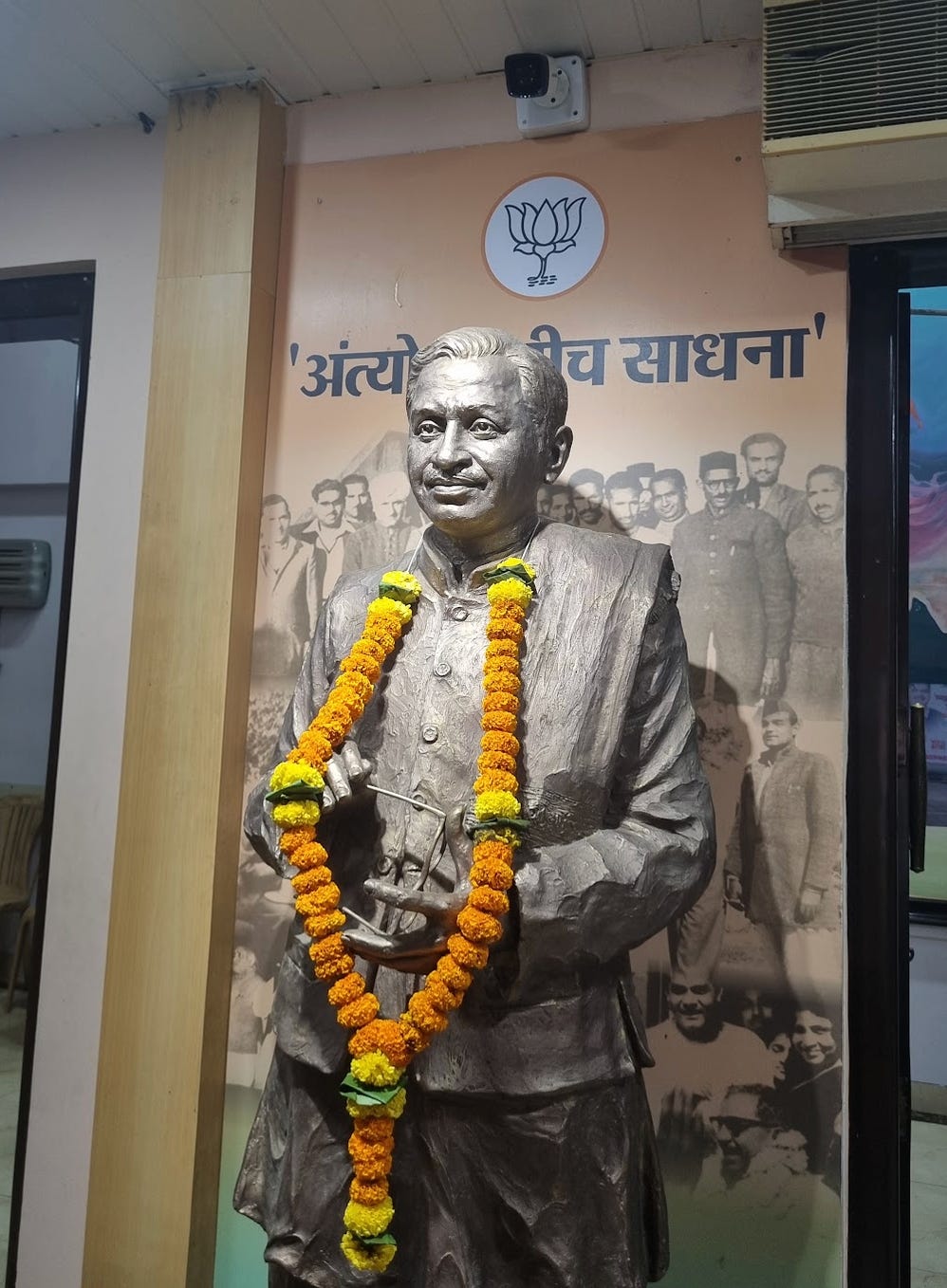
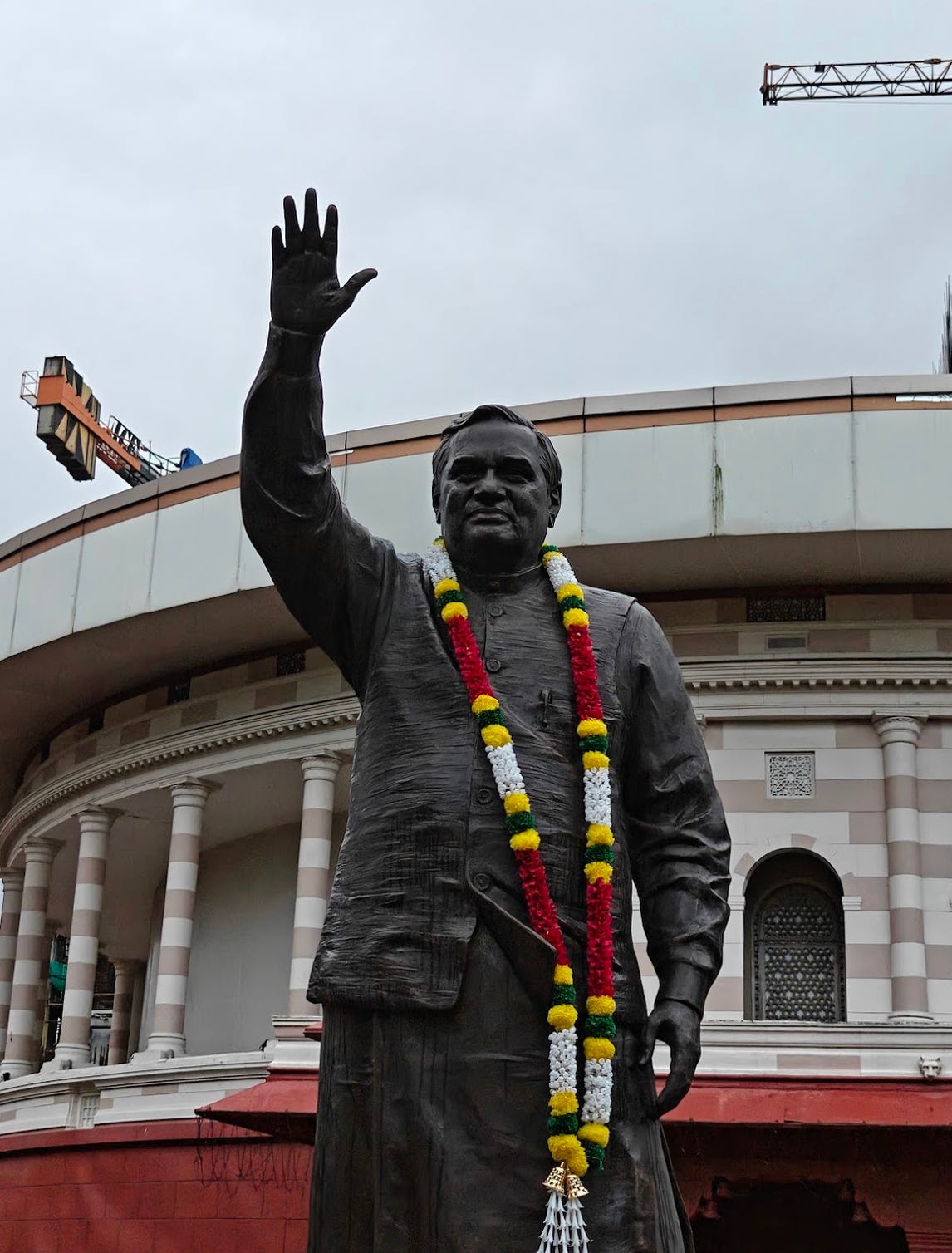
In due time, Singhal's poster will become a statue.
Say the arithmetic falls oddly and Congress returns. What then? A mere change of government fixes little. The people who staff the institutions switch allegiance for a season and set about arranging Congress’s fall. Consider a small, closed world like Delhi University — vice chancellors, faculty, librarians, drawn increasingly from one stable. You cannot purge them from the system entirely. The VCs, if fired from their posts, would continue to serve on interview panels as professors and exercise their discretion. Is Congress going to expand the education budget so far that there is room to hire enough constitutionally-minded people to outnumber them? I doubt it.
What is needed alongside electoral victory is a change in culture: books, films, art, arguments addressed to conscience. And a reformed Hinduism, turned away from the militant reading of itself towards something more peaceable.5
There is a tendency to look back to the city (and the country) that was supposedly more tolerant, with a greater affinity for pluralism. It was never quite so. Whatever we gained was wrung out of the oppressor elites by reformers who had to fight them for it. Since then, those same elites have appropriated words like diversity and tolerance in a self-congratulatory way, as if to remind everyone that it is by their largesse that the layperson is allowed to practice their culture.
Let it be known that it is the layperson who tolerates the oppressor’s excesses. Wearingly, agonizingly, helplessly, we tolerate colour atop our hills and heads. In all earnest, we appeal to your conscience: recognize the folly and put down the brush.
While Anand Patwardhan’s documentary Ram Ke Naam provides a comprehensive account of the movement from beginning to end, this coverage focuses on its aftermath, featuring rare interview clips and a young Seema Chishti reporting from the demolition site. I was particularly fascinated by the interviews with the hapless Congress leadership, including then Prime Minister Narasimha Rao, as well as socialist leaders such as George Fernandes, who conveniently aligned with the BJP for electoral gains. And, cowardly as ever, the BJP sent Sikandar Bakht as its spokesperson to the round tables.
This Sion cluster doesn’t feature in Pal’s map.
As for the broader research direction, I oscillate between two extremes. On the one hand, I appreciate having the vastness of their bureaucratic network laid bare—one that has penetrated the nooks and corners of every institution we have. On the other, I worry that we may be overstating the scale of the problem, and, in the process, driving well-meaning citizens away from action. We must remind ourselves that the RSS will ultimately fail, because its project runs so deeply against the ways of life woven into our nation’s many peoples.
Progressive voices in America, for instance, speak about the difficulty of living alongside those who support genocide in Gaza. Books have been written about liberals travelling to Republican strongholds, trying to understand how people could elect someone like Donald Trump. I have not read those books yet, nor followed those conversations closely enough to borrow their answers.
A list of causes and reforms Tilak opposed in Kesari: Huzurpaga Girls' School, Rukhmabai Raut's divorce case, Pandita Ramabai's practice of Christianity, the Age of Consent Bill.
I’ve recently been reading Tom Holland’s Dominion. A recurring motif in the book is the periodic Christian urge to remake culture through deep-rooted reform. Crusades, Inquisition, Reconquista, Luther’s Reformation, Czech Bohemianism, the French Revolution, the Bolshevik Revolution — what ties these movements together is the extraordinary degree of rationalised violence that accompanied them. In this light, Mahatma Gandhi’s non-violent approach to Hindu reform, albeit only partially successful, with many of its gains since having been reversed, offers a valuable example to build upon.
Interestingly, it is also the place of many old dargahs. What you notice about the hate organisations across Mumbai is real. They are trying to recreate the atmosphere of 1990s.