Arambagh

Of late, my Instagram feed has been punctuated with reels from the current season of Pakistan Idol. Notwithstanding Rahat Fateh Ali Khan’s awfully analytic expressions, the songs themselves are pleasant and artful, drawing me into the world of Lollywood music. While I find myself cheering for Tarab Nafees to win the competition, it was an early-round performance by Rawish Rubab that stood apart.
Rawish chose “Jis Din Se Piya”, sung by Malika-e-Tarannum Noor Jehan in the film Intezar. As the judges note, her trembling—though never underconfident—voice sharply suits the song, lamenting the emptiness a beloved leaves behind. When she reaches the highest notes, Fawad Khan can no longer contain his composure. Despite attempts to keep his eyebrows raised, his face gives way to a pensive wail, and by the end, he rises for a standing ovation alongside Zeb Bangash. “At this late hour,” he remarks, “this song has pierced me.”
The high notes feature the line “Aram nahi mere bagh mein, Main to kho gayi gham ke raag mein.” The voice then recedes and burns into the next one “Dil jalte jalte jal gaya, Pyaar ki thandi aag mein.” As anguishing as these lines are, my focus drifted tangentially towards the choice of site—a garden (bagh).
Around the same time, I was listening to another song, “Aaj Ke Naam” from Haider, sung by Rekha Bharadwaj as a rendition of Faiz’s wrenchingly anti-authoritarian poem Intisaab, which turns to a similar site in its line “Aaj ka gham ke hain zindagi ke bhare gulsitan se khafa.” A sorrow so deep that it is disdainful of the very garden (gulsitan) of life.
The emotive potential of this site is not incidental. In Islamic imagination, the blissful garden figures as an eschatological ideal. To find no peace (aram) in a garden (bagh) is to admit a pain that has reached its furthest limit, precisely because a garden is where peace is most fully promised. It is fitting that some of the most carefully tended gardens are built around tombs of Muslim aristocracy, reflecting a symbolic paradise for the departed.12
More modestly, their everyday presence closer to home, in the form of public parks, ought to register as a form of gentle succour. What follows is a walk through my own pleasurable experiences in public parks. I hope that at least some of these moments resonate with the paradisiacal promise.
Passing Encounters
My earliest memory of a public park is Sundarayya Park in Hyderabad. I remember drifting away from a crowded play area toward greener patches, throwing a discus instead. Chasing discus, I dove onto the grass and felt its irritating poke, deceived by its pretense as a soft cushion.
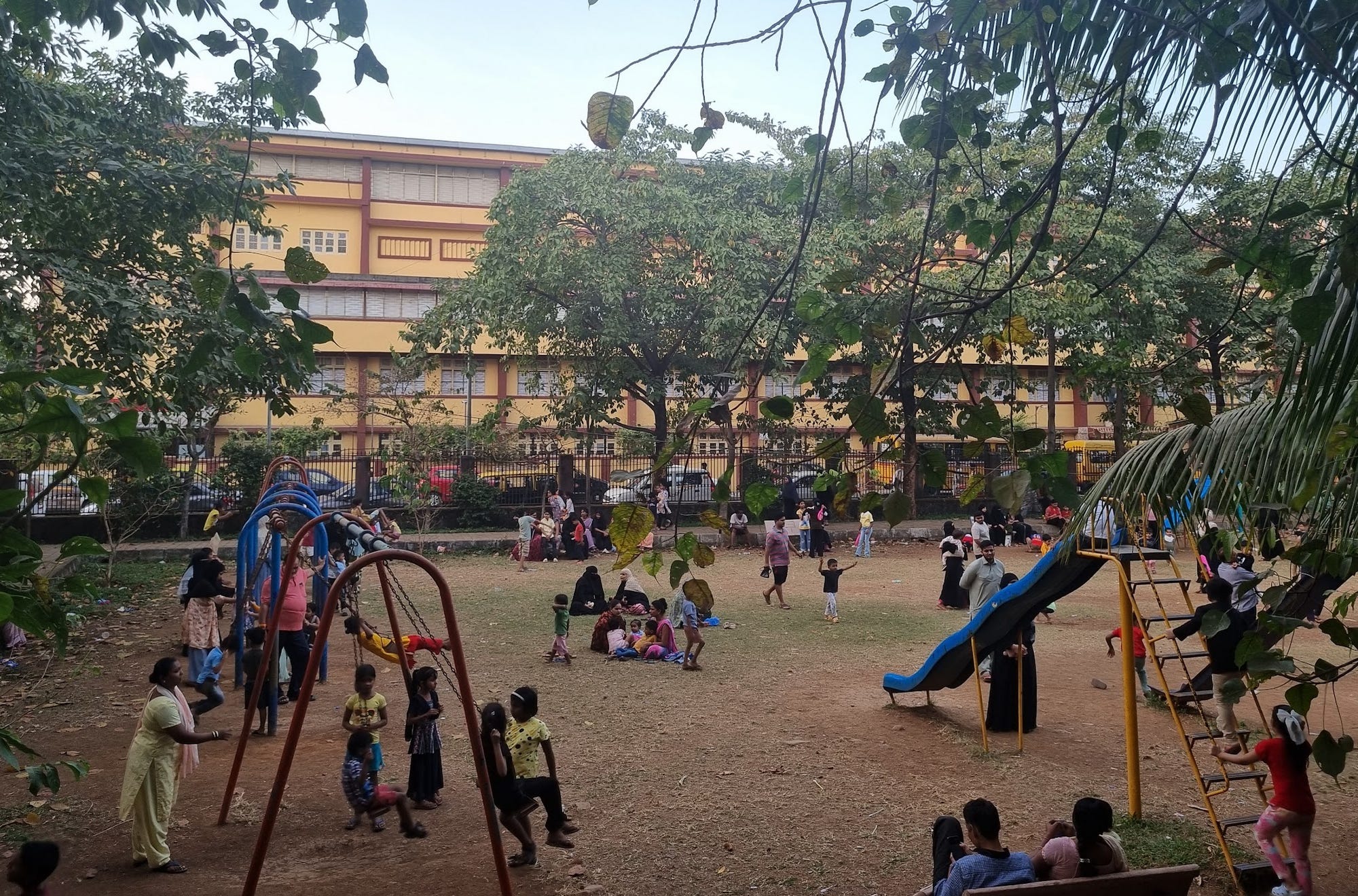
As years passed, I grew accustomed to dusty playgrounds for cricket and football. Parks featured briefly, say when loitering with friends and stopping by an empty play area to latch onto a silly merry-go-round. A mild transgression, plenty of laughs.
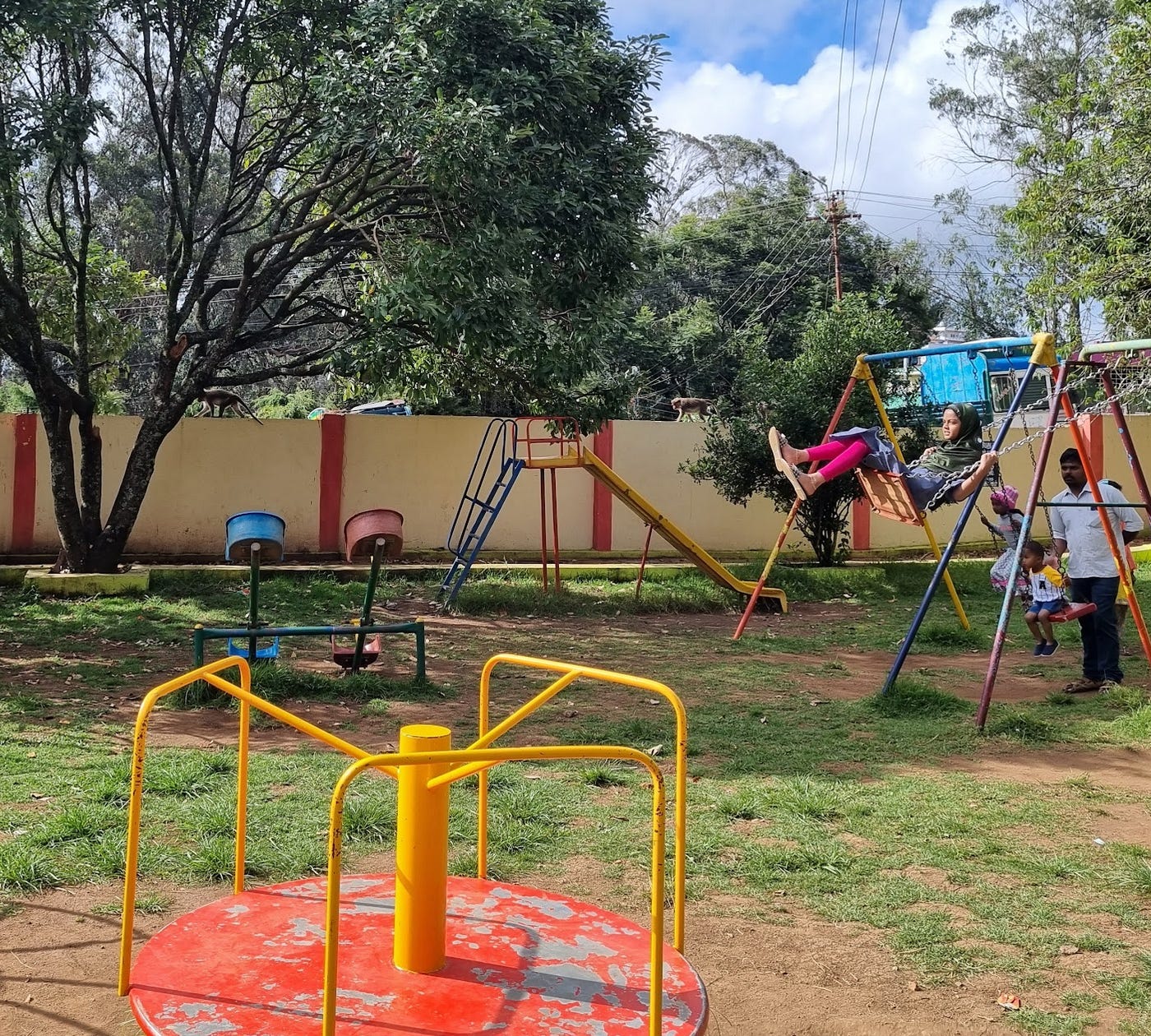
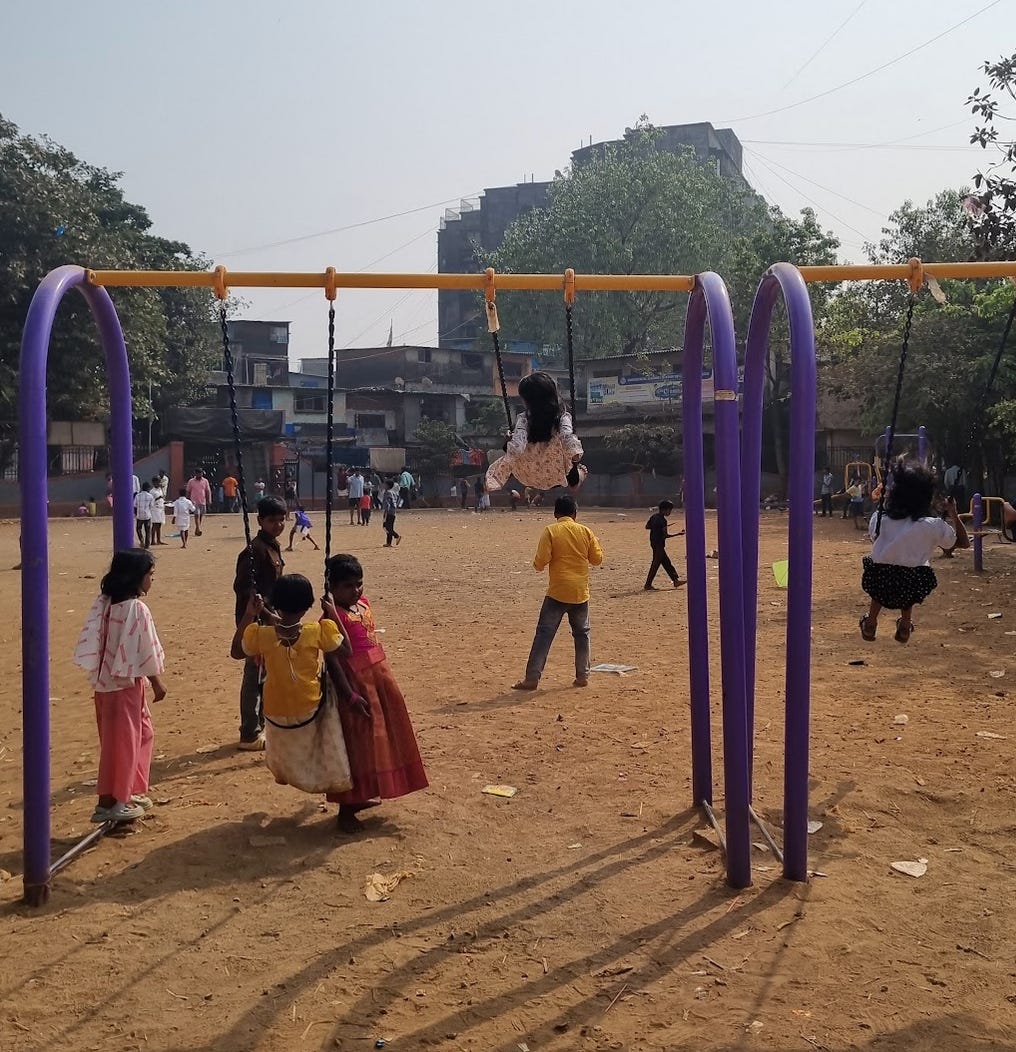
A few years later, parks returned differently as I took up babysitting duties for my niece during summer breaks. I watched her soar higher on the swing, just shy of completing a full arc. She would immediately catch any subtle dose of friction I injected and command me to push harder. Far from being silly, play areas demanded their own bravery.
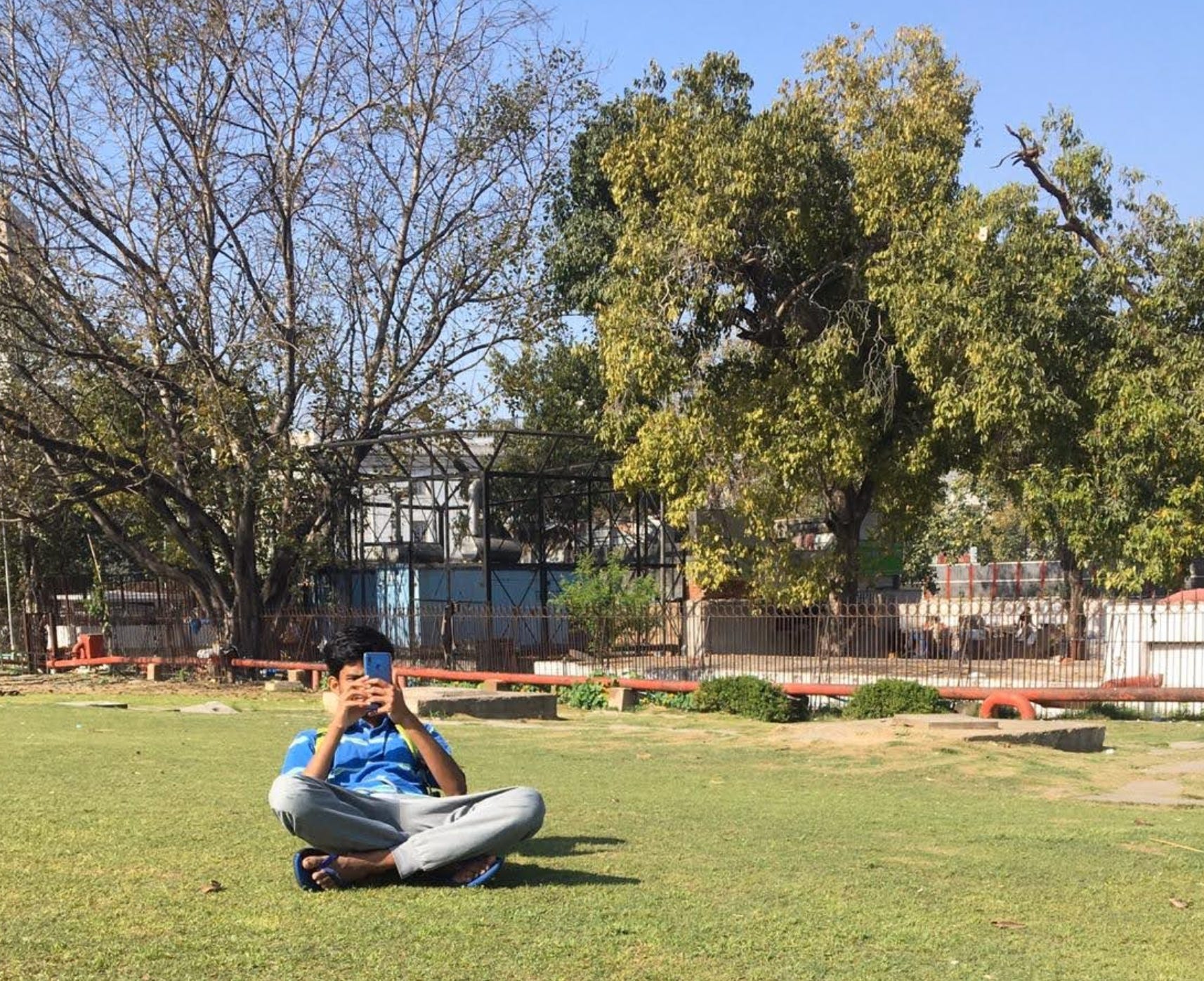
Parks soon faded from sight, as other concerns took precedence. Travelling home from college meant stopping in Delhi, and occasionally the garden atop Rajiv Chowk Metro station offered a place to rest between journeys. I’d soak in the sun, but the appreciation was ephemeral.
It was only toward the end of lockdown that I reconsidered parks more seriously. By then, I had developed a growing resentment for closed spaces—houses, malls, even films that locked me to screens. Gradually, it became a guiding principle to seek open spaces for leisure as much as possible, if not always. When I met a friend for the first time post-lockdown, I suggested a GHMC park instead of a more conventional café. The pleasantness of that meeting shifted something.
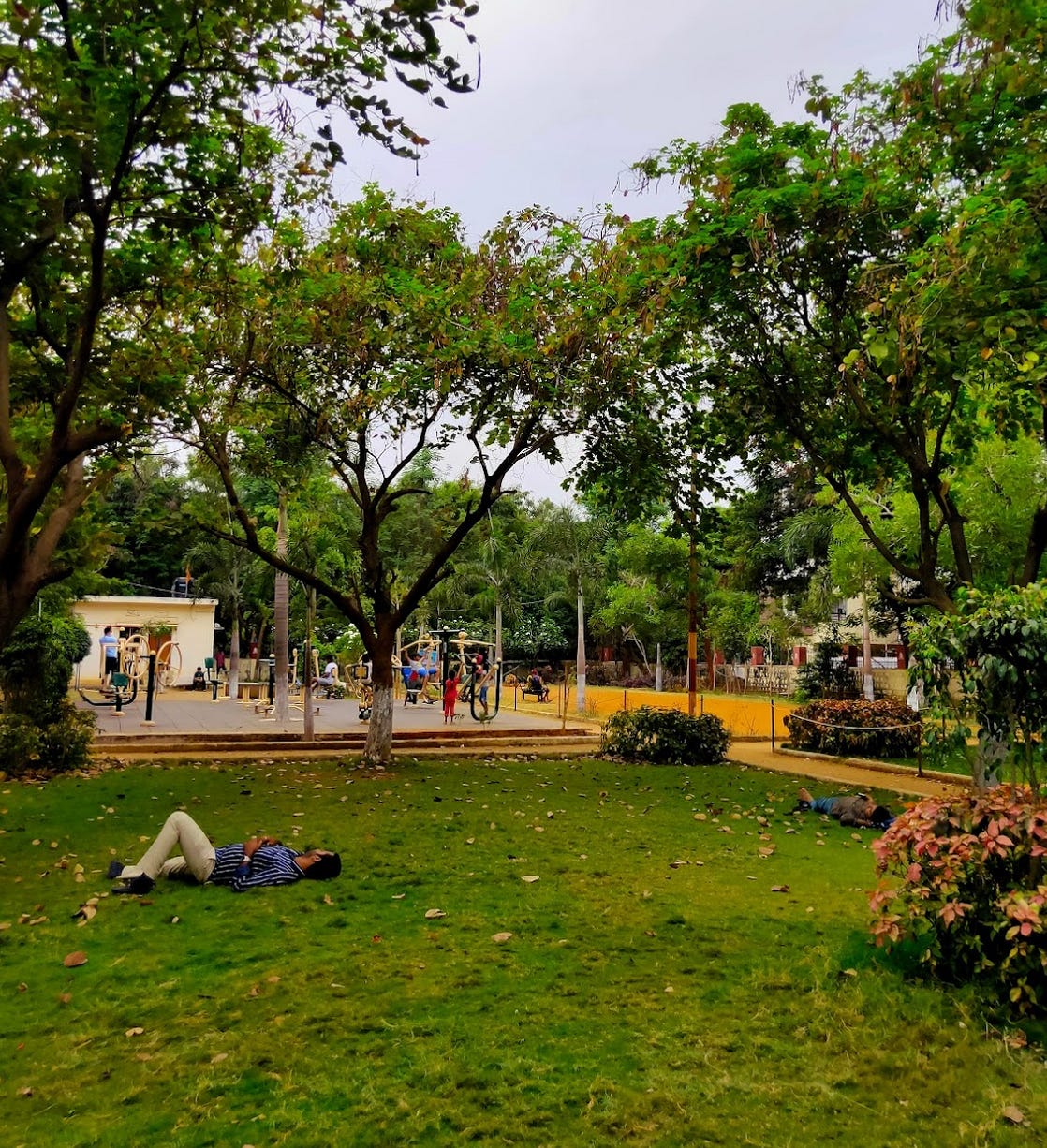
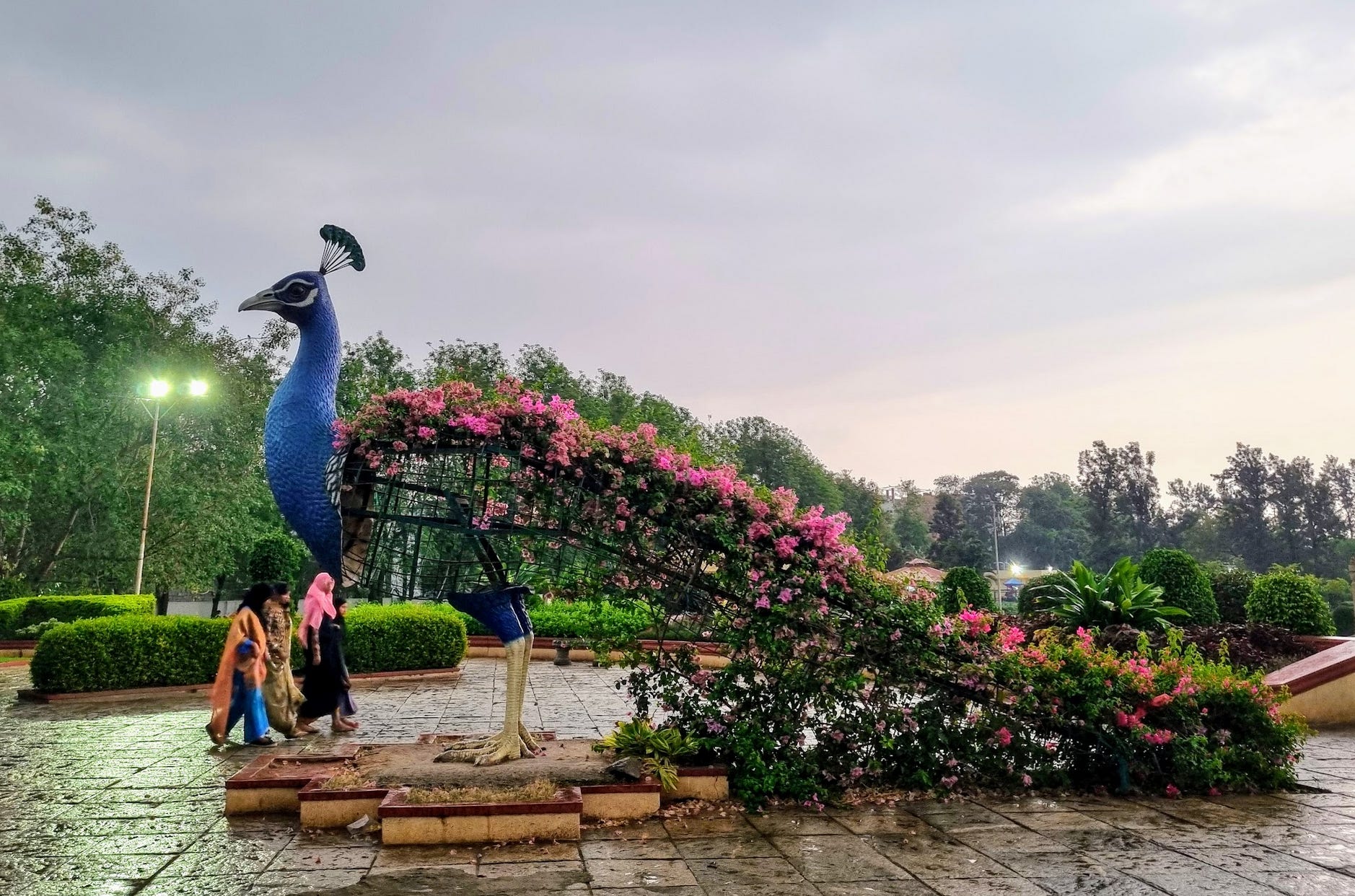
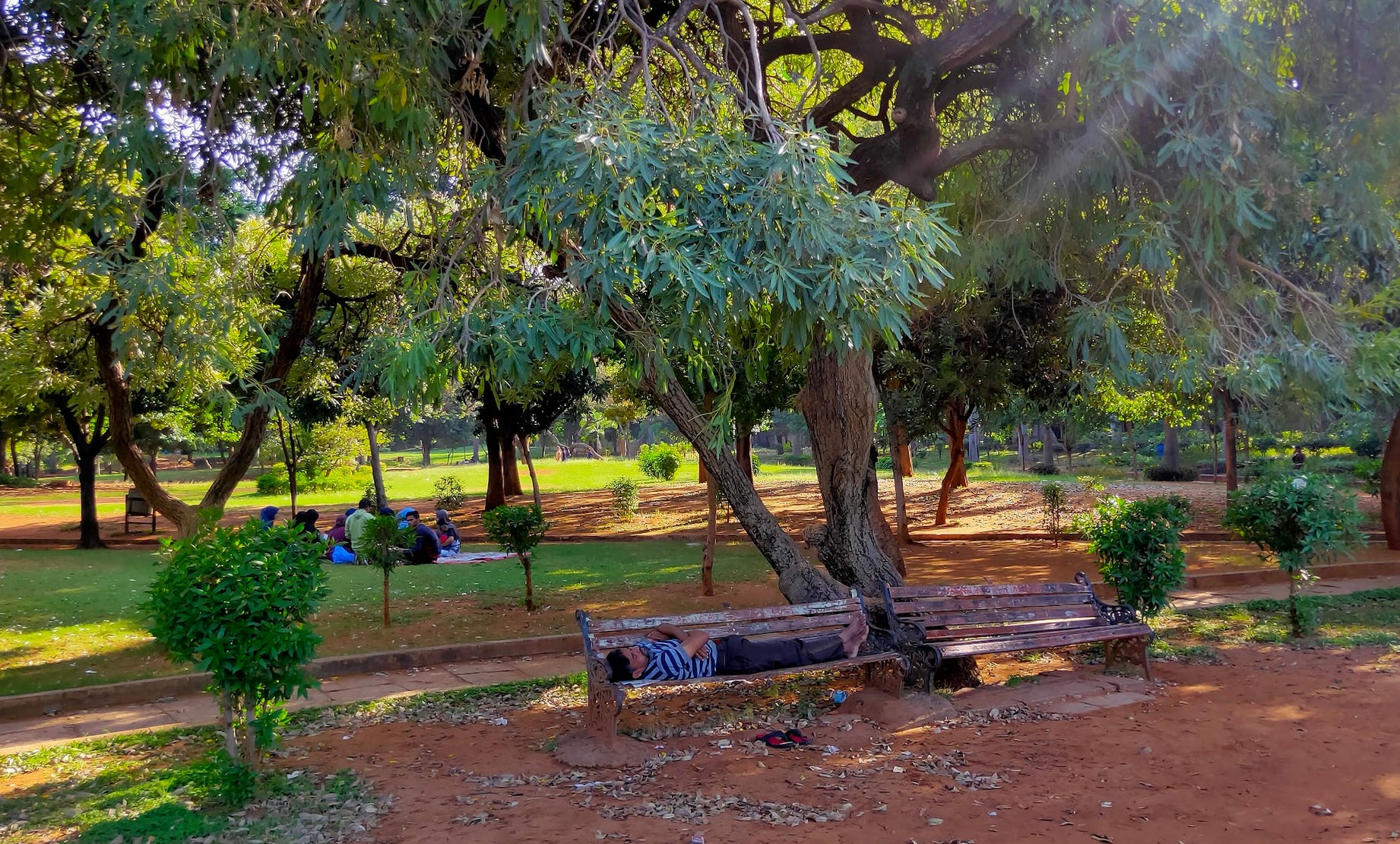
From then on, parks grew more noticeable as I moved through the city, presenting themselves as ready substitutes for everyday inconveniences. Irritated by mosquitoes biting you at Lamakaan? Head to the nearest park marked on Google Maps. Want to explore a new area but unsure where to begin or pause? Again, find a green patch—Priyadarshini Park for Saroor Nagar, Chacha Nehru Park for Masab Tank.3
Immersion
Since moving to Mumbai, my attentiveness to parks has only sharpened, aided by an expanded freedom of movement and time. One such place is the Sion Fort and the adjoining Nehru Udyan.
I visit this park every time I watch a film at Moviemax (Roopam Theatre), my preferred venue for Tamizh cinema, partly because of the surrounding neighbourhood and the vocal audience it draws. After the screening, often following a reflective idli sambar at Central Peninsula, I walk to the udyan. At other times, I come here without occasion or itinerary. A share-auto to Kurla station, a single stop to Sion, and a short walk through an underpass animated by the cooing of kids, brings me to its entrance.
These vignettes, in an unavoidable inventory format, trace an experiential reading of Sion Fort.4
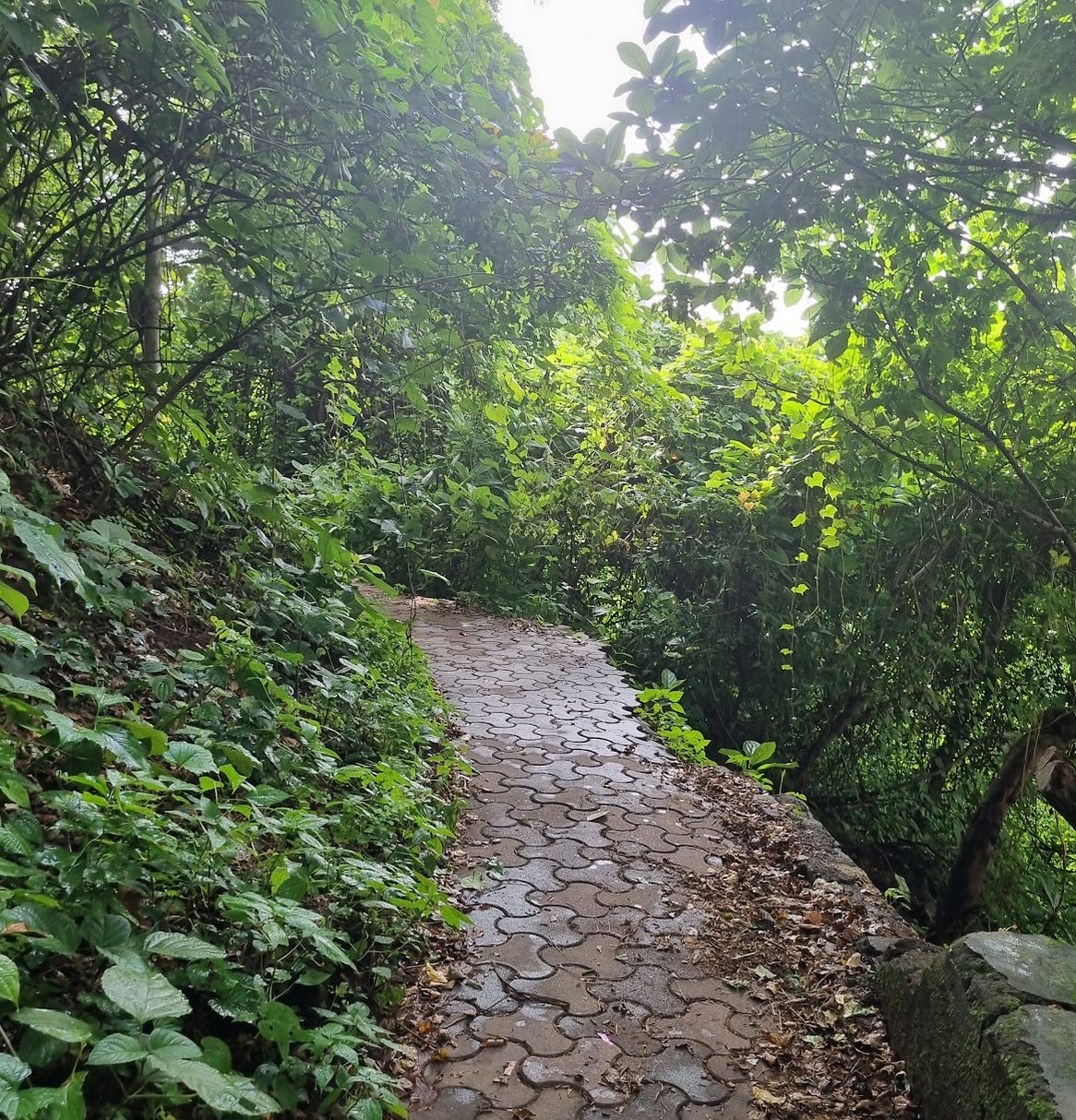
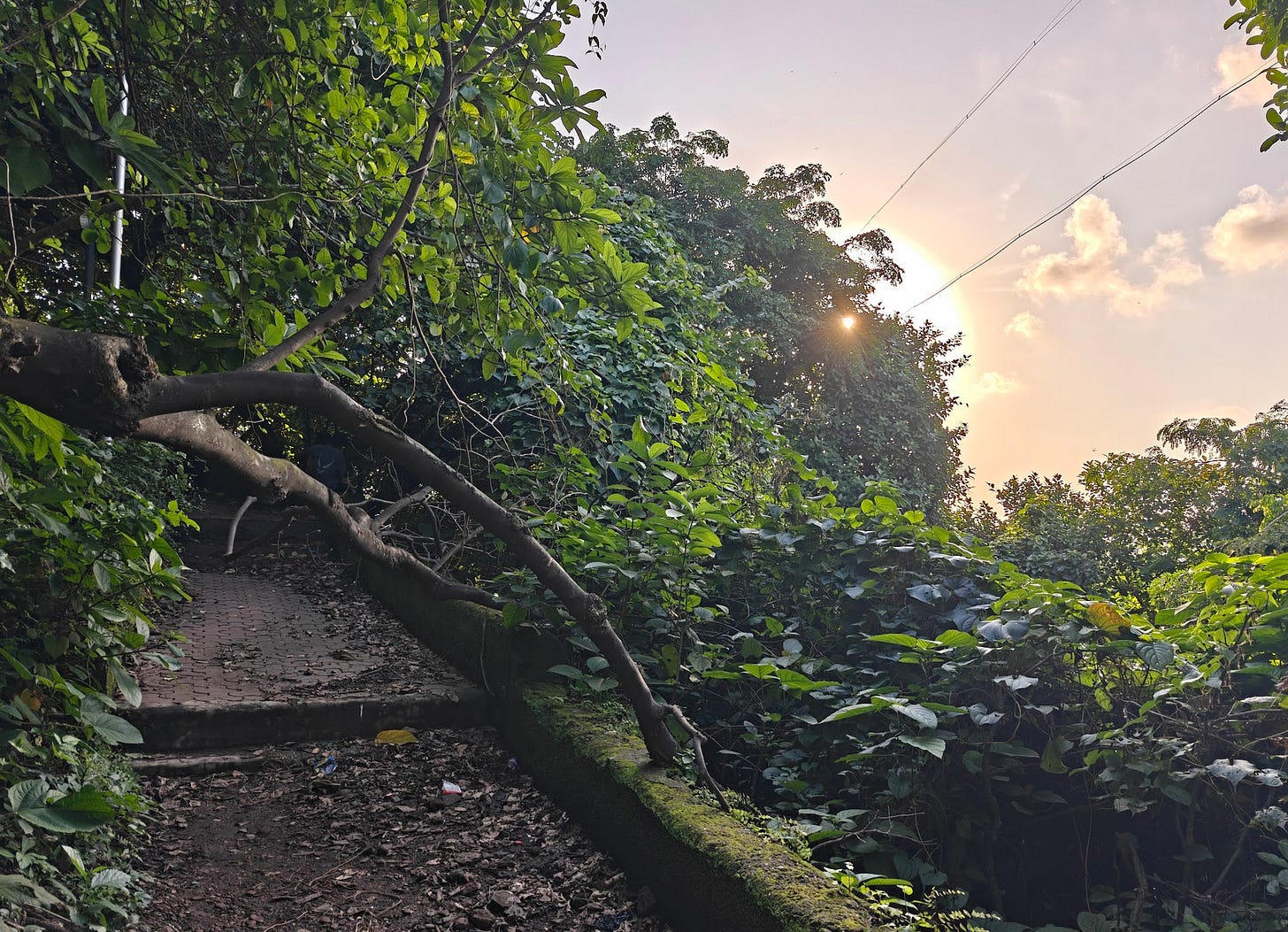
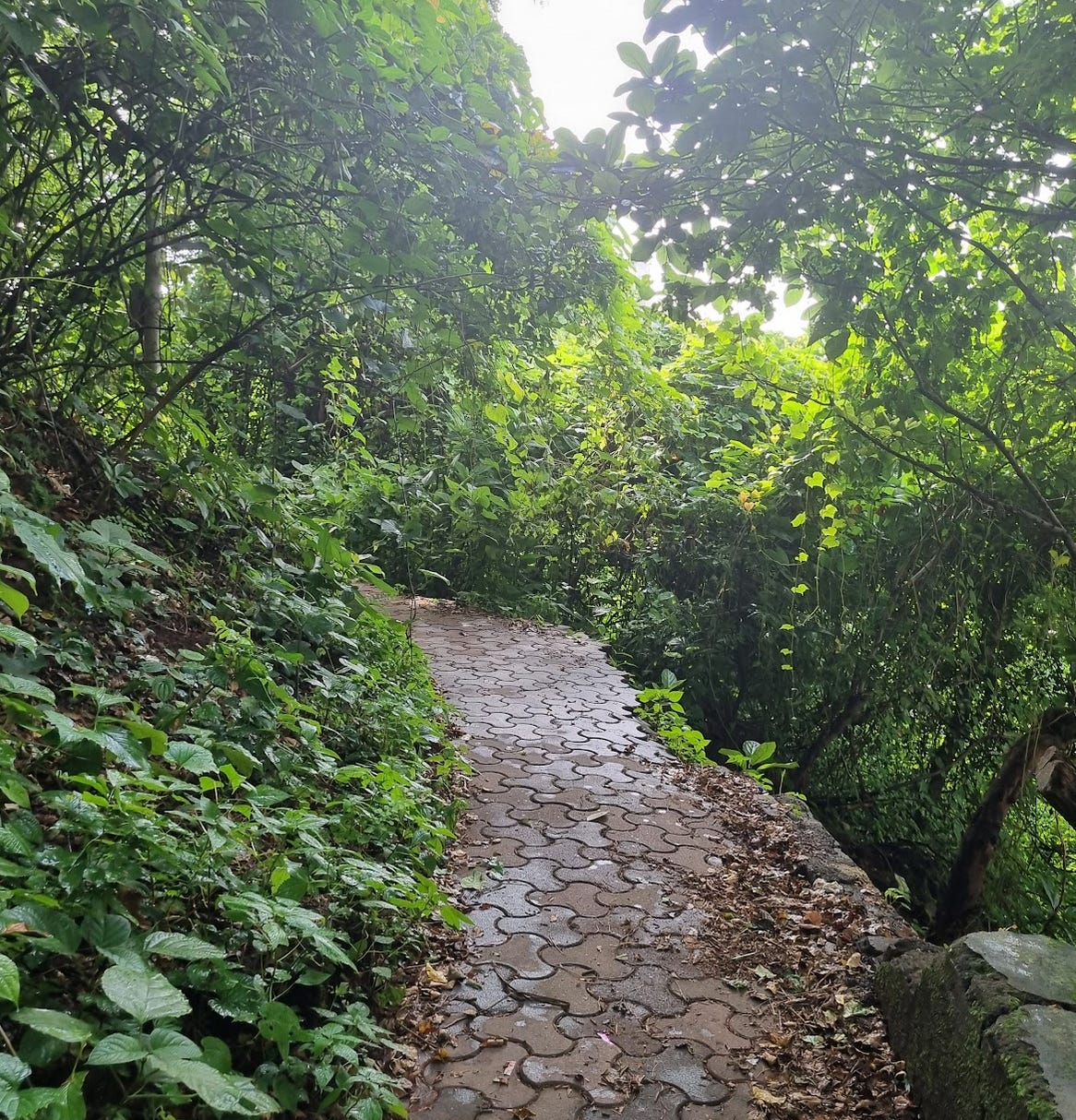
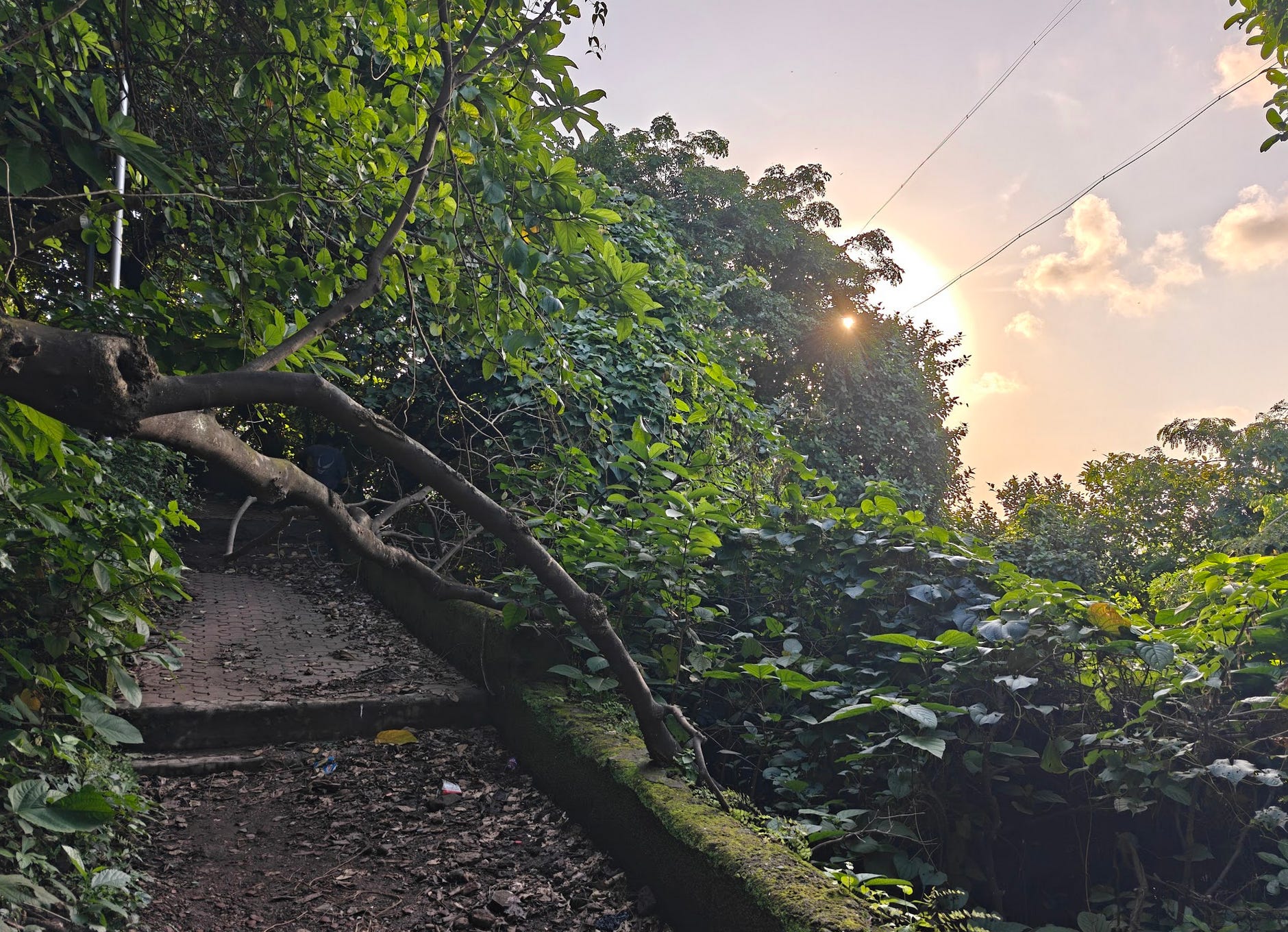
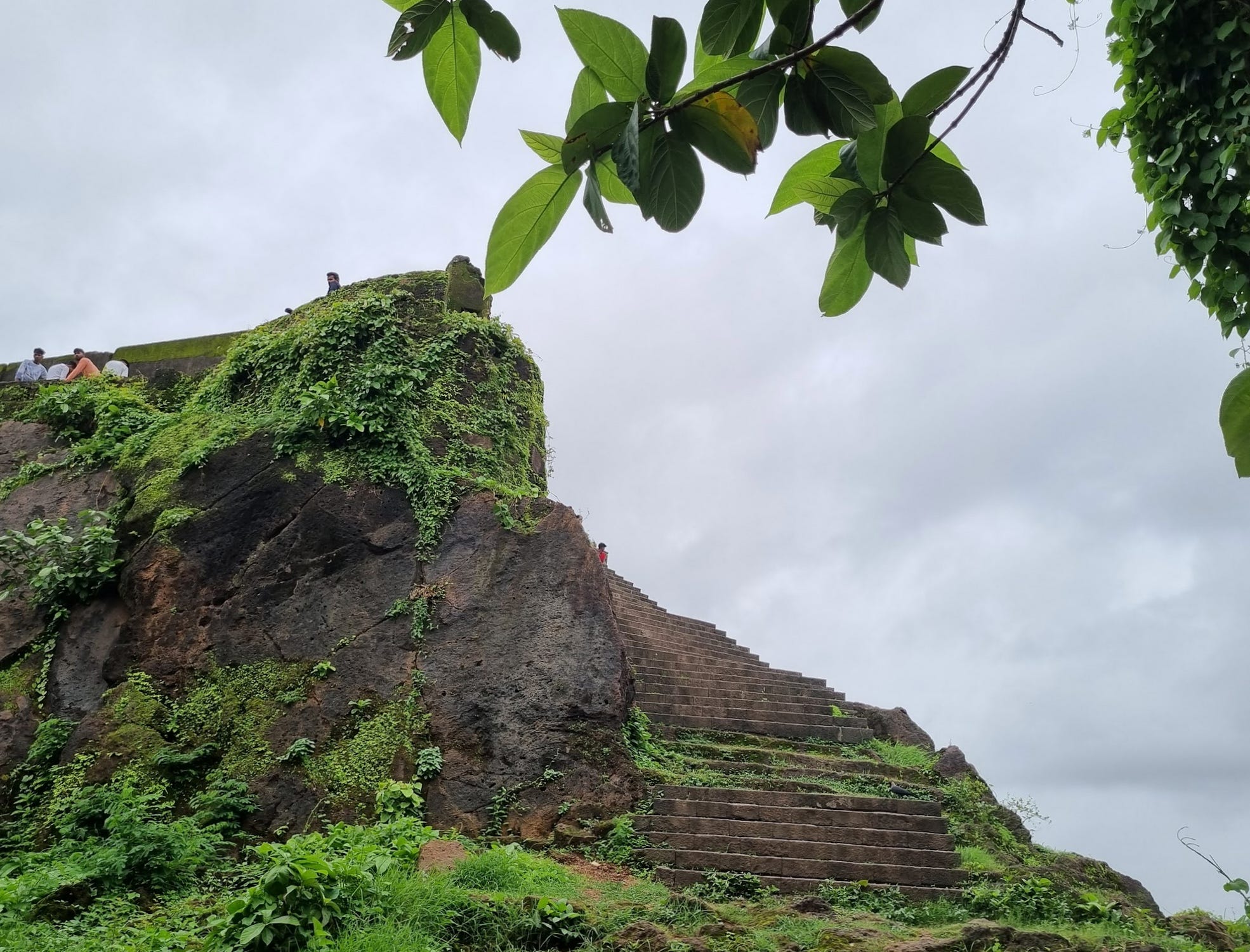
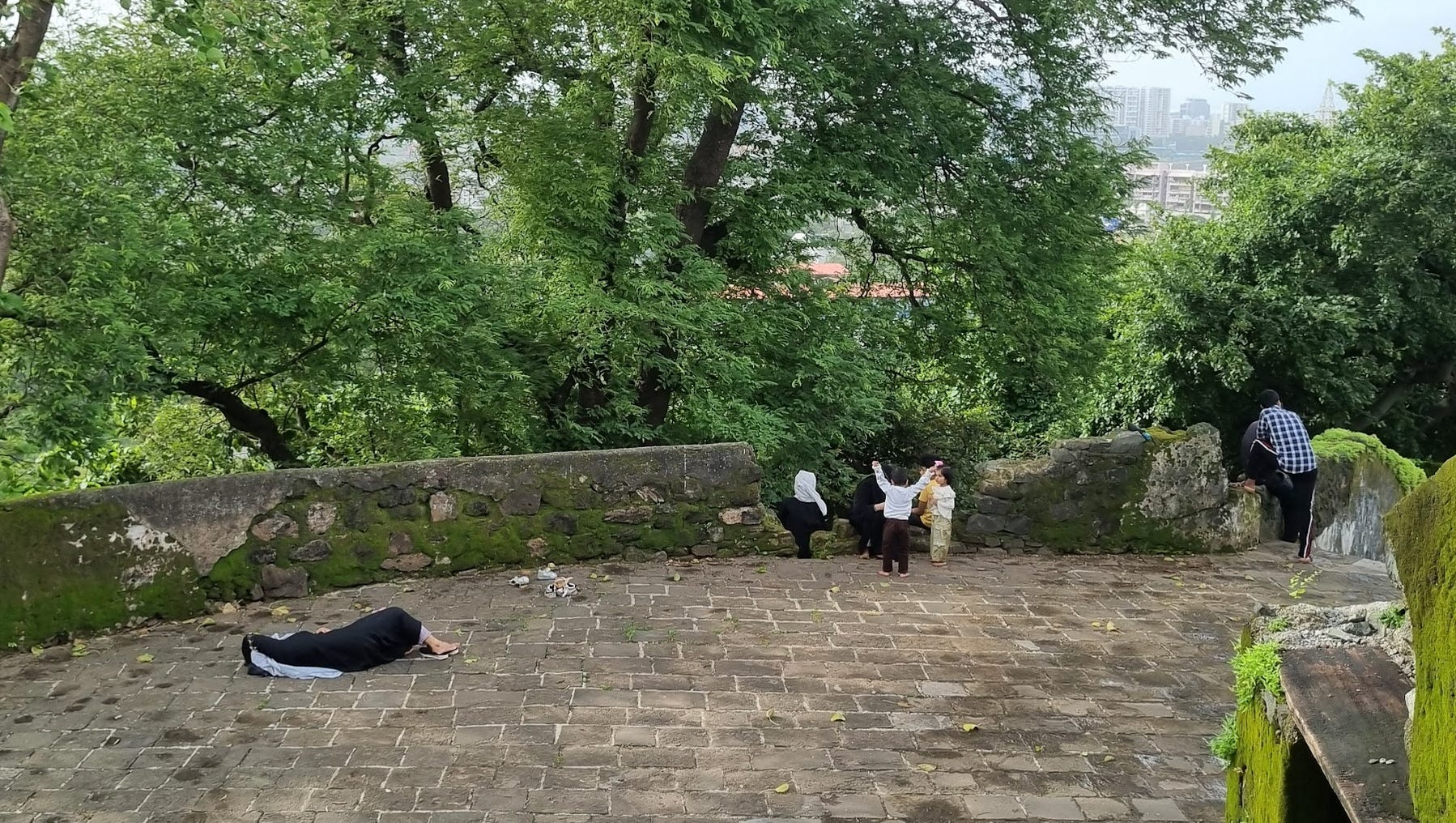
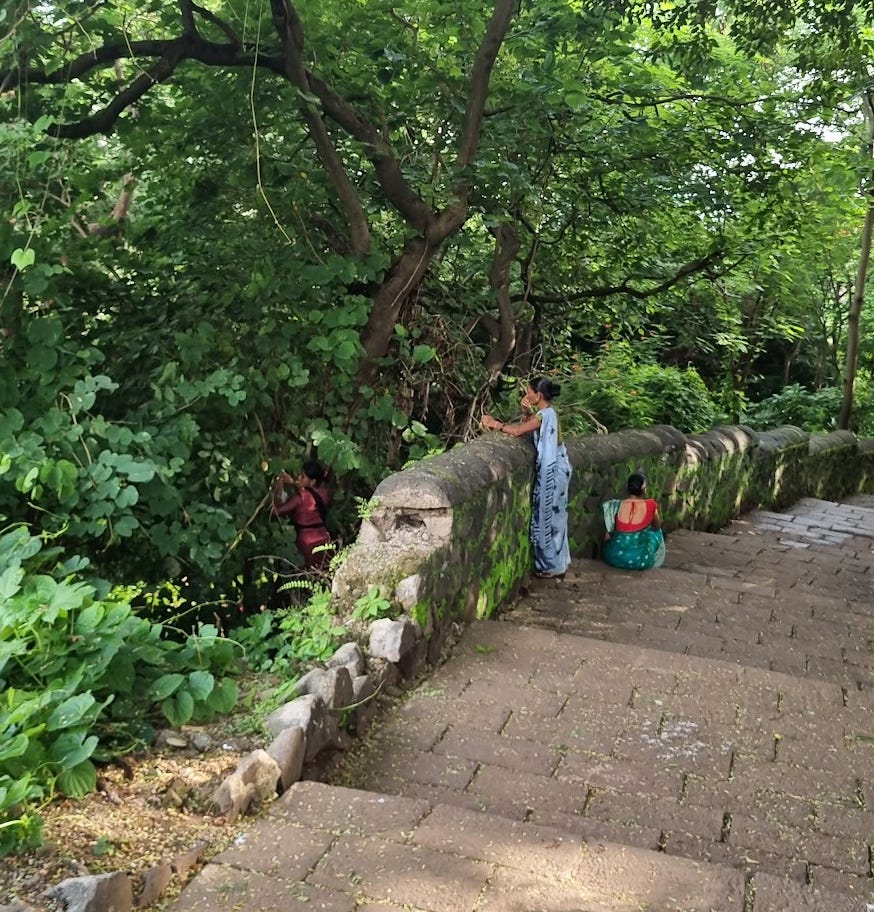
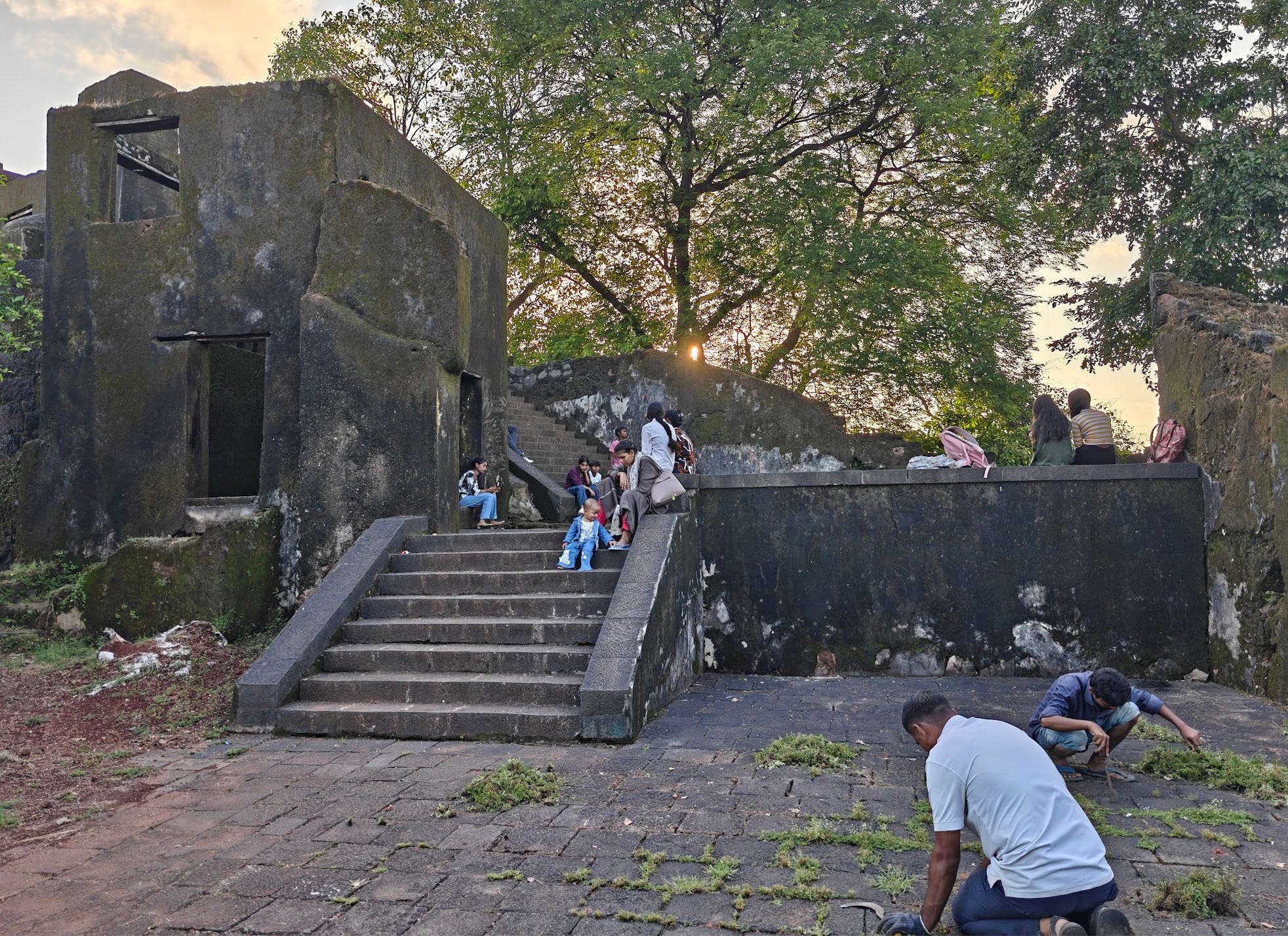
There are two ways to climb up the fort. The official route follows signboards and stairs, winding through the udyan. This is usually occupied by older couples and families with children. The other route, more furtive and far more charged, slips behind the hill and spirals upward along a crumbling path. Unsurprisingly, this is where young couples gather, concealed from plain sight and absorbed in their own privacy. No one interrupts them. Whoever passes through is ignored. Voices rise and fall—arguments, laughter, cajoling, murmur. It is as if their abundance compensates for the path’s neglect.
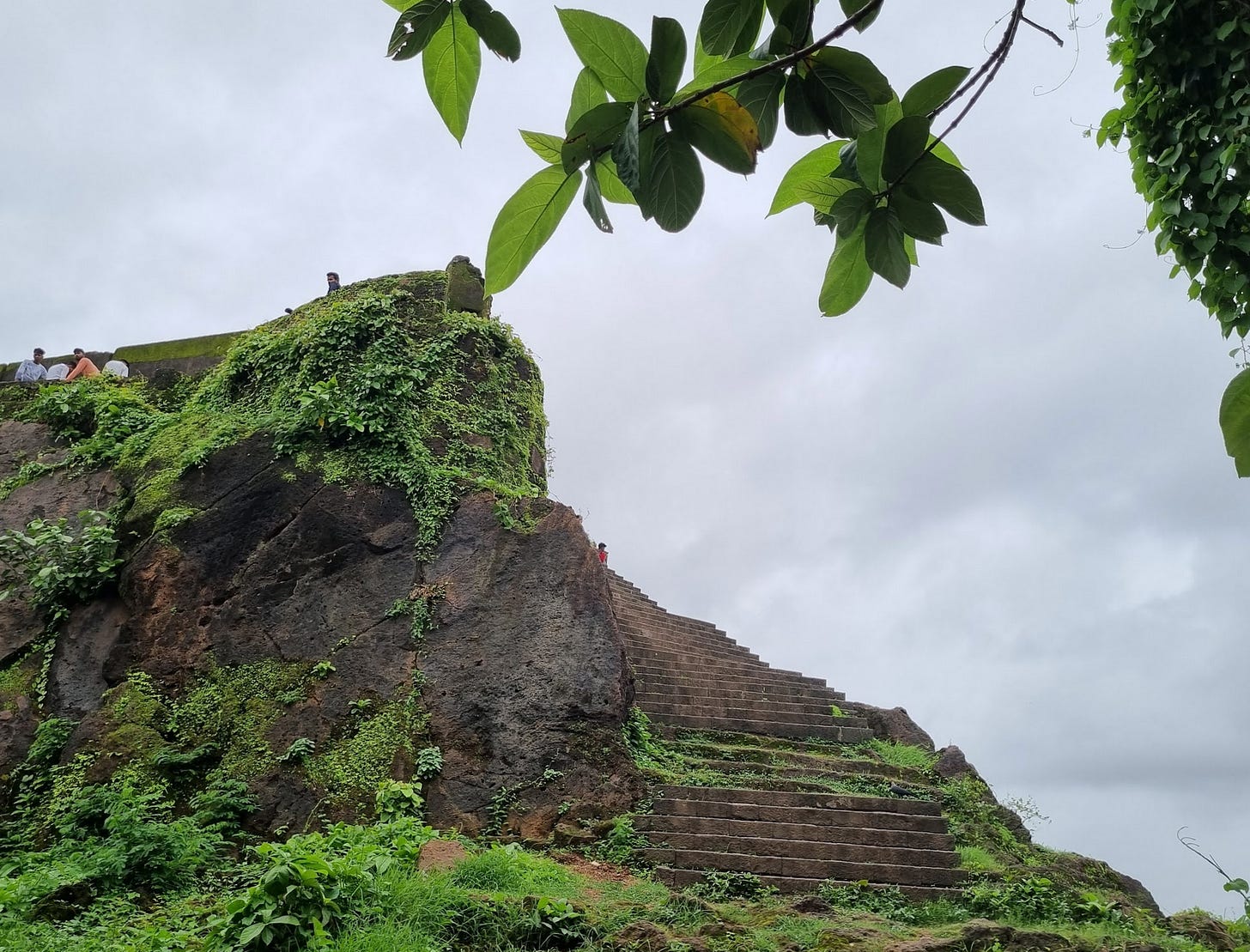
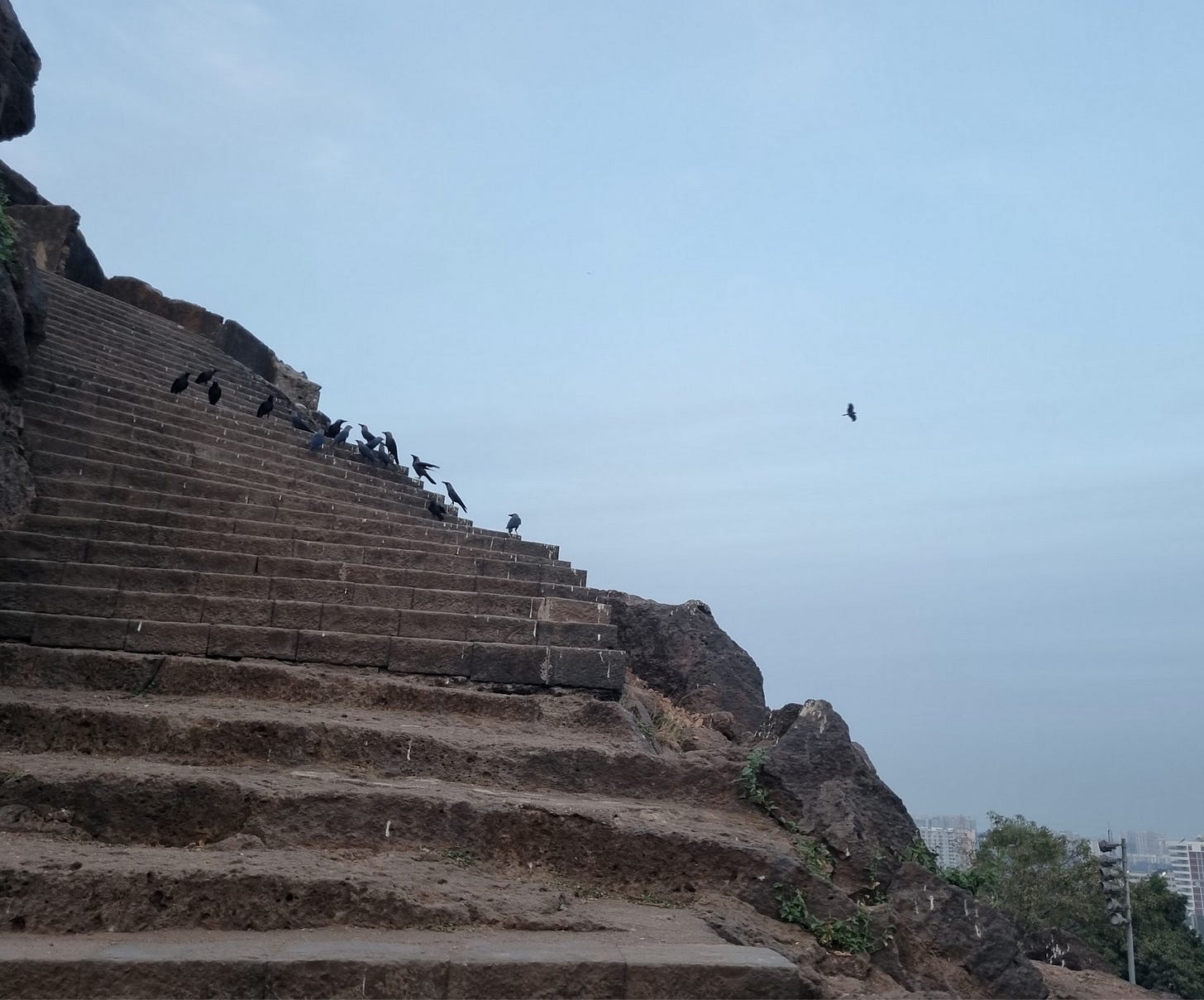
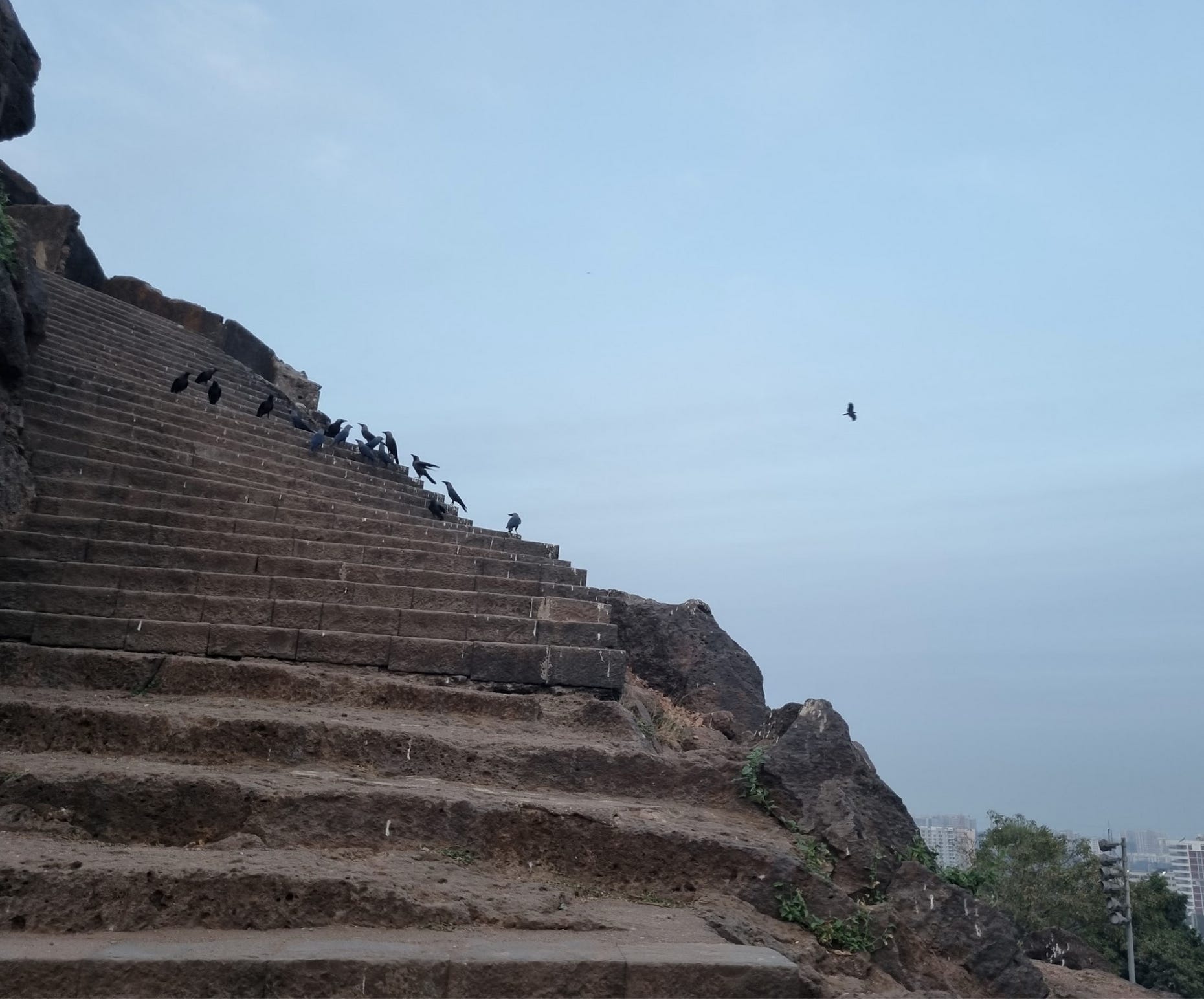
The final flight of curved steps leading up to the fort is among its most arresting details. The bend is so sharp that the stairway seems to disappear mid-ascent, and any further step might take one straight into the sky. Some photographs of these scenic stairs also feature in my previous post. At times, birds appear here briefly, though the area’s ecology remains sparse.
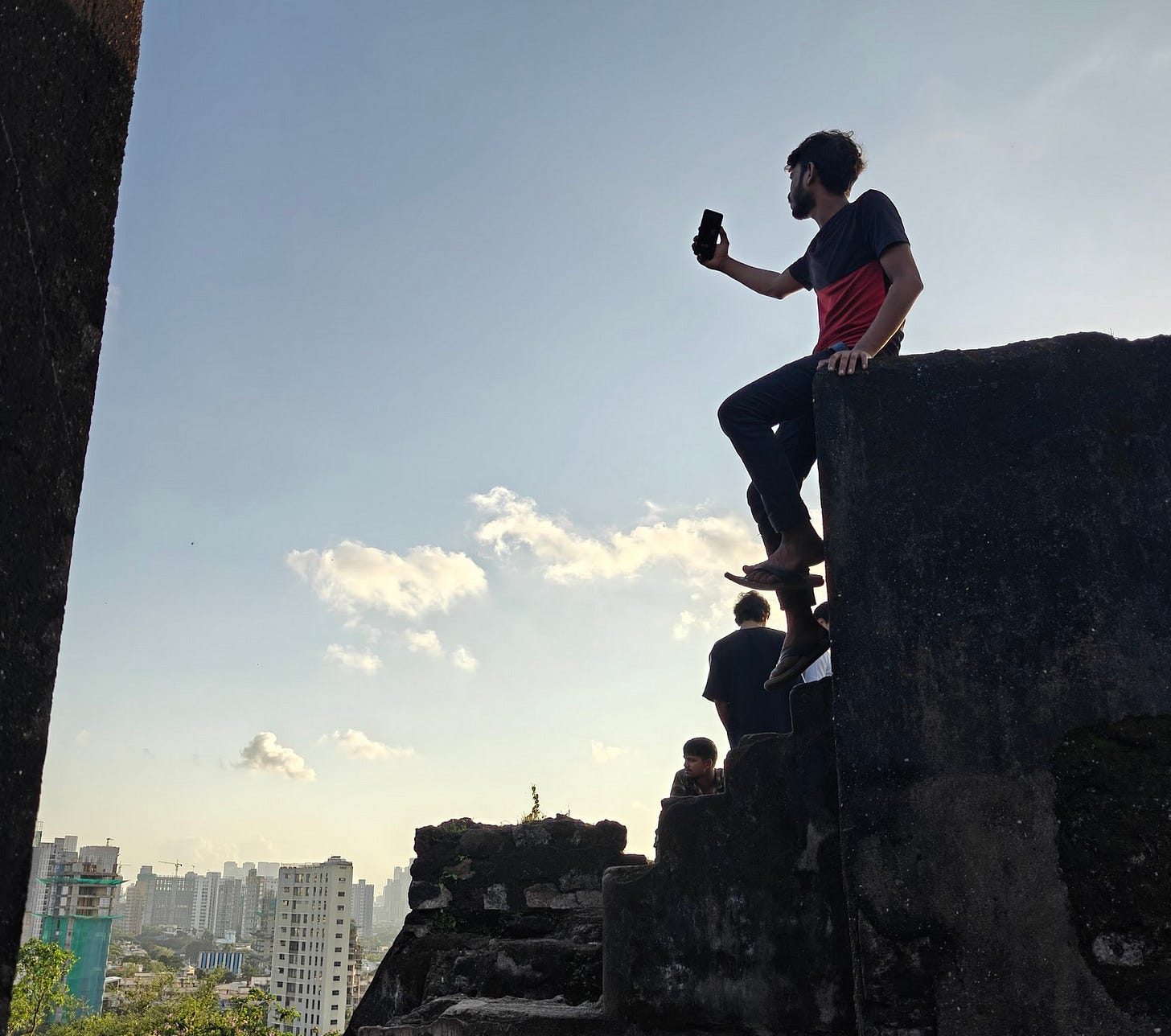
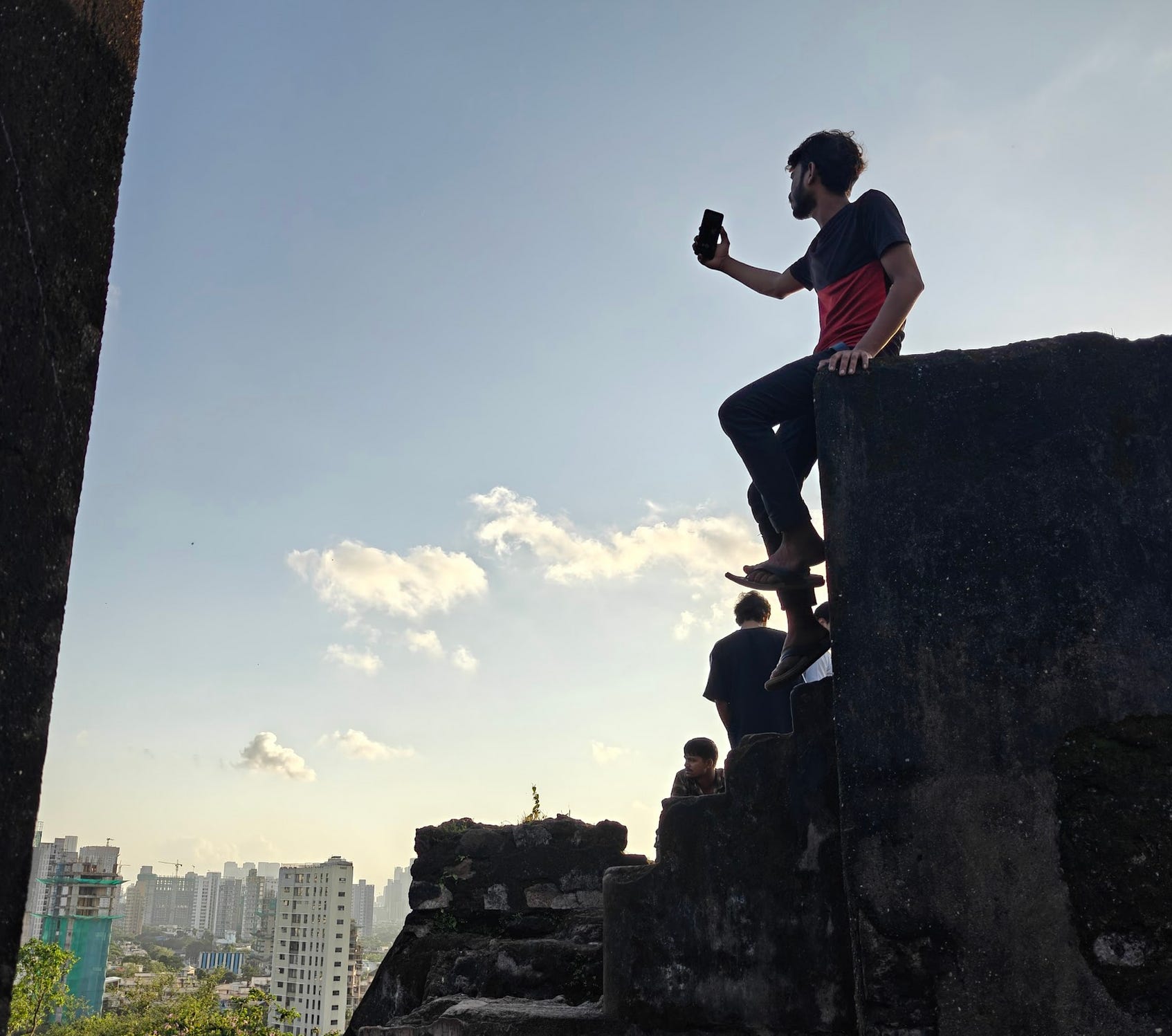
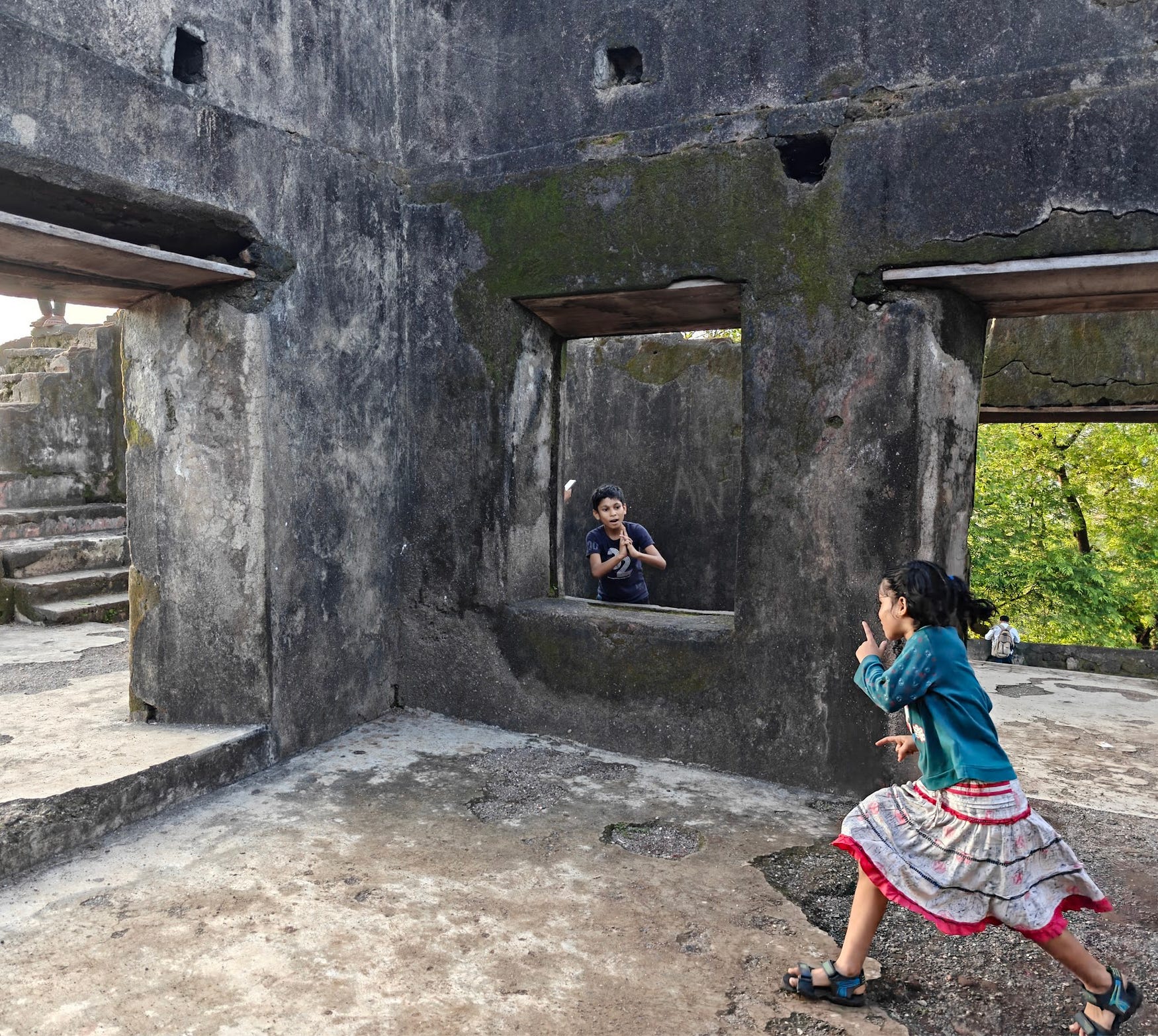
Sitting atop the fort’s raised walls offers panoramic views, now best suited for selfies. The windows, once meant for strategic surveillance and violence, still serve their ordained purpose, though now only in play.
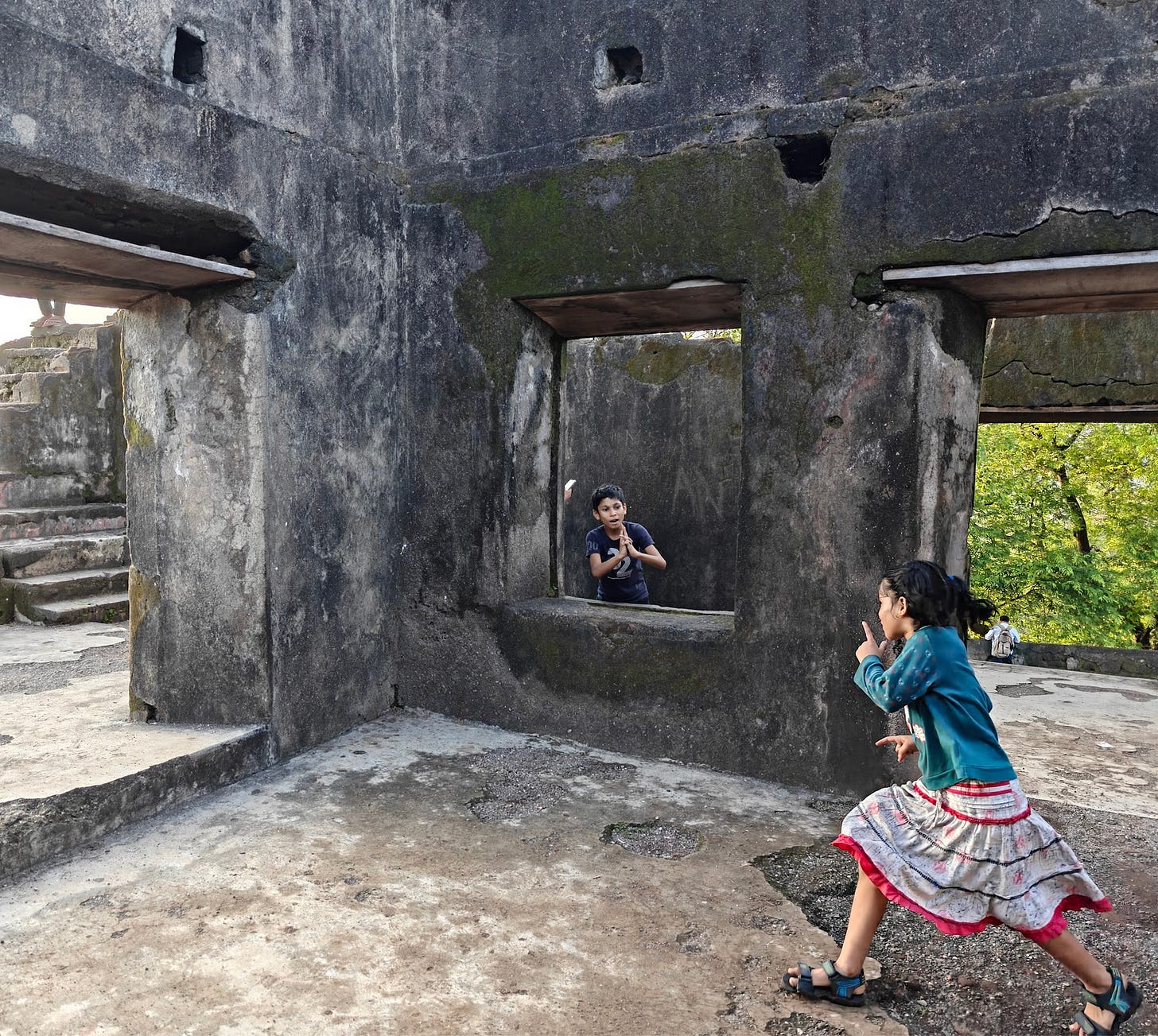
Behind the fort lies an open stretch to rest, following a downward path back to the garden. Visitors sometimes discreetly pluck leaves or gather firewood.
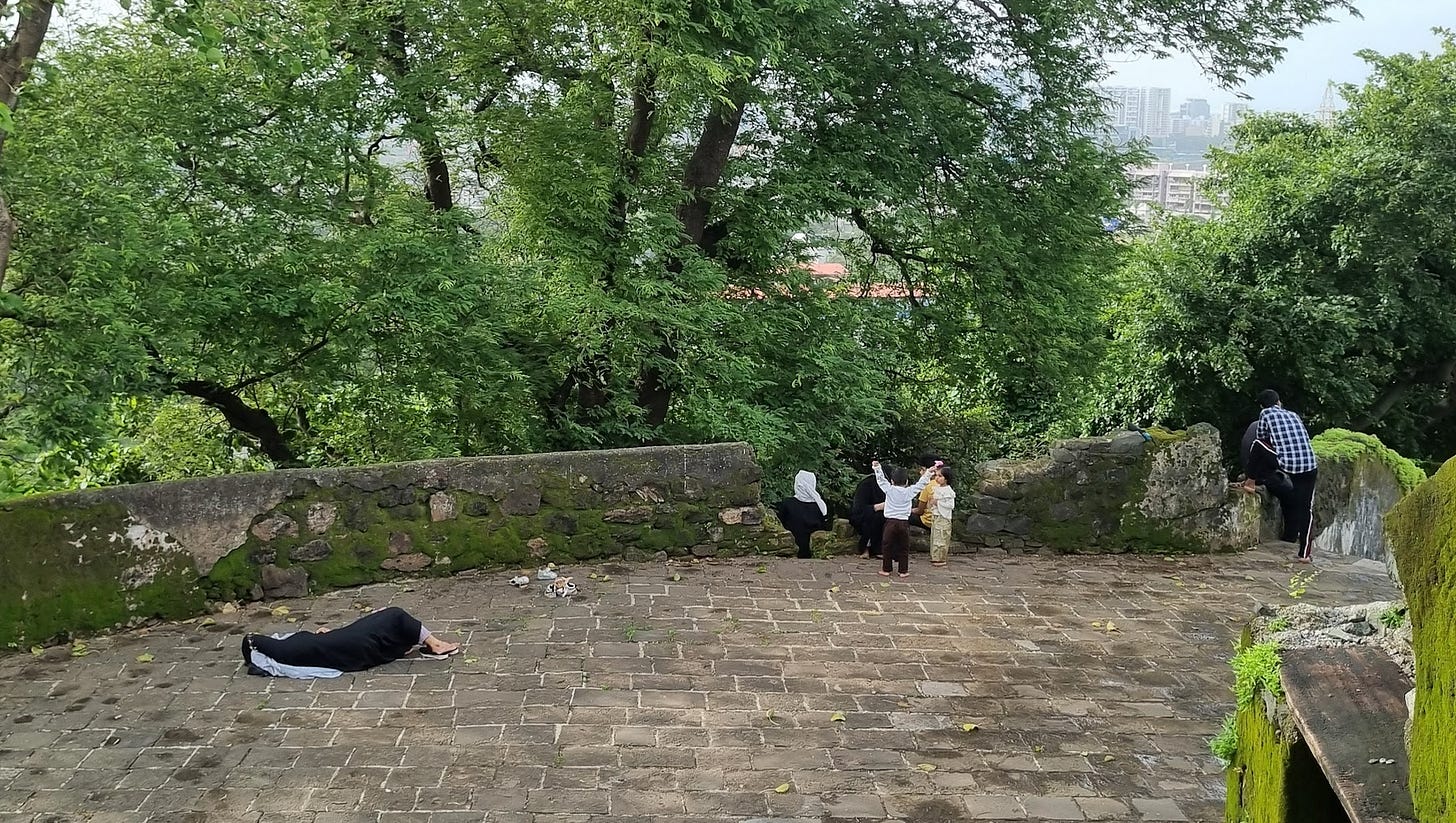
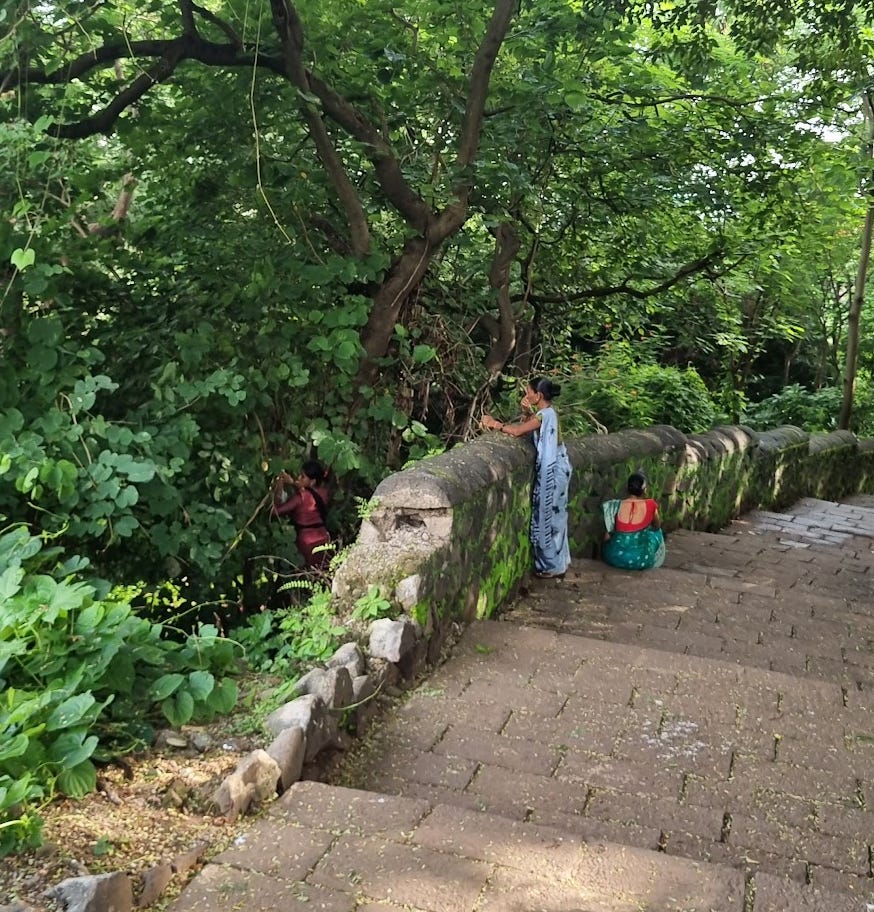
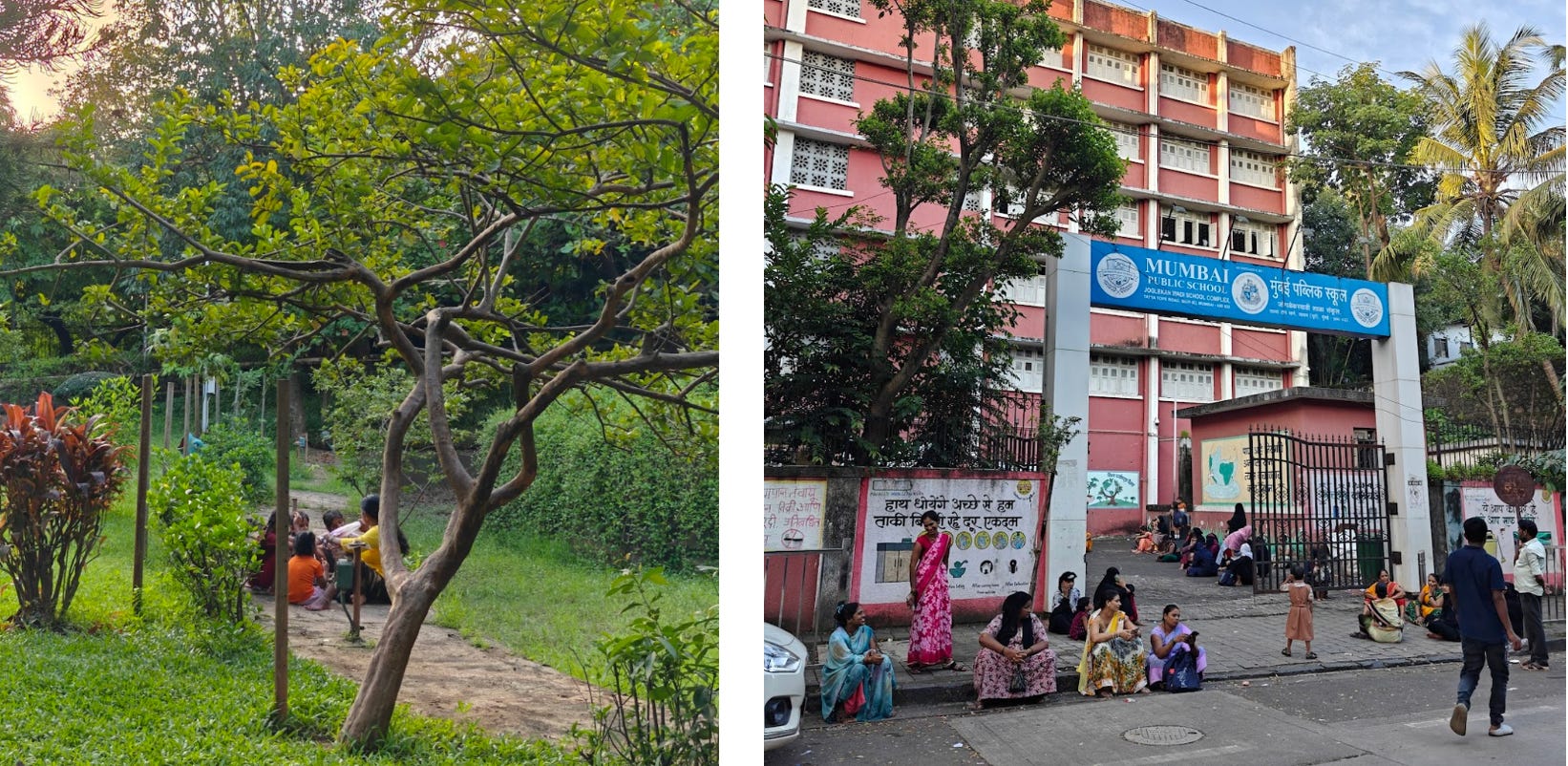
In some images, the intrigue lies in imagining the many possible arrangements that bring people together. A woman sits with five young girls. She hands each a snack. Is this one family? Nearby, I have seen parents waiting outside a municipal school. Maybe she is a teacher who brought these children here for a treat. But they are not in uniform. So, what gives?
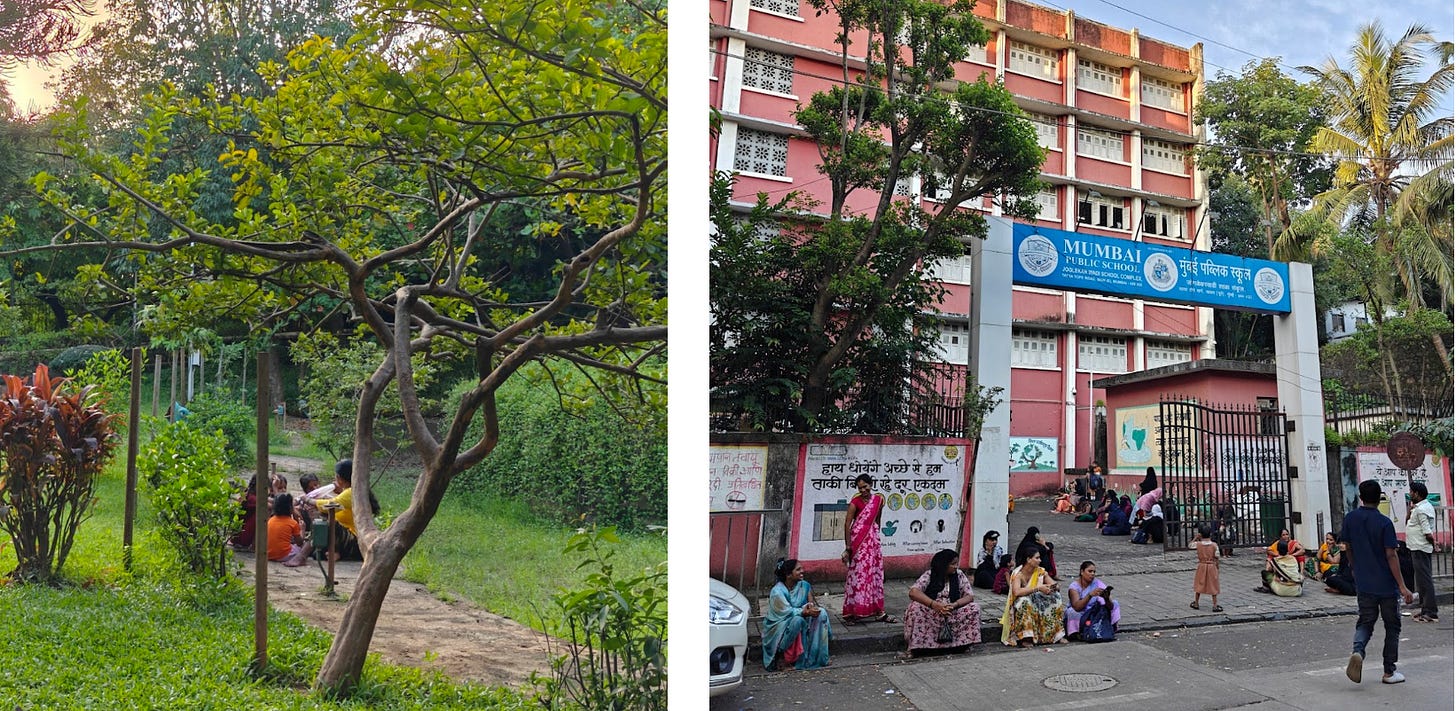
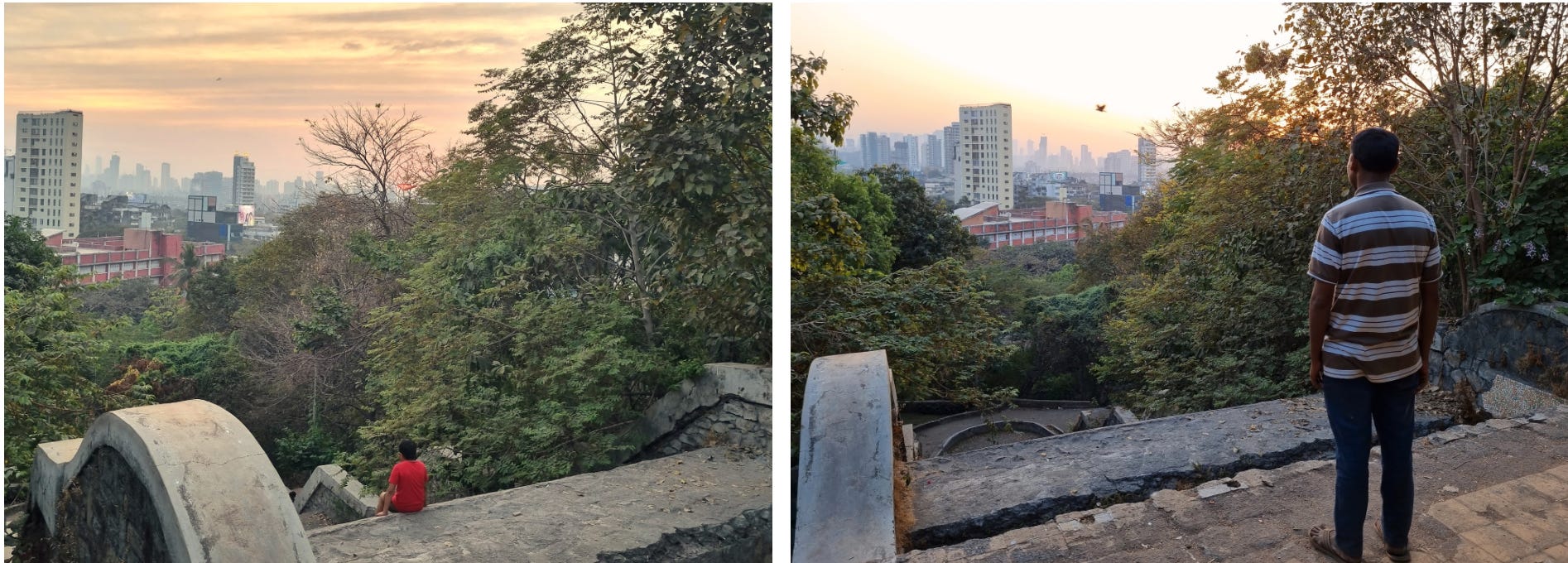
A note on the workers, often seen only as obstacles. Around five in the evening, they begin clearing couples out. By six, the garden is empty. I once met the caretaker, Vijay, from Darbhanga. He was cheerful, aware of his brusqueness, and resigned to it as part of the job. I asked him to pause so I could take a photograph. Perhaps the lovers gained a few extra minutes in that interval. Other workers labour more quietly, trimming grass and maintaining paths, making this pleasure possible.
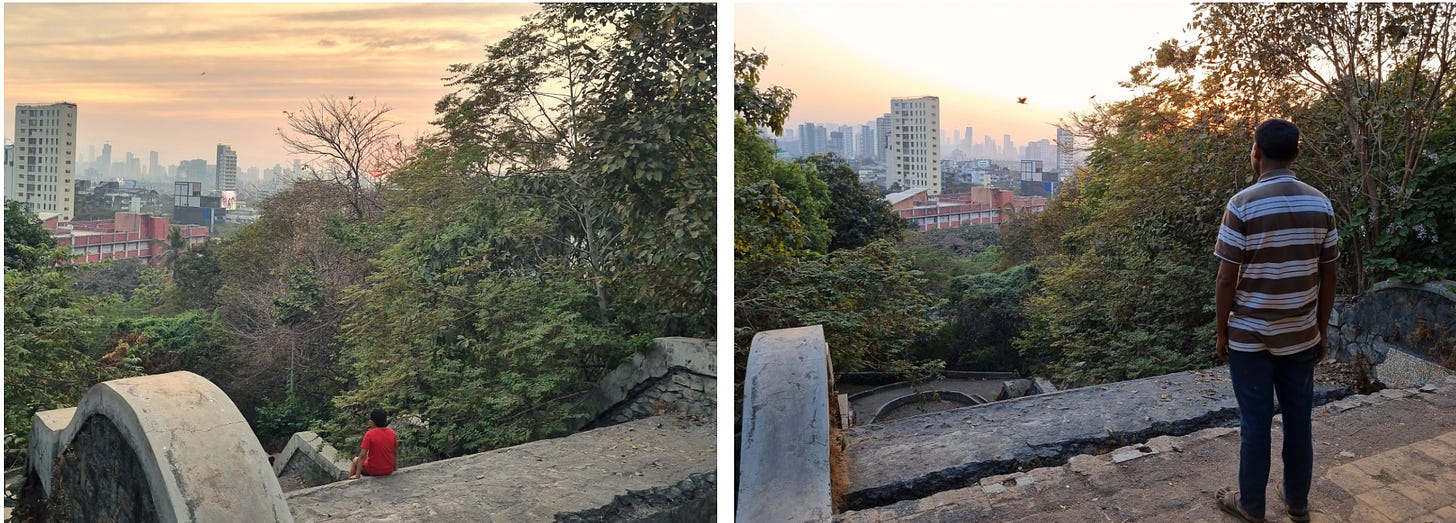
A year apart. Thanks to Vijay for posing. 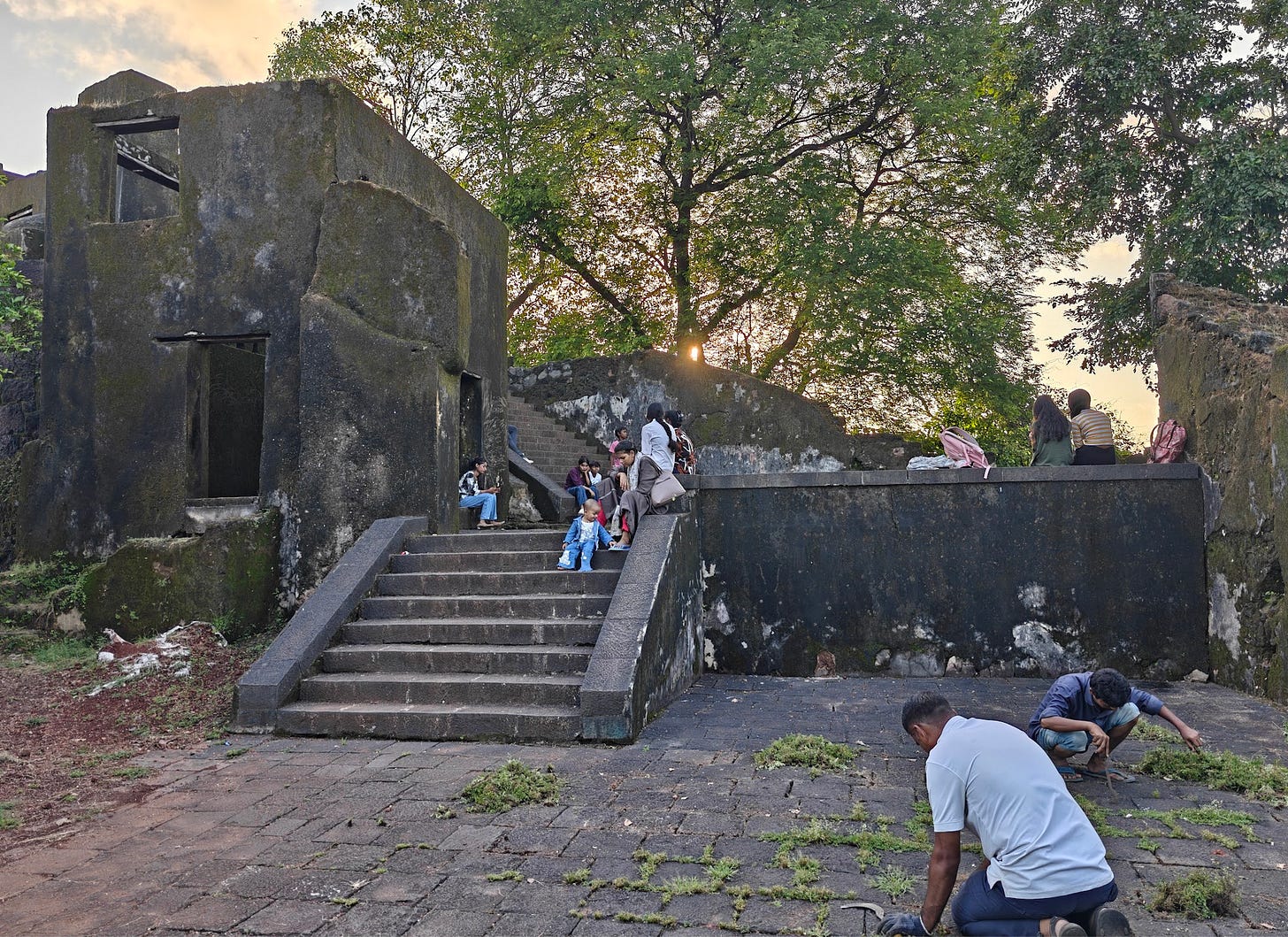
Productive Engagement
It’s easy to dismiss the moments above as useless to society at large. In my defense, wouldn’t obliging couples by clicking their photos count as being useful? Or carrying an umbrella and leading someone out of the rain to a shaded bench. That’s civic duty.
In the park’s defense, afternoons offer a chance to sleep, conserving energy for the demanding work of evening dialogues. After all, sleep is now a frontier for optimizers everywhere: better mattresses, finer metrics, even more precise heart-rate tracking. Perhaps the park could obliquely contribute as a free A/B testing environment.
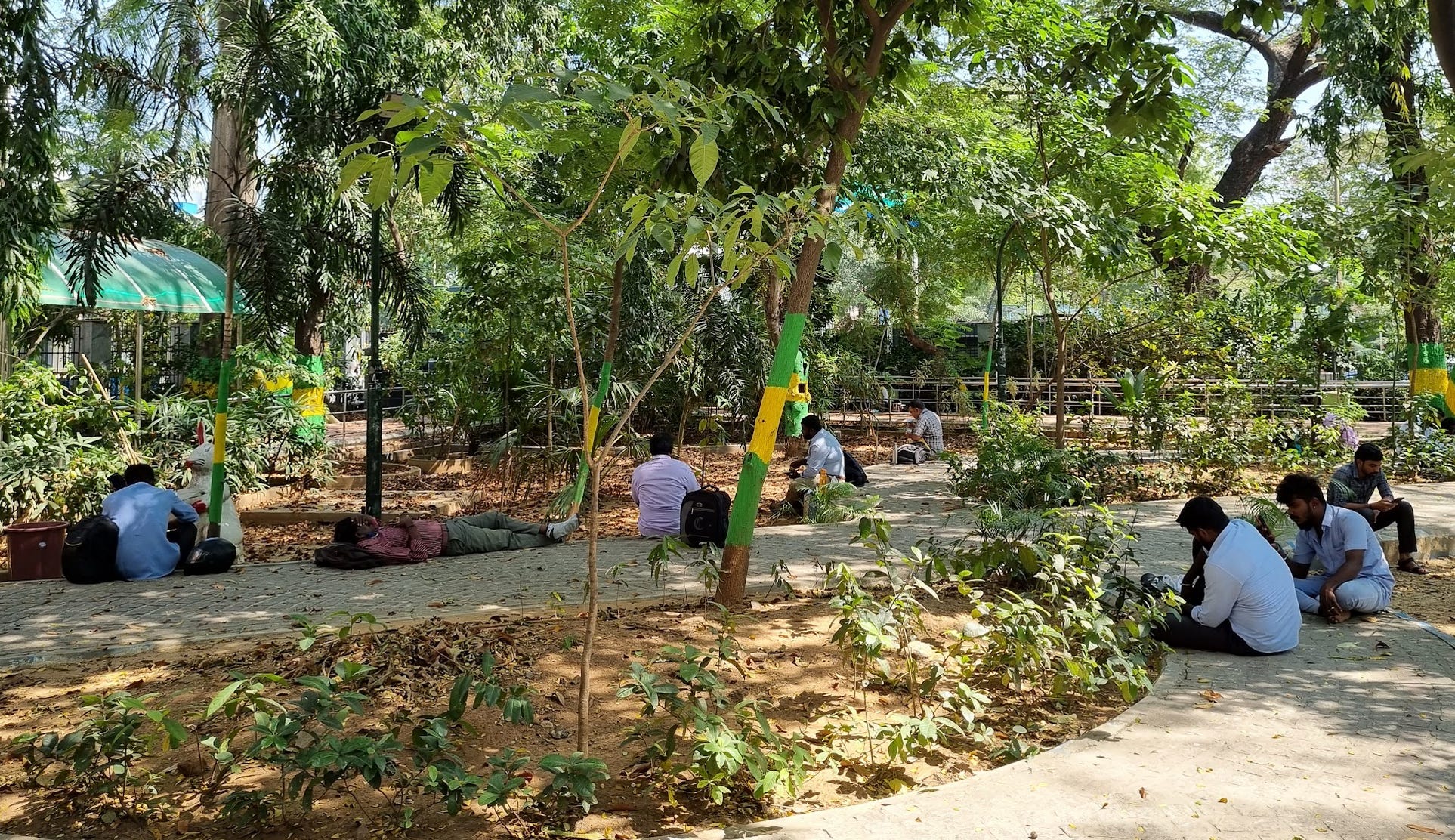
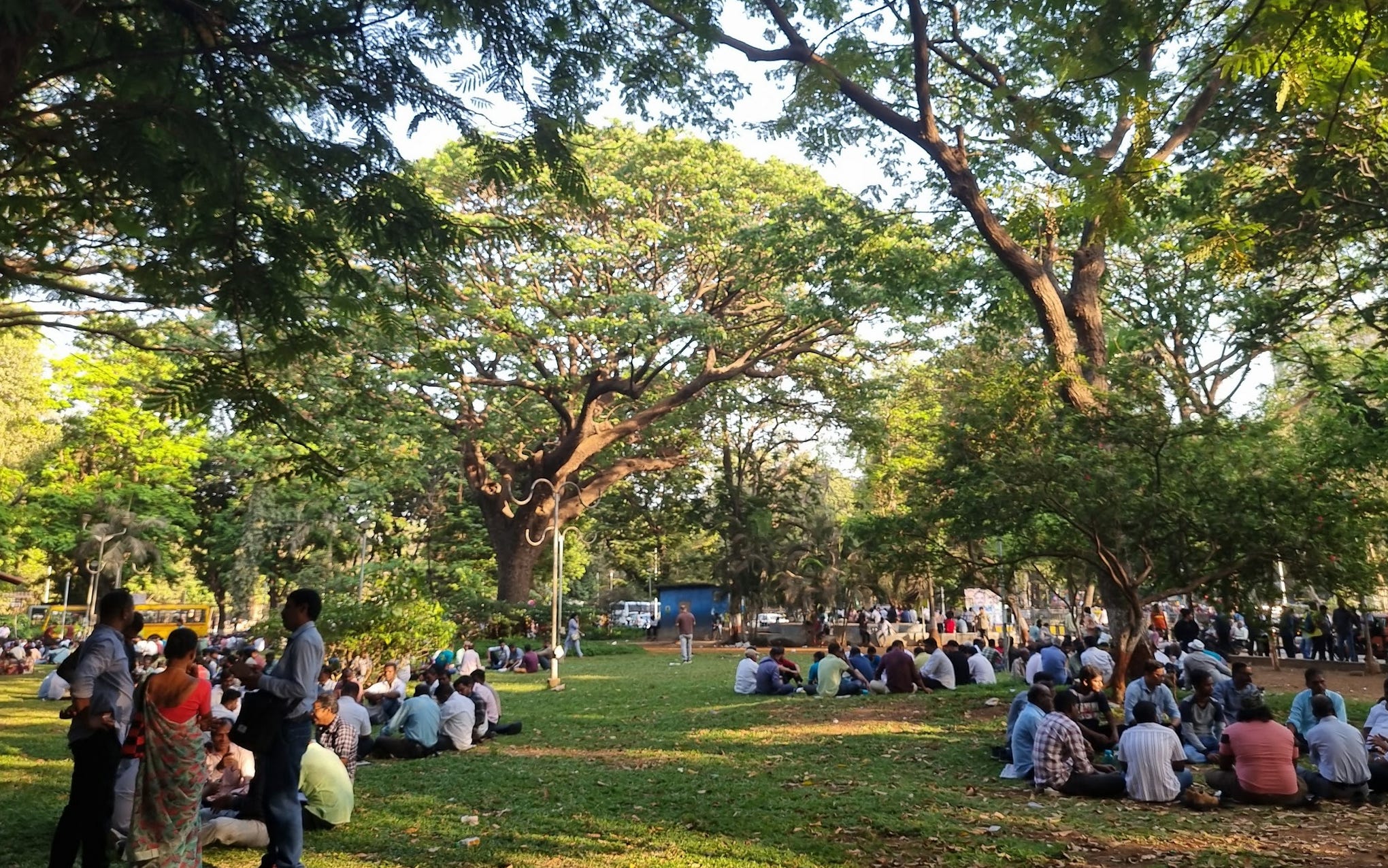
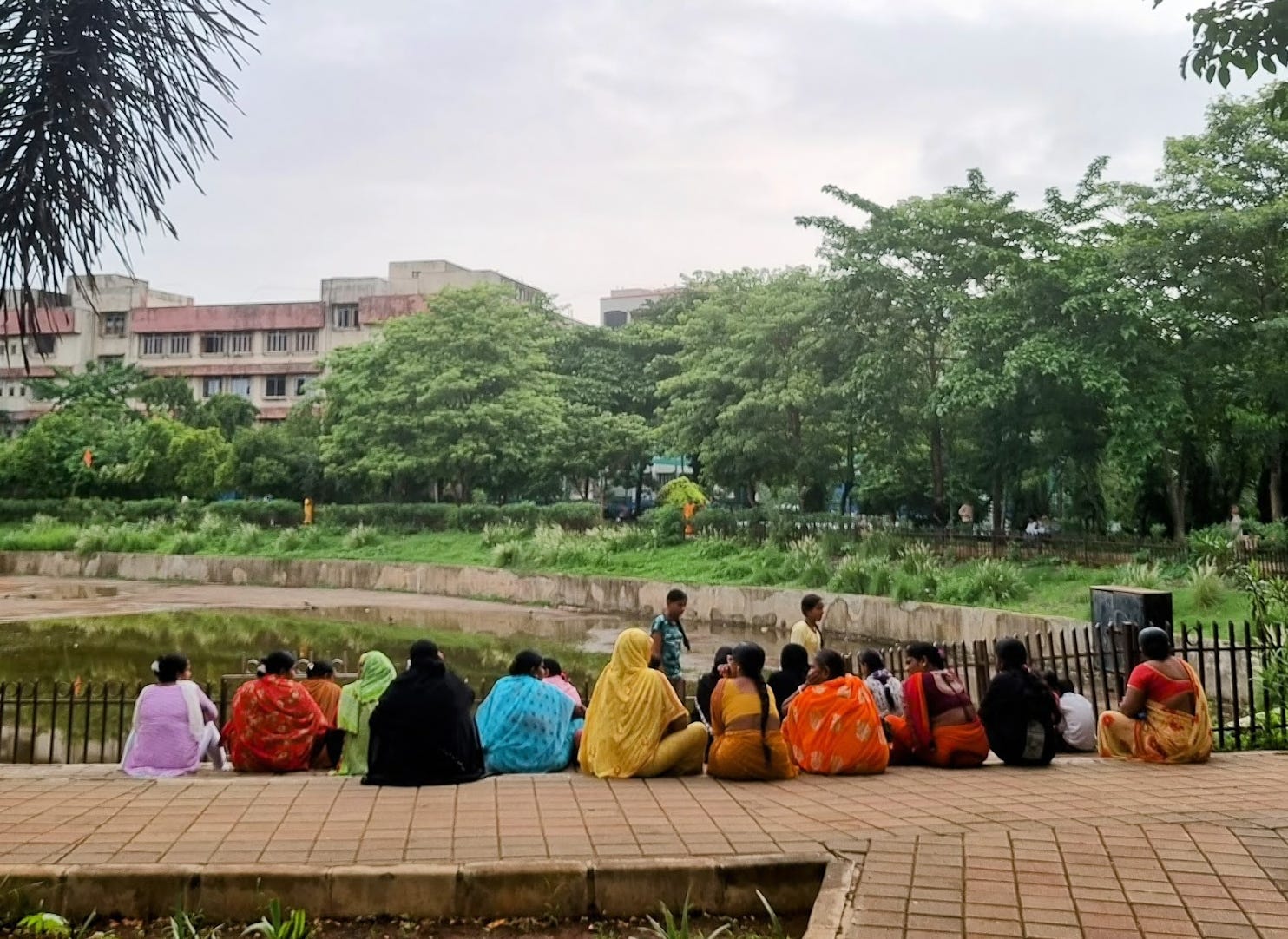
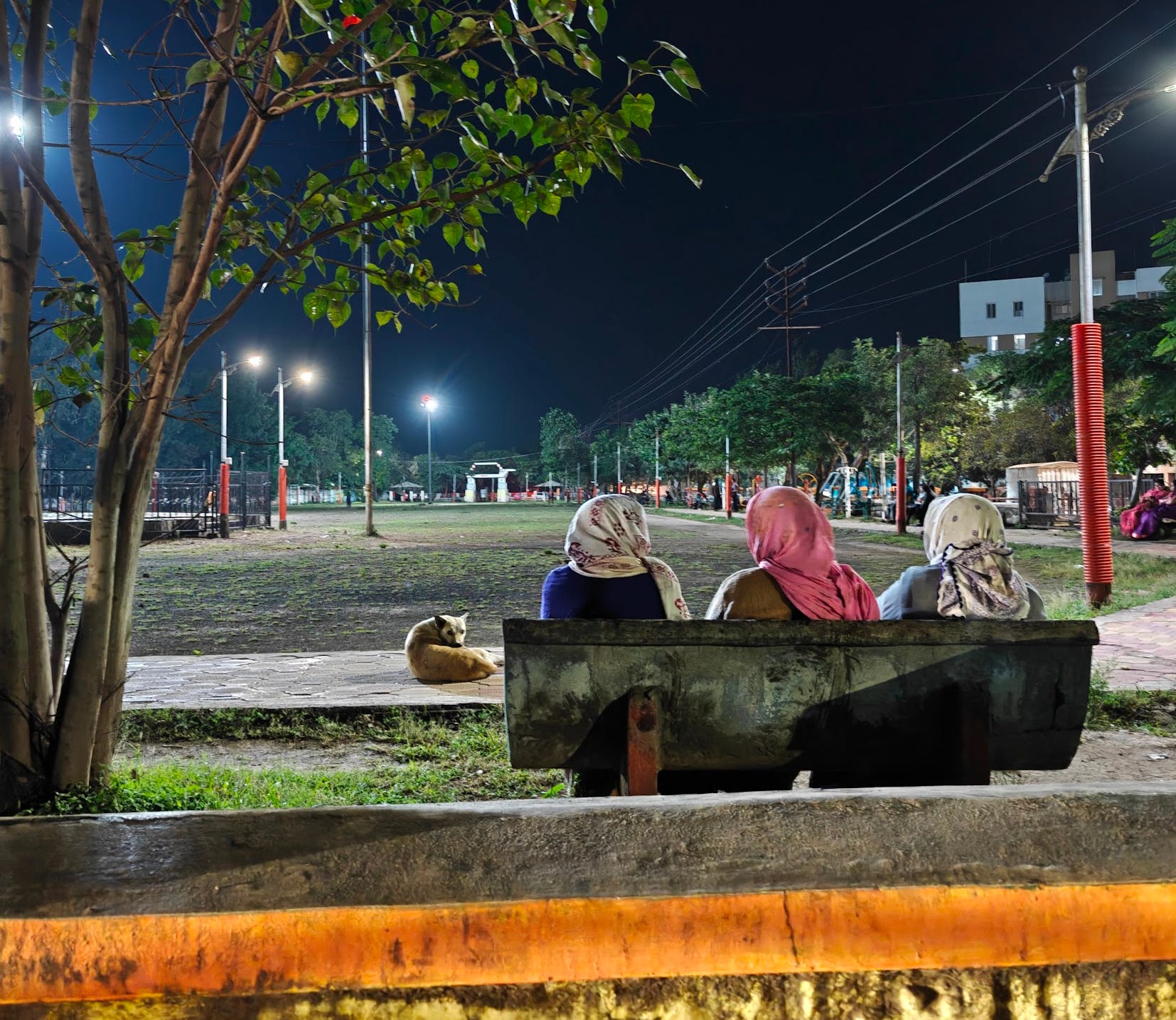
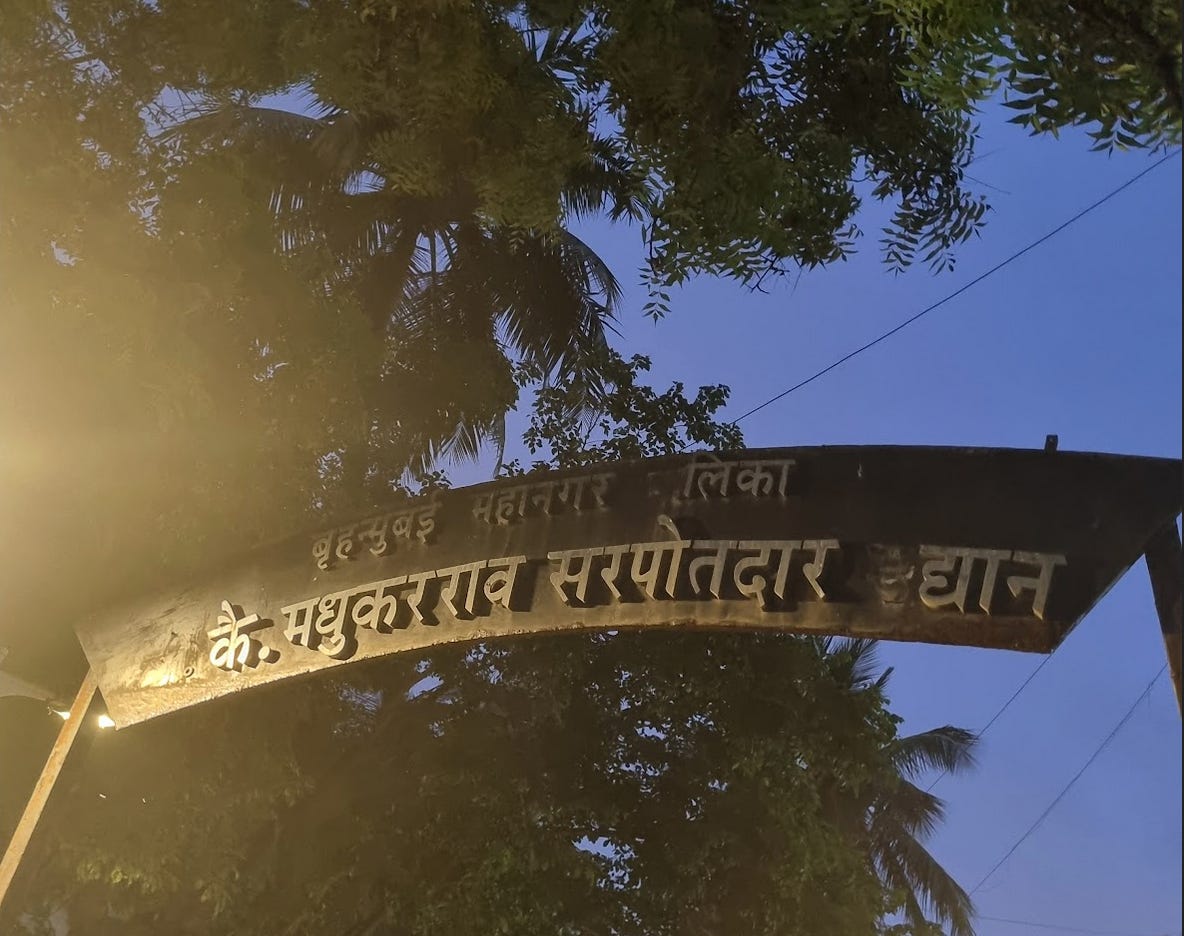
Parks can be conveniently converted into stages for political agendas, marked out through statues and names. Leaders implicated in orchestrating riot violence, like Sarpotdar here, are folded back into respectability. A minor facelift, one extra dust bin, and the performance of development is complete.
More concretely, Why Loiter? by Shilpa Phadke, Sameera Khan, and Shilpa Ranade presents a substantive way to think about the productivity of public parks. The question is not what one does in a park, but whether the space exists at all. The ability to find space and loiter—especially in the face of encroachment and a broader tendency to deny leisure—is itself a political achievement.
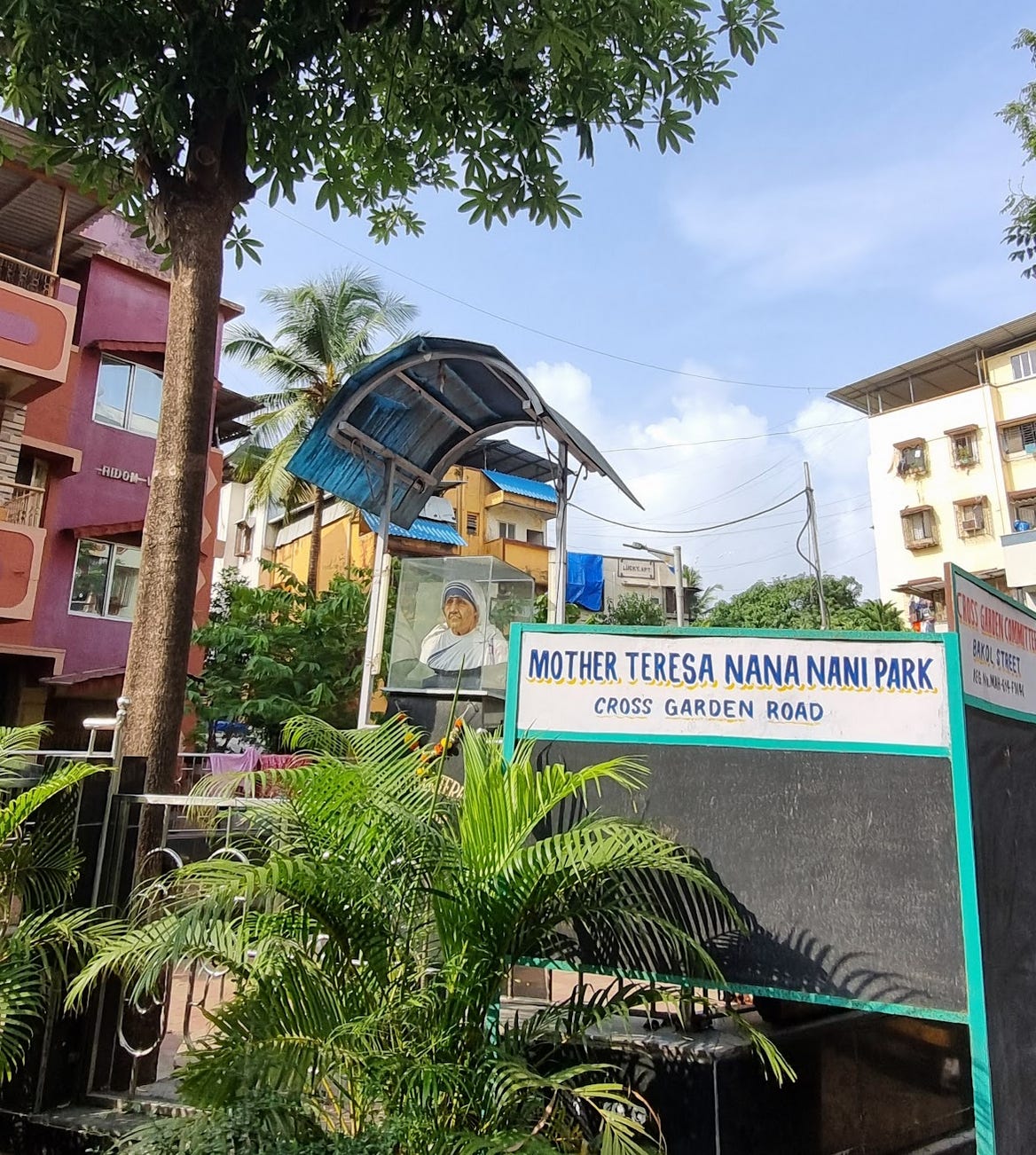
Once the major hurdle of access is cleared, a few practical interventions come in handy. Aim to design layouts that allow different uses to coexist rather than compete, such as areas oriented toward older residents (nana nani parks), children’s play areas, and sections that open only at night. There has also been a recent uptick in using parks for mass book readings and informal gatherings. This continuity helps ensure the park remains accessible across times, bodies, and needs.
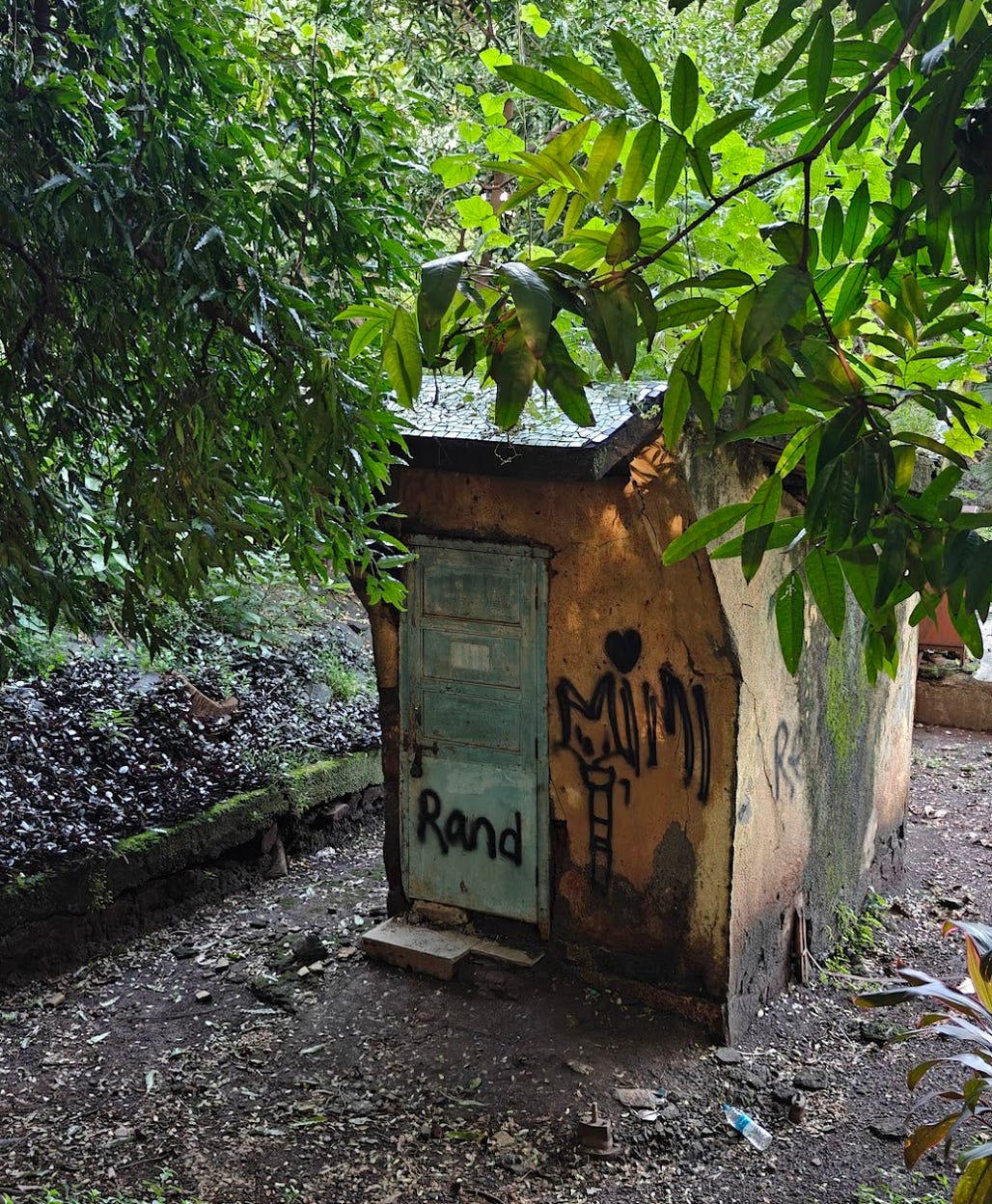
The multipurpose push can feel overly optimistic. It’s fair to have reservations about what all of this actually achieves. Will these efforts keep bad actors away? Vandalism and intoxication don’t disappear simply because of packed time-use.
Moreover, culture critics dismiss some activities, like book reading, as performative: not really about reading, they say, but more to do with littering or speed dating. Such comments are needlessly harsh. If activating the park inspires new kinds of presence, it should be welcomed.
A reasonable criticism is that most attention still gravitates toward well-known parks—Cubbon Park, August Kranti Maidan, Lodhi Gardens—while smaller municipal parks remain neglected. The politics of greenery risks turning narrowly elite.
Amita Baviskar termed it bourgeois environmentalism. Baviskar and other sociologists have shown that when improvements focus solely on middle-class imaginaries of parks as tidy green oases, they can inadvertently erase the claims of poorer residents.5 In a bleak Delhi case that has become emblematic in urban studies, residents in Ashok Vihar clubbed a young man from a slum to death after suspecting him of using their park as a toilet.
Death over the administration of a leisure space might come across as too excessive, but this is far from unusual. What better way to make this clear than by summoning a terrain that many of us seem to vicariously consume lately? In Gutter Baghicha, an amenity land near Lyari, social activist Nisar Baloch spent two decades resisting encroachment by MQM-aligned mafias. Nisar patrolled the park gates daily, documenting violations and staging protests. In a grim reversal, the very political actors (PPP) who once assured him protection allied with his adversaries. Days after publicly stating that MQM would kill him, Sher-e-Baloch was shot dead in broad daylight. The NGO Shehri continues to fight for what remains of the park.6
One Invitation, One Apology
Let’s put battlegrounds aside and take stock. Public parks are wonderful places for rest and leisure. People of all classes turn to them, even when they know peace itself may be elusive. I invite you to visit them, especially when entering a new neighbourhood, to glimpse tender microcosms of local life in repose. They can be as rewarding as any touristic choice.
This contrasts with perhaps a far harsher suggestion put forth by Robert Sullivan in his seminal book on New York rats. He asks us to go “ratting”: hunting locations with the most rats in a city to witness precarious human lives in their rawest state, refusing the comforts of distance. Brutally honest, but hardly welcoming. My alternative—call it park-hopping, or more playfully, parktaking—is gentler. Treat parks as starting points to partake in the gham that circulates in public space, because here, aram is still held out as a possibility, and that lends exchanges a certain ease.
Now, the apology. An attentive reader may have noticed I misheard Rawish. True to my South Indian inflections, I misplaced a ‘h’. The actual line goes “Aram nahi mere bhag mein”, meaning, peace is not written in my fortune. The argument proved serviceable enough to carry my version this far. Not entirely indefensible, I hope.
Once you take unearned liberties with no repercussions, it’s tempting to stretch further. So let me try another riff: “Aram hi hain mere bagh mein, Main to kho gayi…”—wait, how to replace gham? Next stop at a paradise will answer.
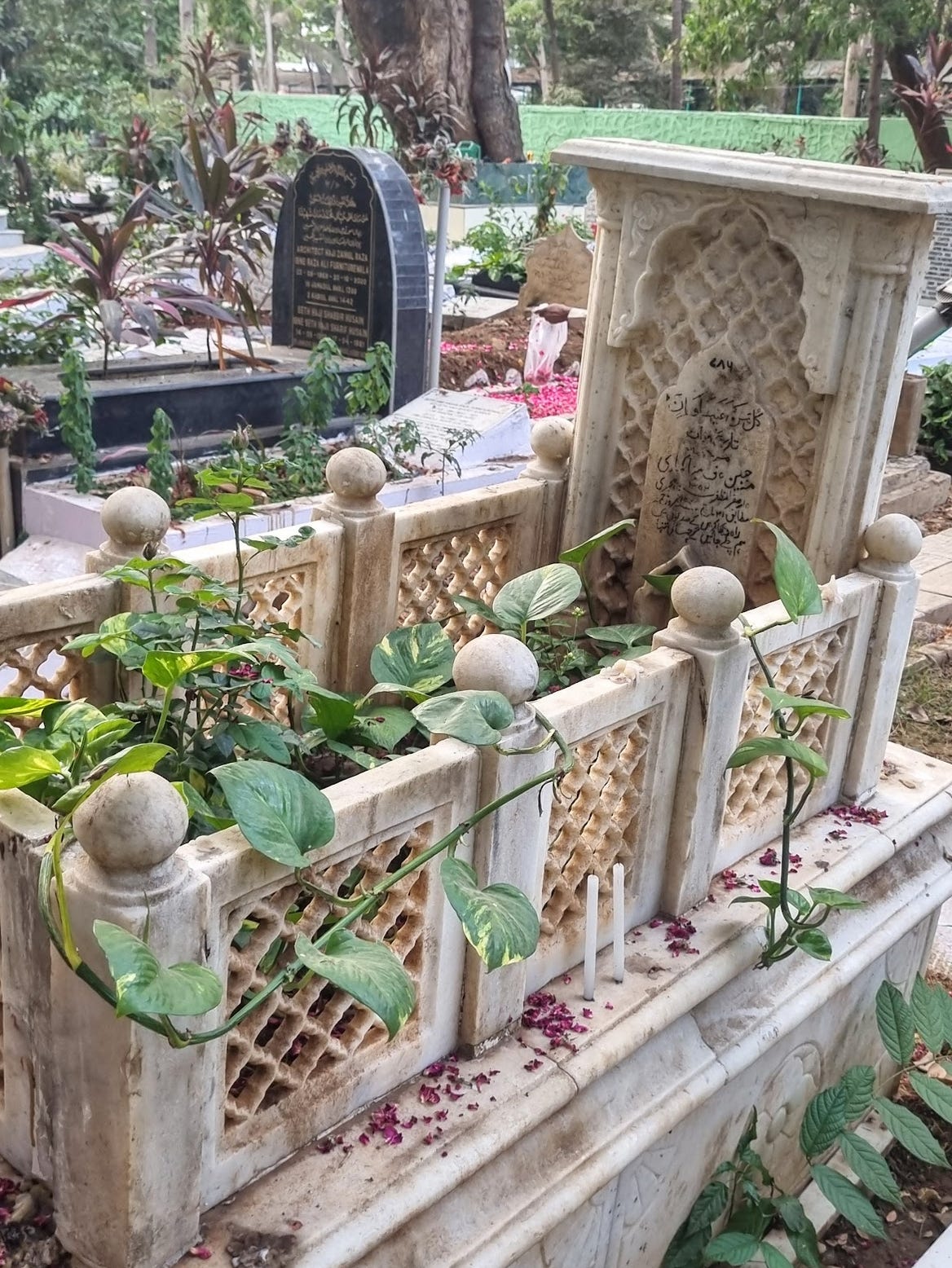
Christophe Jaffrelot makes a case for Islam bestowing public spaces in their true egalitarian sense to medieval Indian cities. I haven’t examined this claim in depth, but it is an appealing one.
Lyrics invoking the garden amid affirmative emotions are easy to come by. Allama Iqbal, before his turn toward a more strident nationalism, hoists Hindustan as “ye gulsitan hamara.” Faiz, meanwhile, addresses the beloved as so indispensable that without her the garden would cease to function: “chale bhi aao ki gulshan ka karobar chale.”
Chacha Nehru Park is special. It is an antidote to the relentless communal hostility that saturates our screens. No trip to Hyderabad feels complete without a pilgrimage here.
I deliberately set apart the fort’s formal history. See Akshay Iyer’s post for a detailed understanding of the fort’s landscape. Sudha Ganapathy writes about hesitations in photographing the fort’s visitors in her excellent blog. Interestingly, her account and the comments it attracted paint a far duller picture than the one I’ve shared here. Perhaps my expectations of the fort were low to begin with.
See Perrin Remonté’s photographs of Delhi. The color of the rich is green.
For a comprehensive account of Nisar Baloch’s struggle, see Steve Inskeep’s Instant City.
Very nice read!
Brilliant piece on how absence of aram in a bagh becomes teh most powerful way to articulate pain, since gardens are literally designed as eschatological promise. The layering from Lollywood songs to Sion Fort's back paths feels so well observed. Spent some time wandering municipal parks last summer and the way couples occupy different terrian to avoid clearing rituals is almost choreographic at this point.